

What Is Indestructible Dog Toys: The Ultimate Guide for Pet Store
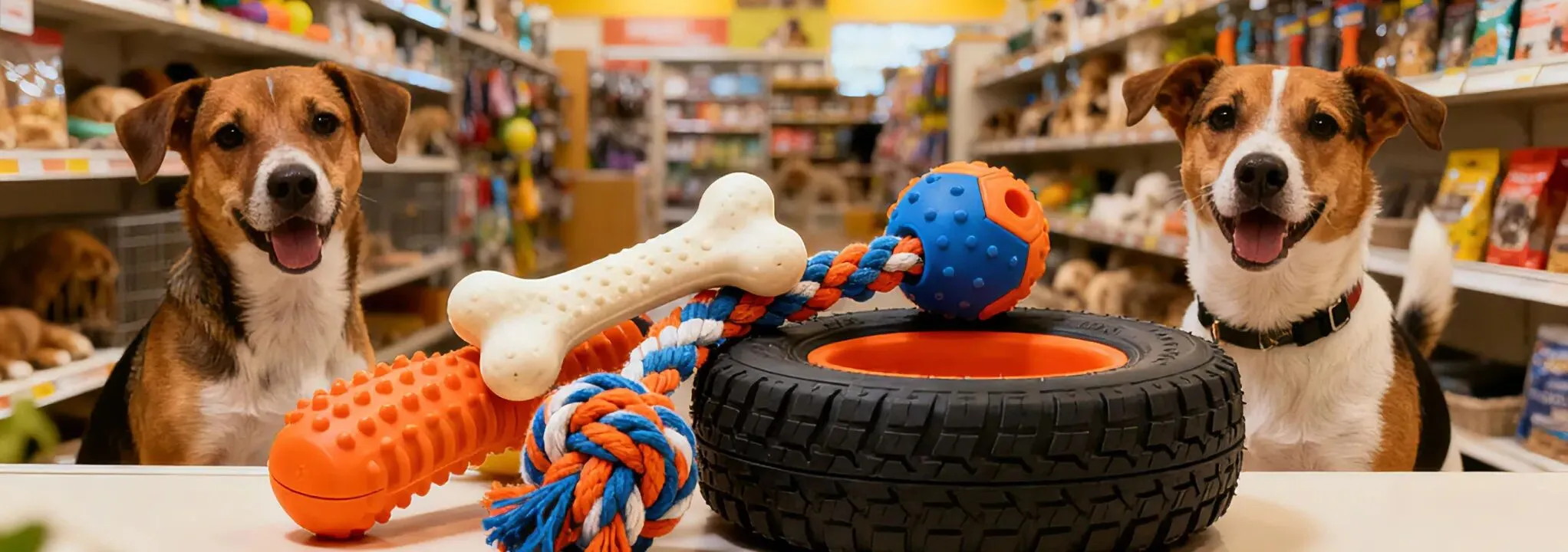
What Are Indestructible Dog Toys?
Indestructible dog toys, also known as durable or chew-resistant toys, are designed to withstand chewing, biting, and tugging from dogs of all sizes and strengths. These toys are not just marketing gimmicks—they serve a real purpose for both dogs and pet store owners or cross-border buyers looking for quality products.
Key Features of Indestructible Dog Toys
1. High Durability
These toys are built to survive intense chewing, gnawing, and tug-of-war. They are ideal for strong chewers, including large and active dog breeds.
2. Durable Materials
Indestructible toys are made from tough materials such as industrial-grade rubber, hard nylon, and other high-strength plastics. These materials resist tearing and last longer than standard toys.
3. Robust Structural Design
Many “indestructible” toys are molded as a single piece, eliminating weak points like seams, stuffing, or small detachable parts that can be chewed off easily.
4. Not Truly Unbreakable
Experts and some brands caution that “indestructible” is often a marketing term. Even the toughest toys may eventually break if a dog has a very strong bite or high destructive drive.
5. Regular Inspection is Necessary
Even the most durable toys require routine checks. Owners should look for wear, cracks, or damage and replace toys at the first sign of risk to ensure safety.
Common Durable Materials Used in Indestructible Dog Toys
Choosing the right material is key to making a dog toy durable and safe. Different materials suit different types of chewers, from moderate to extreme.
Main Materials and Their Features
| Material | Characteristics | Ideal Dog Type |
|---|---|---|
| Natural Rubber | Highly elastic, resistant to tearing, non-toxic | Medium to large dogs, heavy chewers |
| Nylon / Tough Nylon | Extremely hard, abrasion-resistant; may produce small safe fragments after chewing | Super heavy chewers |
| TPR / TPU (Thermoplastic Rubber / Polyurethane) | Softer than nylon but tougher than regular rubber; good tear resistance | Moderate chewers |
| Kevlar / Ballistic Nylon | Ultra-strong fiber, puncture- and tear-resistant | Dogs that play with reinforced fabric toys |
| High-Density Polyethylene / Polypropylene (HDPE / PP) | High hardness, difficult to break | Heavy chewers, hard bone toys |
| Reinforced Layered Fabric | Multiple layers of fabric, mesh, and stitching | Small to medium dogs, fabric toy lovers |
Tip: For the most durable chew toys, natural rubber and tough nylon are usually the best choice.
Common Structural Designs of Indestructible Dog Toys
The durability of a dog toy depends not only on the material but also on its structural design. Most “indestructible” toys follow specific design principles to withstand chewing, tugging, and pulling.
1. Solid One-Piece Design
- Description: The most durable design; made in one piece without seams or joints.
- Benefits: No weak points, extremely resistant to heavy chewers.
- Examples: Rubber balls, rings, and bones.
2. Solid Core / High-Density Core
- Description: Toys with a tightly packed interior made of solid rubber, high-density nylon, or layered TPR.
- Benefits: Prevents collapsing or breaking from chewing.
- Examples: Heavy-duty rubber toys, hard nylon bones.
3. Multi-Layer Construction
- Description: Common for “reinforced” fabric toys; 3–7 layers of canvas, nylon, or mesh, with reinforced stitching.
- Benefits: Extends the lifespan of fabric toys and reduces the chance of being torn apart.
4. Reinforced Stitching
- Description: Strengthened stitching for toys that are not solid one-piece.
- Techniques: Double stitching, triple stitching, cross-stitching.
- Benefits: Prevents quick tearing.
5. Stuffing-Free / Minimal Filling
- Description: Many durable plush toys remove or minimize internal stuffing.
- Benefits: Reduces choking hazards, prevents scattered cotton, safer for large dogs.
6. Thick-Wall Design
- Description: Rubber or TPR toys with thicker walls and tighter construction.
- Benefits: Stronger resistance to tearing, less prone to breaking.
- Examples: Rubber balls, rings, and bones.
7. Chew-Resistant Shaped Design
- Description: Shapes designed to avoid weak points and difficult to grasp for tearing.
- Common Shapes: Rings, balls, solid bones, stick shapes.
- Benefits: Lasts longer, safer for vigorous chewers.
8. No Small Parts
- Description: Avoids plastic eyes, small attachments, or removable decorations.
- Benefits: Prevents choking and accidental ingestion.
Core Design Principle:Solid one-piece + thick structure + elimination of weak points = longer-lasting and safer chew toys.
Common Styles of Indestructible Dog Toys
Durable dog toys come in various styles to suit different chewing habits and play preferences. Choosing the right style can improve customer satisfaction and reduce product returns.
1. Durable Rubber Balls
- Description: Classic, highly chew-resistant balls made from solid or thick-walled rubber.
- Features: One-piece design, strong elasticity, long-lasting chewability.
- Brands: KONG, Chuckit, Jolly Ball
- Ideal For: Medium to large dogs, ball-chasing enthusiasts.
- SEO Tip: Popular in pet store inventory for interactive play.
2. Rubber Rings
- Description: Circular rubber toys with no weak points.
- Features: Even bite distribution, resistant to prying.
- Brands: Goughnuts Ring
- Ideal For: Heavy chewers like pit bulls or German Shepherds.
- Use Case: Great for tugging and chewing.
3. Nylon or Rubber Bones
- Description: Hard nylon or super-tough rubber shaped like bones.
- Features: Dental benefits, strong chewing satisfaction.
- Brands: Benebone, Nylabone
- Ideal For: Dogs that love traditional bone-shaped toys.
- SEO Tip: Essential product for pet product sourcing targeting dental and chew-focused buyers.
4. Tug Toys / Rope + Rubber Hybrid
- Description: Combination of rubber and high-strength rope for interactive play.
- Features: Durable against pulling, slightly less chew-proof than pure rubber.
- Ideal For: Dogs that enjoy tug-of-war; multi-dog households.
5. Heavy-Duty Rope Toys
- Description: High-density, multi-strand ropes.
- Features: Much more durable than standard cotton ropes.
- Ideal For: Dogs that love chewing or dragging ropes.
6. Reinforced Plush / Tough Fabric Toys
- Description: Plush toys with 3–7 layers of fabric and reinforced stitching.
- Features: Minimal or no stuffing, double/triple stitching.
- Brands: Tuffy, Outward Hound
- Ideal For: Moderate chewers who prefer soft toys.
7. Chew Sticks / Bars
- Description: Solid TPR or nylon sticks designed for persistent chewing.
- Features: Long-lasting chew satisfaction, hard to destroy.
- Ideal For: Dogs that love stick-shaped chewables.
8. Interactive Tough Toys
- Description: Toys that stimulate intelligence, like treat-dispensing rubber toys or safe squeaky toys without easily broken parts.
- Features: Combines durability and mental engagement.
- Ideal For: Energetic dogs prone to boredom.
- SEO Tip: A strong addition to wholesale pet supplies catalogs for interactive play.
9. Kevlar / Ballistic Nylon Toys
- Description: Made from Kevlar or ballistic nylon for tear-resistance.
- Features: Cannot be torn easily, though prolonged heavy chewing may wear them.
- Ideal For: Dogs that enjoy vigorous tugging and shredding.
Tip for Pet Stores: Offering a range of indestructible dog toy styles ensures inventory meets the needs of all dog breeds and chewing habits, enhancing sales and customer loyalty.
Why Indestructible Dog Toys Are Essential for Pet Stores & Cross-Border Buyers
For pet retailers and cross-border buyers, selecting indestructible dog toys isn’t just marketing—it’s a strategic choice that can boost repurchase rates, reduce after-sales issues, and strengthen consumer trust.
1. Meet the Needs of Strong Chewers
- Target Dogs: Pitbulls, German Shepherds, Labradors, and other medium-to-large breeds with strong bite force.
- Why It Matters: Ordinary toys are destroyed within minutes. Lack of durable options may push customers to competitors.
- Benefits of Indestructible Toys: Satisfy heavy chewing needs Release excess energy Reduce furniture or home damage
- Key Takeaway: A must-have item in your pet store inventory.
2. Reduce Customer Complaints & After-Sales Costs
- Standard plush or thin rubber toys often break quickly, leading to: Complaints and negative reviews Returns Perceived low quality
- For cross-border sellers, durable toys minimize logistics costs and platform penalties.
3. Increase Average Order Value & Repurchase Rate
- Indestructible toys often have higher retail prices, which: Improve profit margins Facilitate bundle sales (toys + treats + dental chews)
- Being both consumable and long-term needed, they drive repeat purchases—critical for pet product sourcing strategies.
4. Enhance Customer Trust in Your Store or Brand
- Shoppers perceive stores offering: High-quality, tested products Toys designed for strong chewers
- This positions you as more professional than standard pet sellers.
5. Safer for Pets—Avoid Choking or Ingestion Risks
- Broken toys may cause: Plastic shards or stuffing ingestion Intestinal blockage
- Durable toys focus on: Solid, one-piece design No small detachable parts Tear-resistant construction
- Pet owners prioritize these safety features.
6. Follow Market Trends: Durable Toys Are Best-Sellers in the West
- In Amazon, Chewy, and Walmart, durable chew toys consistently rank among top sellers.
- Implications for cross-border sellers: Large market size Stable search traffic High ad conversion potential
- A promising category for long-term growth in wholesale pet supplies.
7. Promote Dog Behavioral Health
- Chewing helps dogs: Burn off energy Reduce stress Alleviate separation anxiety
- Indestructible toys provide longer-lasting engagement and mental stimulation, delivering tangible value to pet owners.
Pro Tip for Pet Retailers: Stocking a range of indestructible dog toys ensures your pet store inventory meets the needs of all chewers, from moderate to extreme, improving customer satisfaction and loyalty.
How to Determine if a Dog Toy is Truly “Indestructible” (Practical Guidelines)
For pet retailers and cross-border buyers, knowing how to evaluate durable dog toys is essential for smart pet product sourcing. Here are practical standards to judge if a toy can withstand heavy chewing:
1. Check Material Standards
- Natural Rubber: Hardness ≥ 65 Shore A
- Nylon: Injection-molded, no hollow thin walls
- TPR / TPU: Sufficient density and weight
- Certifications: Look for bite test results or material certifications
- Pro Tip for Store Owners: Among toys of similar size, heavier and denser ones are usually more durable.
2. Verify One-Piece Construction
- Durable toys avoid seams, joints, and hollow areas. Reliable structures include: One-piece molding (solid injection) No glued parts No exposed stitching or fabric covers Solid core rather than thin-shell
- For rubber toys, a single molded piece is far more resistant to tearing.
3. Inspect Hardness, Density, and Weight
- Same material: Heavier → denser → harder to chew through Hard to compress by finger pressure → more durable Drops with a solid “thud” → higher density
- Quick Test: If a toy satisfies 2 out of 3: “cannot squeeze easily, sounds solid when tapped, feels heavy when dropped,” it’s usually a reliable chew toy.
4. Look for Bite Test Videos or Data
- Professional suppliers provide: Mechanical Bite Tests Tensile / Pulling Strength Tests Real dog testing (Pitbulls, Labradors, or other strong chewers)
- Toys without basic durability testing should be considered questionable.
5. Check Customer Reviews for Durability
- Focus on feedback mentioning: Longevity: “Lasted weeks/months” Strong chewers exceptions: “My dog destroys everything, but this toy survived” Pictures or videos demonstrating actual use
- Beware: many products claim “indestructible” yet reviews report “chewed in 5 minutes.”
6. Look for Chew-Strength Ratings
- Reputable brands categorize toys by chewing intensity: Power Chewers: Heavy-duty chewers Aggressive Chewers: Strong chewers Moderate Chewers: Medium chewing strength
- Clear classifications often indicate a reliable product.
7. Evaluate Design to Reduce Weak Points
- Durable toys avoid: Thin necks, legs, or ears Hollow tips Thin edges around depressions or holes
- Stronger shapes include: tires, balls, and bones, which enhance overall structural support.
Safety Standards for Indestructible Dog Toys (US & EU Regulations)
For pet retailers and cross-border buyers, durable dog toys must not only withstand chewing but also comply with strict safety regulations in the USA and Europe. Here’s a comprehensive guide:
I. United States (USA) Key Standards
CPSIA (Consumer Product Safety Improvement Act)
1. Although primarily for children’s products, many major US brands reference CPSIA for dog toys due to oral contact.
2. Key requirements:
- Lead content limits
- Phthalates restrictions
- Small parts safety
3. Materials like natural rubber, TPR, and nylon must meet low-toxicity requirements.
FDA Food-Grade Compliance
1. Applies to materials in contact with the mouth: natural rubber, TPR, silicone.
2. Ensures no harmful chemicals are released during chewing.
3. Common labels:
- FDA-compliant grade rubber
- Food-grade TPR
ASTM F963 (Toy Safety Standard Reference)
1. Reference for mechanical and physical testing:
- Bite and chewing tests
- Tensile and tear strength
- Small part detachment
2. Many US brands (KONG, Nylabone) use ASTM as a benchmark for chew resistance.
II. European Union (EU) Key Standards
1. REACH Regulation
- All dog toys exported to the EU must comply with chemical restrictions:
PAHs (Polycyclic Aromatic Hydrocarbons)
Heavy metals (Cd, Pb, etc.)
Phthalates
SVHC (Substances of Very High Concern)
- REACH is mandatory; non-compliant toys cannot be sold in Europe.
2. EN 71 (Toy Safety Standards) Reference
- Though for children’s toys, many European buyers require reference to EN 71:
EN 71-1: Mechanical & physical safety (prevents shards and debris)
EN 71-3: Specific element migration (heavy metals)
- Ensures that even if chewed, toys do not produce toxic or sharp fragments.
3. CE Mark (Optional but Recommended)
- Not mandatory for pet toys, but many EU importers request:
CE Declaration of Conformity
Test reports covering REACH, PAHs, EN71-3
- Adds credibility and eases customs inspections.
III. Key Safety Indicators for Durable Dog Toys
1. Material Safety
- Free from BPA, PVC, phthalates
- Low odor, no strong rubber smell
- Non-toxic softeners
- Natural rubber toys should avoid industrial-grade rubber with high vulcanization residues
2. Structural Safety
- Cannot break into sharp fragments
- No detachable small parts
- No thin-wall or easily torn designs
- Extremely hard toys can damage teeth; most brands use “chewable but non-fragmenting” structures
3. Durability Testing (Essential)
Suppliers should provide:
- Bite force tests
- Tensile / pull strength tests
- Abrasion / wear tests
Toys without testing rely mainly on marketing claims and should be treated cautiously.
Dog Breed Chewing Needs & Recommended Durable Toys
| Dog Type | Typical Breeds | Key Needs | Recommended Toy Types | Notes |
|---|---|---|---|---|
| Large Power Chewers | Pitbull, Rottweiler, German Shepherd, Doberman, Labrador, Golden Retriever, Akita, Bulldog | Extreme durability, solid one-piece, thick wall | Solid rubber balls, solid rubber rings, super hard nylon bones, thick rubber dumbbells, tough frisbees | Ordinary toys break instantly |
| Medium Active Dogs | Border Collie, Australian Shepherd, Corgi, Husky, Shiba Inu, Cocker Spaniel | Durable but not too hard, fetch & tug friendly, some elasticity | Medium rubber balls, soft-hard frisbees, reinforced tug ropes, medium nylon bones, tough squeaky toys | Prefer interactive play |
| Small Dogs | Pomeranian, Bichon, Maltese, Pug, Dachshund, Mini Schnauzer, French Bulldog | Not too hard, small/light, chew-friendly | Small rubber balls & bones, light TPR toys, reinforced plush, mini nylon sticks | Focus on chewability over extreme hardness |
| Extra Large Dogs | Great Dane, St. Bernard, Mastiff, Newfoundland | XL size, ultra-thick, solid, heavy materials | XL rubber balls, large nylon bones, XL frisbees | Size & thickness prevent breakage & choking |
| Puppies | All breeds in puppy stage | Soft, safe for teeth, light & easy to grab | Soft rubber, puppy TPR toys, small chew ropes, stuffing-free plush | Avoid ultra-hard materials |
| Senior Dogs | All senior dogs | Soft, gentle, easy to chew, safe | Soft rubber toys, mild TPR, senior chew gums | Prevent tooth damage; avoid hard toys |
Quick Tip for Buyers:
Match toy material, size, and structure to the dog’s breed, age, and chewing strength. This increases customer satisfaction, repeat purchases, and reduces complaints.
Common Misconceptions About Indestructible Dog Toys
1. “Indestructible” ≠ Unbreakable
- No toy is truly indestructible.
- Always check bite tests, tensile tests, and material certifications (REACH, EN71-3).
2. Harder ≠ More Durable
- Overly hard toys can break teeth, cause gum bleeding, or be unchewable for puppies/seniors.
- True durability = strong + elastic, not stone-hard.
3. Big Dogs Always Need Hardest Toys
- Small dogs (Dachshunds, Corgis, French Bulldogs) can have strong bites too.
- Buy according to chewing strength, not size.
4. Plush Toys Cannot Be Durable
- Multi-layer reinforced plush with strong stitching and no filling can withstand moderate chewing.
5. Natural Rubber = Automatically Safe
- Low-quality rubber may contain sulfur residues, chemicals, PAHs, heavy metals.
- Verify REACH, EN71-3, FDA-grade certifications.
6. Larger Size = More Durable
- Size alone doesn’t guarantee strength.
- Check material density, wall thickness, one-piece design, weak points.
7. No Need to Inspect Durable Toys
- All toys wear over time. Check weekly for cracks, delamination, sharp edges, or shredded parts.
8. Nylon Toys Never Break
- High-density nylon can still form small sharp edges.
- Quality nylon = even wear, no large shards, safe edges.
9. All Dogs Need Maximum Chew Strength
- Puppies: soft rubber
- Seniors: gentle chew
- Small dogs: not too hard
- Sensitive teeth: soft & safe
10. Material Alone Makes a Toy Durable
Structure often matters more than material:
- One-piece molding > stitched
- Ball/ring shape > complex animal shape
- Thick walls > thin walls
- No filling > filled
Safety Tips for Using Indestructible Dog Toys
Even the best indestructible dog toys need to be used correctly to stay safe and last longer. Here are practical tips every pet store owner, cross-border seller, and dog parent should know.
Choose the right hardness for your dog.
Puppies, seniors, and dogs with sensitive teeth need softer rubber or flexible TPR.
Medium chewers can use medium-firm rubber toys.
Power chewers (like Pit Bulls and Rottweilers) should stick to solid rubber or heavy-duty nylon toys. Choosing the wrong hardness may damage teeth or shorten the toy’s lifespan.
Supervise the first 10–15 minutes.
Watch for sharp edges, cracks, or small pieces coming off. If anything looks unsafe, take the toy away and switch to a stronger model.
Always use the correct size.
A chew toy should be at least twice the size of the dog’s mouth. If a dog can fully fit a toy in its mouth, it’s a choking risk—especially balls, bones, and stick-shaped toys.
Check wear and tear weekly.
Even “indestructible” materials break down over time. Look for cracks, missing chunks, sharp spots, or frayed nylon edges. Replace the toy immediately if you see any of these.
Be careful with nylon toys.
Nylon doesn’t usually break into big pieces, but it can form sharp, spiky edges. Swap it out once you notice rough spots.
Avoid overly hard toys for puppies and senior dogs.
Baby teeth and aging teeth are easier to damage. Softer rubber, TPR, or reinforced fabric toys are safer choices.
Use squeaky toys carefully.
The squeaker often becomes the “target.” Power chewers can rip them open quickly. Squeaky toys are better for playtime interaction—not for long chewing sessions.
Don’t leave a dog alone with a new toy.
Especially with strong chewers. Supervise the first few sessions to ensure the dog interacts safely.
Limit chewing time.
Too much continuous chewing (1–2 hours straight) may cause gum irritation or tooth fatigue.
10–20 minutes a day is enough for most dogs.
Clean toys regularly.
Rubber toys: warm water + mild soap
Nylon toys: rinse and brush
Fabric toys: machine-washable if the material allows
Clean toys last longer and smell better.
Use different materials for different purposes.
Rubber, nylon, TPR → daily chewing
Fabric toys → fetch or light play
Rope toys → tug games
Squeaky toys → mental stimulation
Mixing toy types helps extend each toy’s lifespan.
Stop using the toy immediately if the dog shows signs of injury.
Bleeding gums, broken teeth, swallowing small pieces, choking risk, or unusual fatigue—all mean it’s time to take the toy away and consult your vet.
Strength Levels of Indestructible Dog Toys (Light / Moderate / Heavy Chewers)
Not all dogs chew the same way, so indestructible dog toys are often divided into different strength levels. These levels are based on material density, wall thickness, structure design, and test results. Understanding them helps retailers choose better products and guide customers more accurately.
1. Light Chewers
Best for:
Small dogs, puppies, seniors, and dogs with sensitive teeth.
Material Features:
Soft rubber, flexible TPR, and lightweight nylon—easy to bite, gentle on teeth.
Typical Toys:
Small rubber balls, puppy chew toys, reinforced fabric or plush toys.
Key Point:
Light-chewer toys focus on soft texture and safety rather than maximum durability.
2. Moderate Chewers
Best for:
Medium-size dogs or breeds with average chewing strength (Border Collies, Huskies, Cocker Spaniels).
Material Features:
Medium-hard natural rubber or TPR with medium wall thickness.
Typical Toys:
Medium rubber balls and bones, rope & rubber combos, multi-layer reinforced fabric toys.
Key Point:
Balanced design—durable enough for daily chewing but still forgiving on the teeth.
3. Heavy Chewers
Best for:
Large breeds and power chewers (Pit Bulls, German Shepherds, Bulldogs, Labradors, Golden Retrievers).
Material Features:
High-density natural rubber or solid nylon, one-piece molding, thick walls, no weak joints.
Typical Toys:
Solid rubber dumbbells, balls, rings, ultra-tough nylon bones, and oversized discs.
Key Point:
Built for extreme chewing—solid, dense, and structurally reinforced to prevent breakage.
4. Why Strength Levels Matter for Sellers and Pet Stores
- Better sourcing decisions: You can select the right mix of products for different dog types, reducing returns and complaints.
- More professional recommendations: Store staff can explain clearly which level fits each dog.
- Smarter inventory planning: Light / moderate / heavy categories make restocking simple and targeted.
5. Quick Indicators for Classifying Chew Strength
Manufacturers typically evaluate toys based on:
- Material density & Shore A hardness
- Wall thickness and overall weight
- Mechanical bite tests or real-dog testing
- Suitable breed size and chewing behavior
General reference range:
- Light chewers: ≤ 45 Shore A
- Moderate chewers: 50–65 Shore A
- Heavy chewers: ≥ 65 Shore A (Actual standards may vary by brand.)
Practical Product-Sourcing Tips for Sellers
For cross-border sellers and pet store buyers, choosing the right indestructible dog toys is not only about durability—it’s also about safety compliance, material quality, and supplier reliability. Here are simple, practical guidelines to make sourcing faster and more accurate:
1. Prioritize suppliers with REACH + EN71-3 certifications
These two standards make products easier to sell across both the EU and the U.S., and ensure low chemical residues and safer materials.
2. Choose food-grade natural rubber for rubber toys
Food-grade rubber offers better elasticity, fewer impurities, and higher safety for heavy chewers. It’s also more resistant to cracking and tearing.
3. For nylon toys, select pure injected nylon (non-toxic nylon polymer)
Avoid mixed plastics or recycled materials. Pure nylon ensures consistent density, clean wear patterns, and no large sharp fragments.
4. Avoid “durable plush toys” for true power chewers
Even reinforced plush can be ripped apart easily, increasing the risk of fabric ingestion. Plush toys are best positioned as interactive or fetch toys—not for long chewing sessions.
5. Request an MSDS (Material Safety Data Sheet) from factories
MSDS files help verify chemical safety, material sources, and compliance with major markets.
6. Ask suppliers for destruction-test videos
A short bite-test or stress-test video is the fastest way to assess a toy’s structure, wall thickness, and real durability before placing bulk orders.
If you’re looking to source durable, indestructible dog toys for your store, Petfairs is a reliable platform to start with. We offer factory-direct pricing, low MOQs starting from just one carton, and fast door-to-door delivery to global destinations — making procurement easier for retailers of all sizes.



 Popular Blogs