

Cat Growth, Senior Care & Reproductive Milestones: The Ultimate Guide for Pet Retailers (2026Edition)
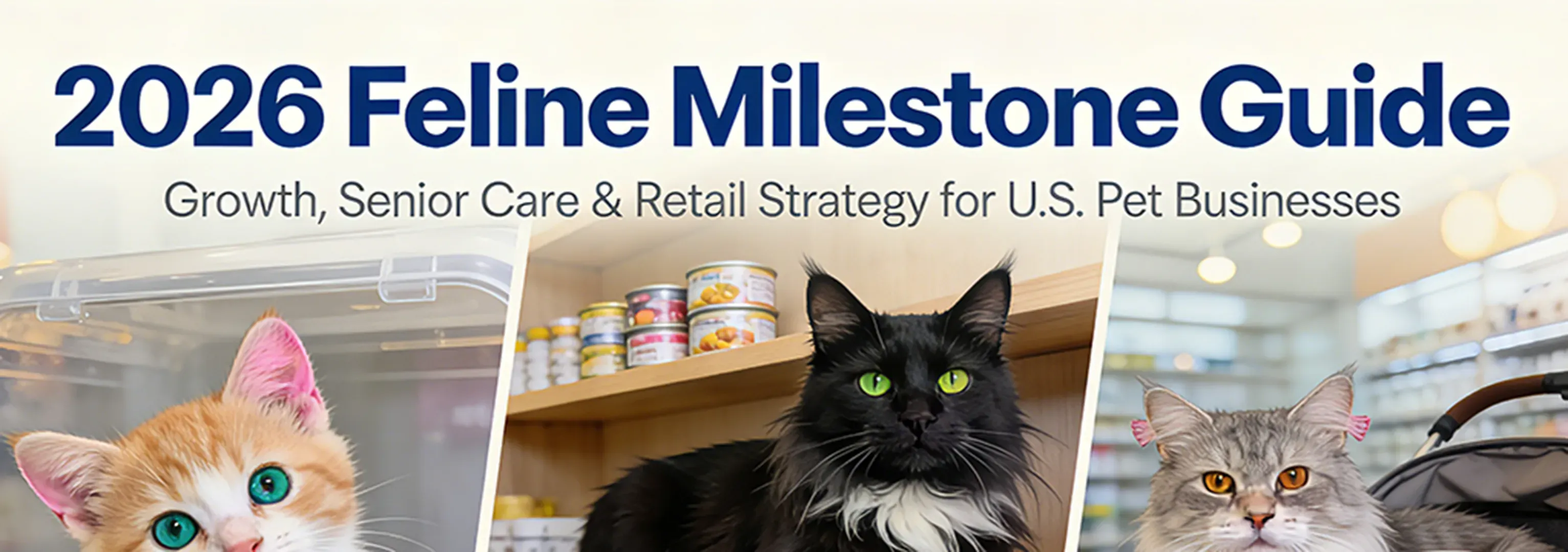
Understanding feline development—from kitten growth to senior care—is essential for any U.S. pet retailer. Pet parents frequently search questions like what age do cats stop growing, at what age can a cat get pregnant, what age do cats go into heat, what age is a senior cat, and at what age can cats have catnip.
These aren’t just casual questions—they’re real buying triggers. When customers seek these answers, they're also preparing to purchase new products suitable for the cat’s age stage.
Petfairs helps pet businesses meet this demand with:
- Global Shipping
- Factory-Direct Prices
This upgraded guide gives you the science, the retail strategy, and the product opportunities—plus data sources, comparison tables, and pros/cons analysis to support your store decisions.
- Cat Growth Overview — What Age Do Cats Stop Growing?
Most cats reach full size between 12–18 months, but some large breeds mature as late as 3–4 years.
✔ Growth Stage Comparison Chart
| Age Range | Growth Stage | Physical Development | Product Needs (Wholesale Opportunities) |
| 0–6 months | Rapid Growth | Bones & muscles developing quickly | Kitten food, small toys, grooming starter kits, teething toys |
| 6–12 months | Slowing Growth | Coordination improves | Stronger toys, small scratching boards, transition feeders |
| 12–18 months | Near Maturity | Adult size & weight | Adult food bowls, catnip introduction, durable toys |
| 18–36 months | Late Maturity (large breeds) | Full muscle definition | Cat furniture, climbing towers, high-durability products |
Pros & Cons for Retailers
| Pros for Retailers | Cons for Retailers |
| Clear age-based upselling opportunities | Needs diversified inventory |
| Easy to create growth-stage bundles | Requires more customer education |
| High repeat purchase rate | Product demand shifts quickly |
- Feline Reproduction — At What Age Can a Cat Get Pregnant?
Cats can get pregnant as early as 4–6 months. This surprises many first-time cat owners.
Heat Cycle Comparison
| Topic | Age/Timing | Retail Opportunity |
| When do cats go into heat? | As early as 4 months | Calming sprays, heat-cycle behavior toys |
| How often do they cycle? | Every 2–3 weeks | Enrichment toys & stress-relief aids |
| When can they get pregnant? | 4–6 months | Veterinary educational materials, early-age care kits |
Pros & Cons for Retailers
| Pros | Cons |
| Predictable seasonal product demand | Emotional/behavioral challenges make some owners reluctant |
| High demand for calming products | Need accurate education materials |
| Strong tie-in sales with grooming & vet clinics | Heat-cycle products require clear labeling |
- What Age Is a Senior Cat? (What Age Is a Cat Considered Senior?)
Although definitions vary, most veterinarians and the American Association of Feline Practitioners (AAFP) consider:
- 7–10 years = Mature
- 11–14 years = Senior
- 15+ years = Super Senior
Senior Cat Age Comparison Chart
| Age | Veterinary Term | Common Needs | Product Recommendations |
| 7–10 years | Mature Adult | Weight control, hydration | Slow feeders, water fountains |
| 11–14 years | Senior | Joint support, softer surfaces | Orthopedic beds, soft grooming tools |
| 15+ years | Super Senior | Mobility support & comfort | Low-entry litter boxes, gentle toys |
Pros & Cons for Retailers
| Pros | Cons |
| Senior category grows every year in the U.S. | Requires specialized stock |
| Products have high perceived value | Cost-sensitive customers may need guidance |
| Repeat purchases in supplements & beds | Need educational signage |
- At What Age Can Cats Have Catnip?
Most cats respond to catnip starting at 6 months, when scent receptors mature.
Catnip Response Table
| Age | Reaction | Recommended Product |
| 0–6 months | Usually no response | Kitten-safe toys, soft plushies |
| 6–12 months | Mild response | Light catnip blends |
| 1+ years | Strong reaction | Catnip, silvervine, catnip-infused toys |
Pros & Cons of Catnip Products
| Pros | Cons |
| One of the top-selling toy categories | Some cats never respond |
| Low cost, high margin | Overuse may reduce reaction |
| Easy to bundle and upsell | Requires labeling (pure vs blend) |
- How U.S. Retailers Should Stock Inventory Based on Cat Age
Below is a clear comparison of ideal product categories by age stage:
Inventory Strategy Table for U.S. Pet Stores
| Cat Age Stage | Top Retail Products | Why US Petfairs Fits |
| Kitten (0–12 months) | Teething toys, starter kits, kitten brushes | One-carton MOQ lets you test new categories |
| Young Adult (1–3 years) | Catnip toys, scratchers, durable toys | Factory-direct pricing boosts margins |
| Adult (3–7 years) | Dental care, feeder upgrades | Fast U.S. shipping keeps stock moving |
| Senior (7–14+) | Orthopedic beds, senior feeders, hydration aids | Wide category selection for niche customers |
| Super Senior (15+) | Low-entry litter boxes, soft toys | Reliable inventory for specialty buyers |
Why Retailers Choose Petfairs
US Petfairs is specifically built for B & large-C customers:
- Groomers
- Dog Trainers
- Veterinary practices
- Pet adoption agencies
- E-commerce sellers
- Website builders & independent sellers
Your Wholesale Advantage:
- Fast Free Shipping
- Factory-Direct Prices
- Low MOQ
- Local Ready-to-Ship Stock
- Best value for retailers needing flexible inventory
Data Sources Used for This Article
Veterinary & Academic Sources
- AVMA (American Veterinary Medical Association) — Feline developmental data
- AAFP (American Association of Feline Practitioners) — Senior cat classification guidelines
- Cornell University Feline Health Center — Growth & reproduction timelines
- UC Davis School of Veterinary Medicine — Heat cycle & reproductive information
Industry & Pet Behavior Sources
- International Cat Care (ICC) — Feline maturity stages
- ASPCA — Catnip safety, cat behavior
- Pet Industry Research Reports (U.S. Market) — Product demand & retail trends


 Popular Blogs