

How Do Retailers Find Pet Suppliers? 2026 Modern Sourcing Guide
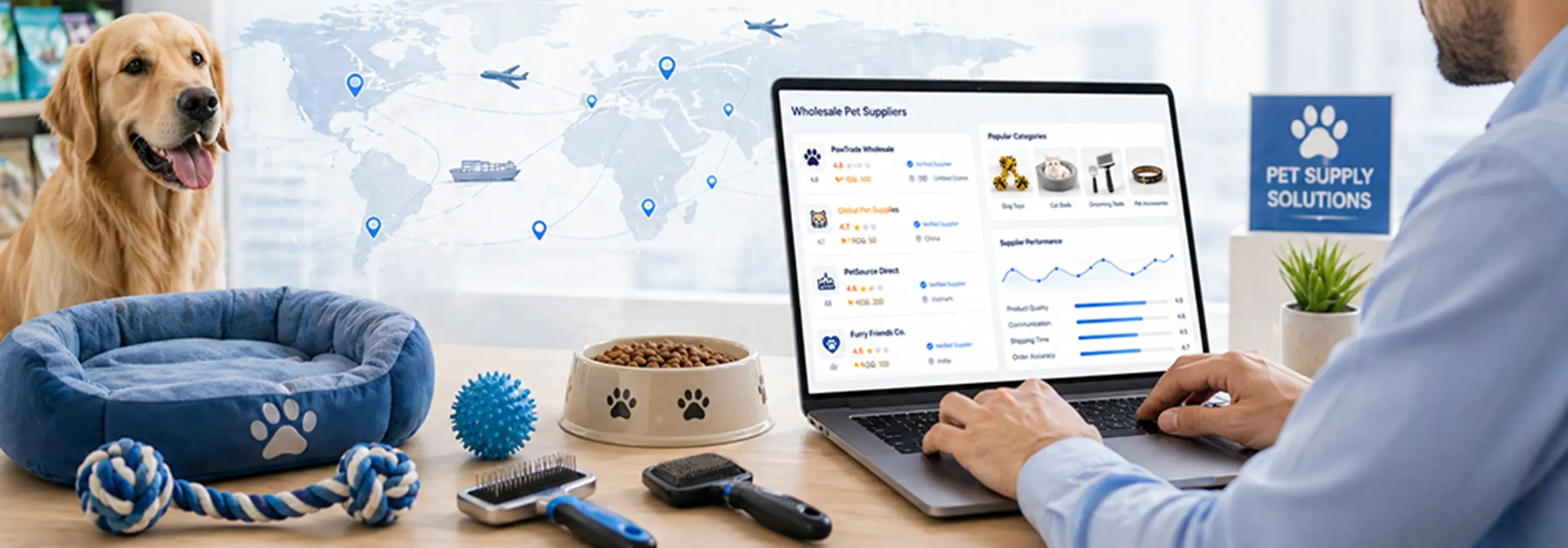
The global pet industry is no longer a small niche reserved for neighborhood pet shops. It has become one of the most resilient retail sectors worldwide, driven by pet humanization, rising pet ownership, premium product demand, and the rapid expansion of online pet commerce.
According to the latest report released by the American Pet Products Association, total pet industry spending in the United States alone reached $158 billion in 2025, and analysts expect that number to climb to approximately $165 billion in 2026 as consumer demand continues shifting toward higher-quality pet food, pet wellness, grooming accessories, enrichment toys, travel gear, and lifestyle products.
This growth creates enormous opportunity for retailers—but it also raises one difficult question:
Where do successful pet retailers actually find reliable pet suppliers
For many new pet store owners, online pet sellers, groomers expanding into retail, veterinary clinics, subscription box businesses, and marketplace resellers, sourcing is often the first real bottleneck.
Not because pet suppliers do not exist.
But because:
- There are too many low-quality vendors online,
- Traditional distributors often offer the same crowded products,
- direct factories usually require high MOQs,
- shipping timelines can be unpredictable,
- and supplier reliability is hard to verify before money is committed.
In other words, modern retailers are no longer simply asking:
“Where can I buy pet products wholesale?
They are asking something much deeper:
How can I find pet suppliers that are low-risk, profitable, flexible, and dependable enough to support long-term retail growth
That question is exactly what this guide answers.
In this article, we will break down:
- where retailers traditionally source pet products,
- which sourcing channels are growing fastest in 2026,
- the hidden risks behind each supplier type,
- what successful retailers evaluate before placing their first order,
- and why more small-to-mid pet businesses are moving toward digital wholesale sourcing platforms.
Why Finding the Right Pet Supplier Matters More Than Ever
Ten years ago, many independent retailers could survive by purchasing from one or two regional distributors and simply stocking mainstream dog toys, collars, bowls, or cat litter products.
That model is no longer enough.
Today's pet buyers behave differently:
- they expect faster shipping,
- they look for trend-driven novelty products,
- they compare prices instantly online,
- and they are far more willing to switch brands if inventory feels repetitive.
Recent consumer retail research shows that over 53% of pet owners now purchase pet supplies online regularly, while younger shoppers increasingly discover products through social commerce, influencer recommendations, and lifestyle-based buying rather than traditional brand loyalty.
For retailers, this changes the sourcing game completely.
Because the wrong supplier now creates four direct business problems:
| Supplier Problem | Retail Impact |
| High MOQ | Cash trapped in slow inventory |
| Slow shipping | Lost repeat customers |
| Generic products | Harder to compete |
| Poor communication | Fulfillment instability Retailers are not simply buying inventory anymore. They are buying: |
inventory speed, trend access, margin room, and operational predictability
That is why supplier choice often determines whether a pet retail business scales—or gets stuck.
The 5 Main Ways Retailers Find Pet Suppliers Today
Although every business model is different, most pet retailers source products through five common channels.
Each has advantages.
Each also comes with trade-offs.
Understanding these sourcing routes is the first step to choosing the right wholesale strategy.
Trade Shows and Pet Industry Expos
Trade shows remain one of the oldest and most established methods for finding pet suppliers.
Major events such as:
- Global Pet Expo
- SuperZoo
- Interzoo
bring together manufacturers, distributors, OEM factories, and emerging brands under one roof.
These expos are valuable because retailers can:
- physically inspect products,
- compare multiple vendors quickly,
- negotiate wholesale pricing,
- request catalogs,
- and build direct face-to-face supplier relationships.
For stores looking for premium or differentiated inventory, this hands-on sourcing still carries strong value.
However, trade show sourcing also has major limitations:
Time-sensitive
Most trade shows only happen once or twice a year.
Travel-heavy
Flights, hotels, and attendance costs are significant.
Slow replenishment
Finding a supplier at a trade show does not solve day-to-day restocking.
MOQ pressure
Many exhibitors are manufacturers looking for container-level or bulk buyers.
So while trade shows are excellent for trend discovery, they are often inefficient as the sole sourcing engine for smaller retailers.
Regional and National Pet Distributors
The second traditional route is using pet wholesalers and domestic distributors.
These distributors typically warehouse established pet brands and resell to stores in smaller mixed shipments.
Retailers like distributors because they offer:
- familiar ordering systems,
- domestic shipping,
- lower freight complexity,
- recurring replenishment convenience.
This model works especially well for staple items such as:
- feeding bowls,
- basic leashes,
- pet shampoos,
- flea combs,
- standard treats,
- litter accessories.
For decades, distributors were the backbone of independent pet store inventory management.
But there is one growing issue:
Most distributors sell the same catalog to everyone
That means:
your local competitor, another online reseller, and dozens of boutique stores may all be buying the exact same SKU list.
This creates:
- price competition,
- limited uniqueness,
- lower merchandising freshness,
- weaker brand differentiation.
Many retailers report that relying only on domestic distributors gradually turns their shelves into:
“the same products customers can find anywhere else.
And in today's social-media-driven retail environment, “same as everyone else” rarely wins.
Buying Directly from Manufacturers
Many retailers eventually consider going straight to factories.
This sounds ideal on paper:
- lower ex-factory pricing,
- custom logo options,
- private label opportunities,
- more control over margins.
And yes—factory direct sourcing can dramatically improve long-term profitability.
Especially for retailers planning to build:
- exclusive bundles,
- branded grooming lines,
- subscription boxes,
- or custom seasonal collections.
But direct factory sourcing is much harder than many beginners expect.
Because cheaper product cost often comes with hidden operational costs:
| Direct Factory Challenge | Common Retailer Experience |
| High MOQ | Too much upfront inventory |
| Long lead times | 20–45+ day waiting cycles |
| Sampling delays | Slower decision making |
| Quality inconsistency risk | Harder remote verification |
| International freight complexity | Unexpected landed costs This is one reason many small retailers discover that: |
direct factory buying is profitable later, but difficult at the early growth stage
Without stable cash flow, large MOQ commitments can freeze inventory budgets for months.
Peer Referrals, Communities, and Seller Networks
An underrated but very common sourcing behavior today is simple peer recommendation.
Retailers constantly ask in communities:
- Where do you source low MOQ pet supplies?
- Any reliable wholesale pet toy vendors?
- Who ships faster to the U.S.?
- Which suppliers are good for Shopify pet stores?
- Which factories are responsive with repeat orders?
This happens across:
- Reddit sourcing threads,
- Facebook wholesale groups,
- seller Discord communities,
- Amazon and Etsy seller circles,
- pet retail networking forums.
Why?
Because retailers trust actual buying experience more than supplier ads.
A supplier may look polished on a website.
But retailers want to know:
- Did they really ship on time?
- Was quality consistent?
- Were products true to sample?
- Did they respond when problems happened?
This “real seller validation” has become one of the strongest filters in supplier decision-making.
However, peer referrals alone also have limits:
- recommendations are often fragmented,
- many good suppliers are private contacts,
- and availability can change quickly.
So while referrals help reduce risk, they rarely create a full scalable sourcing system by themselves.
Online B2B Wholesale Platforms (Fastest Growing Sourcing Channel)
This is where the biggest change in pet retail sourcing is happening.
Over the last few years, small and medium retailers have increasingly moved toward online wholesale sourcing platforms because these platforms solve several problems at once:
They allow retailers to compare:
- MOQ,
- product categories,
- freight options,
- supplier responsiveness,
- trend products,
- and restocking flexibility—
without spending weeks traveling or emailing factories one by one.
Instead of sourcing through a single distributor catalog, retailers can now source through a global digital inventory pool.
This model is especially attractive for:
- new pet store owners,
- pet e-commerce sellers,
- social commerce sellers,
- groomers adding product shelves,
- veterinary retail corners,
- subscription box operators.
Because these buyers usually need:
lower upfront risk + wider selection + faster testing
Online wholesale platforms also make it easier to source beyond traditional dog and cat staples, including:
- bird accessories,
- reptile supplies,
- small animal toys,
- fish tank products,
- horse grooming items,
- and niche pet enrichment goods.
This category expansion matters because niche inventory often carries healthier margins than oversaturated mainstream products.
And this is exactly why digital sourcing platforms are rapidly becoming the preferred procurement method for agile pet retailers.
Why Online Wholesale Sourcing Is Becoming the Preferred Model for Modern Retailers
If we compare all five sourcing methods side by side, a very clear pattern appears:
| Sourcing Method | MOQ Flexibility | Product Variety | Speed | Risk Level | Best For |
| Trade Shows | Medium to High | High | Slow | Medium | Trend scouting |
| Domestic Distributors | Medium | Low to Medium | Fast | Low | Staple replenishment |
| Direct Factories | Very High | High | Slow | High | Mature scaling |
| Peer Referrals | Depends | Depends | Medium | Medium | Validation |
| Online Wholesale Platforms | Low to Medium | Very High | Fast-Medium | Lower | Agile sourcing This is why sourcing behavior is changing. Retailers no longer want to wait for annual expos. They no longer want to commit all inventory capital into one factory. And they no longer want to depend only on the same distributor catalog every competitor carries. They want something more dynamic: |
the ability to test products quickly, replenish flexibly, and adjust inventory based on live customer demand
That shift is directly aligned with broader pet retail market changes.
According to the latest industry outlook from the American Pet Products Association, the U.S. pet market returned to “real growth” in 2025, reaching $158 billion, with projected sales of $165 billion in 2026. At the same time, APPA noted that pet retail is no longer a simple manufacturer-to-store model; it has become an omnichannel buying environment shaped by e-commerce, live selling, and faster product turnover.
This matters because omnichannel retail requires omnichannel sourcing.
Retailers need suppliers that can support:
- faster trend adaptation,
- lower-risk testing,
- more frequent restocking,
- and wider category diversification.
Traditional sourcing systems were not built for that.
Digital wholesale sourcing platforms were.
What Smart Retailers Evaluate Before Choosing a Pet Supplier
Finding a supplier is easy.
Finding a supplier that does not quietly damage your cash flow is much harder.
Experienced retailers usually evaluate suppliers across five operational dimensions, not just price.
MOQ vs Inventory Pressure
A lower listed price means very little if the supplier requires a purchase volume that locks cash into slow-moving stock.
This is one of the most common mistakes among new pet retailers:
they focus on unit cost, but ignore inventory turnover.
Example:
- Supplier A offers dog toys at $1.20/unit with MOQ 2,000 pcs
- Supplier B offers dog toys at $1.55/unit with MOQ 200 pcs
At first glance, Supplier A looks cheaper.
But if only 30% of that inventory sells in the first month, the retailer has trapped thousands of dollars in unsold stock.
Meanwhile Supplier B allows:
- faster product testing,
- easier trend replacement,
- lower warehouse burden,
- and healthier reorder flexibility.
For many small-to-mid pet businesses, inventory liquidity is often more important than the cheapest factory quote.
Shipping Reliability and Restocking Speed
Cheap products become expensive when replenishment is unstable.
A supplier with poor fulfillment speed creates:
- listing interruptions,
- delayed customer orders,
- empty retail shelves,
- refund pressure,
- poor review cycles.
This is especially dangerous for:
- pet e-commerce sellers,
- subscription boxes,
- marketplace resellers,
- grooming shops selling add-on retail items.
Because these businesses depend heavily on repeat stock consistency.
Retailers should always ask:
Supplier Shipping Questions Checklist
- What is the average production lead time?
- Are there ready-stock SKUs?
- Is there a U.S. or local warehouse support?
- Can they handle mixed-category orders?
- What shipping methods are available?
- Are landed logistics costs transparent?
A “good supplier” is not just a cheap catalog.
A good supplier is a supplier you can reorder from without anxiety.
Product Differentiation
This is the silent profit maker many retailers underestimate.
If every other store carries the same rope leash, same stainless bowl, same generic chew bone, then your only weapon becomes discounting.
That is a dangerous race.
Smart retailers look for suppliers that offer:
- fresh novelty collections,
- themed seasonal products,
- breed-specific accessories,
- niche pet categories,
- cross-selling bundles,
- social-media-friendly trend items.
Differentiation increases:
- click-through rates,
- shelf engagement,
- average order value,
- and customer memory.
In modern pet retail, unique merchandise is often a stronger asset than lower wholesale price.
Communication and Repeat Order Stability
Many suppliers perform well on the first sample order.
The real test begins after the second, third, and fourth replenishment.
Retailers should observe:
- response speed,
- problem handling,
- missing item resolution,
- order tracking transparency,
- consistency of packaging,
- whether SKUs disappear without notice.
Poor communication can quietly become an operational tax.
A delayed answer may cost:
- a lost Amazon ranking,
- a delayed TikTok shop campaign,
- or an empty subscription shipment.
Reliable wholesale relationships are built on predictability—not one-time convenience.
Category Breadth
As pet retail becomes more lifestyle-driven, retailers increasingly need more than one or two categories.
A typical pet business today may need combinations of:
- dog toys,
- cat accessories,
- grooming tools,
- feeding supplies,
- travel products,
- seasonal apparel,
- pet training gear,
- small animal accessories,
- bird products,
- reptile enrichment.
Working with too many fragmented suppliers creates:
- higher freight complexity,
- inconsistent packaging,
- more payment administration,
- difficult replenishment scheduling.
This is why many retailers now prefer consolidated sourcing ecosystems where multiple pet categories can be purchased under one wholesale workflow.
Why Smaller Pet Businesses Are Moving Toward Flexible Wholesale Platforms
Large chain retailers can afford:
- container imports,
- overseas buying teams,
- six-month forecasting.
Most independent businesses cannot.
Smaller businesses need:
fast testing, low commitment, broad choice, and manageable reorders
That includes:
- new pet boutiques,
- local distributors,
- online pet startups,
- groomers with retail corners,
- dog trainers selling recommended accessories,
- veterinary retail shelves,
- social commerce sellers.
For these buyers, flexibility often beats absolute lowest unit cost.
This is exactly why online pet wholesale marketplaces have expanded rapidly in the last few years:
They reduce the traditional friction between retailer and supplier.
Instead of spending weeks emailing factories, requesting separate quotes, and coordinating multiple freight agents, retailers can source through one digital purchasing workflow.
Some platforms now also solve additional retailer pain points such as:
- mixed-category ordering,
- lower carton-based MOQs,
- visual product comparison,
- sea shipping options,
- faster reorder visibility,
- and easier access to global pet product trends.
This sourcing model is particularly useful when retailers want to test broad inventory across:
- dogs,
- cats,
- birds,
- reptiles,
- fish,
- small animals,
- horses,
- and seasonal pet gift categories
without building ten separate supplier relationships.2026 Sourcing Trends Retailers Can No Longer Ignore
Beyond traditional wholesale channels, pet retailers in 2026 are also being influenced by two fast-rising procurement trends: AI-powered sourcing efficiency and sustainability-driven product selection.
These trends are quietly changing not only what retailers buy—but also how they choose suppliers in the first place.
AI-Powered Sourcing Is Reducing Wholesale Decision Time
One of the biggest sourcing frustrations for pet retailers has always been comparison fatigue.
A buyer may spend days or even weeks trying to answer basic sourcing questions:
- Which supplier offers the lowest MOQ?
- Who has faster shipping?
- Which products are already oversaturated?
- Which categories are trending in social commerce?
- Which vendors are responsive enough for repeat orders?
In the past, this process required:
- manual quote requests,
- spreadsheet comparison,
- dozens of supplier emails,
- and significant trial-and-error.
But in 2026, AI-assisted sourcing tools are making procurement decisions far more data-driven.
Retailers are increasingly using:
- AI product trend analysis,
- automated supplier comparison systems,
- keyword demand forecasting,
- and inventory turnover prediction tools
to reduce the guesswork behind wholesale buying.
Instead of relying only on supplier catalogs, retailers can now identify:
which pet products are likely to sell faster, which seasonal themes are rising, and which categories may carry better reorder potential
This is particularly important for online pet sellers and social commerce retailers, where trend speed can directly affect ad performance and conversion rates.
As a result, suppliers that provide easier digital browsing, faster catalog filtering, and clearer online wholesale data are becoming more attractive than traditional offline-only vendors.
In short:
sourcing is becoming less relationship-only and more intelligence-assisted
Sustainable Pet Accessories Are Becoming a Serious Buying Category
At the same time, consumer values are beginning to reshape wholesale purchasing priorities.
More pet owners now care about:
- eco-friendly materials,
- reusable feeding products,
- natural fiber toys,
- biodegradable waste solutions,
- recycled packaging,
- and low-impact grooming accessories.
This demand is not theoretical.
According to multiple pet retail consumer studies, younger buyers—especially Millennial and Gen Z pet owners—are increasingly willing to pay more for products that align with sustainability and safety values.
That means retailers are actively looking for suppliers that can provide:
- cotton rope toys instead of synthetic plastic-heavy toys,
- bamboo or wheat-straw feeding bowls,
- recycled fabric pet apparel,
- natural rubber chew products,
- low-waste travel accessories.
Sustainable pet accessories are no longer a “nice extra.”
They are gradually becoming:
a margin-friendly premium niche with stronger storytelling value
For retailers, this changes sourcing standards in two ways:
First, suppliers with greener product lines create differentiation.
Eco-conscious collections help stores avoid pure price competition by selling value and lifestyle.
Second, sustainable products often perform better in content marketing.
Products positioned around:
- natural materials,
- earth-friendly packaging,
- pet-safe ingredients,
- responsible manufacturing
tend to receive stronger engagement on social platforms, subscription boxes, and boutique retail shelves.
This is why many modern wholesalers are expanding sustainable SKU selections alongside traditional pet inventory.
Retailers that source early in this category are often able to build stronger premium positioning before the market becomes saturated.
The Big Shift: Retail Procurement Is Becoming Smarter and More Selective
Taken together, these two trends reveal something important:
Retail sourcing in 2026 is no longer just about finding any supplier with cheap stock.
It is about finding suppliers that support:
- faster information access,
- smarter product testing,
- trend visibility,
- and long-term consumer preference shifts.
Retailers who continue buying only by habit may survive.
Retailers who source based on data and emerging demand will usually grow faster.
A New Sourcing Reality: Retailers Need Agility More Than Ever
The pet industry may be growing, but retailers are also becoming more cautious.
APPA’s 2026 market report notes that consumer spending remains strong, yet buyers are becoming increasingly value-conscious and selective about what they purchase.
This creates a chain reaction:
pet retailers themselves must become more selective with what they stock.
That means sourcing is no longer:
buy bulk, wait, and hope
It is now:
test, monitor, restock, replace, and scale quickly
Agility is the new inventory strategy.
And agile inventory needs agile suppliers.
Where Many Retailers Are Finding a Practical Middle Ground
For many pet business owners, the smartest sourcing strategy today is not choosing only one supplier type.
It is combining:
- selective trend scouting,
- occasional direct factory margin projects,
- domestic fast replenishment,
- and one reliable online wholesale platform for daily flexible sourcing.
This blended approach gives retailers:
- risk diversification,
- better cash flow management,
- broader category testing,
- and faster response to what customers actually buy.
Platforms such as Petfairs have emerged specifically around this middle-ground sourcing model—serving retailers that want access to wholesale pet supplies across common and niche pet categories, global shipping options, lower MOQ purchasing, and a simpler online procurement process without the heavy friction of traditional importing.
Rather than functioning as a single factory or a narrow domestic distributor, this type of platform reflects where modern sourcing is moving:
toward centralized, flexible, retailer-friendly wholesale ecosystems
And for many growing pet businesses, that model is proving far more practical than old-school one-channel buying.
Final Thoughts: Successful Retailers Do Not Just Find Suppliers — They Build Smarter Supply Systems
The biggest misconception in pet retail is believing that finding a supplier is a one-time task.
It is not.
The best-performing retailers treat sourcing as an ongoing competitive strategy.
Because every supplier decision affects:
- inventory turnover,
- shipping consistency,
- gross margin,
- merchandising freshness,
- and customer retention.
In a market now worth $158 billion and climbing toward $165 billion, retailers are under more pressure than ever to move faster, stock smarter, and reduce procurement mistakes.
That is why the question is no longer simply:
“Where can I find pet suppliers?
The better question is:
Which sourcing system will allow my business to stay flexible, profitable, and scalable over the next three years
Retailers who answer that question correctly are usually the ones that grow.
Q1: What are the best ways for a new pet store to find reliable suppliers in 2026?
A: The most effective methods include attending major trade shows (like Global Pet Expo), using digital wholesale marketplaces (like Petfairs), joining industry associations, and conducting direct factory audits to ensure quality and reliability.
Q2: How can small pet businesses avoid high Minimum Order Quantities (MOQs)?
A: Small businesses should move toward flexible digital wholesale platforms that offer "carton-based" ordering. This allows you to test market trends with low risk instead of committing to container-level purchases.
Q3: What should I evaluate before choosing a pet supply wholesaler?
A: Key factors include their manufacturing certifications, shipping reliability, transparent pricing, quality control processes (like pre-shipment inspections), and their ability to provide low-MOQ options for trend-driven items.
Q4: Are trade shows still worth attending for pet retailers?
A: Yes, trade shows like SuperZoo and Interzoo are excellent for physical product inspection and face-to-face networking, but they should be supplemented with online sourcing platforms for consistent, year-round restocking.
Q5: How do I find eco-friendly or sustainable pet product suppliers?
A: Look for suppliers on specialized digital platforms that filter for sustainable materials and ethical manufacturing practices, as consumer demand for "green" pet products is projected to surge in 2026.
Q6: What is the risk of sourcing pet products directly from overseas factories?
A: The primary risks include long lead times, unpredictable shipping costs, high MOQs, and the difficulty of verifying product quality from a distance. Using a platform with verified manufacturers can mitigate these risks.
Q7: Can I source multiple pet categories (dog, cat, bird, etc.) from a single supplier?
A: Yes. Modern wholesale ecosystems like Petfairs allow retailers to consolidate orders across multiple categories (from dog harnesses to reptile enrichment) into a single shipment, reducing freight complexity.
Q8: Why is "Agile Sourcing" important for pet retailers in 2026?
A: With pet owners becoming more trend-conscious, retailers need to "test, monitor, and restock" quickly. Agile sourcing ensures you aren't stuck with dead stock while missing out on viral new products.
Q9: How do digital platforms like Petfairs help pet groomers and vets with retail?
A: These platforms provide a "retail-in-a-box" solution with low-risk inventory, allowing service-based businesses to expand into retail without the need for large warehouses or massive upfront investment.
Q10: What is the projected growth of the US pet industry by 2026?
A: According to industry analysts, the US pet market is expected to reach approximately $165 billion by 2026, driven by premiumization and the continued humanization of pets.


 Popular Blogs