
How Small Pet Stores Can Test New Products Without Overstocking
Introduction
If you own or operate a small pet business — whether it’s a local pet boutique, mobile grooming service, dog training business, veterinary retail section, or an online pet store — you already know how tough this industry really is. On the surface, the pet market looks incredibly promising. Industry reports confirm that U.S. pet industry spending continues climbing year after year, with projected expenditures hitting around $157 billion in 2026. Pet ownership rates remain extremely high across North America, Europe, and Australia, and modern pet parents treat their animals like family members, meaning they’re consistently willing to spend on quality goods, enrichment items, and daily care supplies.
But here’s the reality no new pet business owner fully understands until they start stocking inventory: small pet retailers rarely fail from a lack of customers — they fail from bad inventory decisions.
Big-box retailers and giant online platforms like Chewy have massive purchasing power, huge warehouses, and professional inventory teams. They can afford to overstock, discount slow-moving goods, and absorb losses on failed product trials. Small independent stores, however, operate on very tight cash flow margins. One wrong bulk order, one trending product that flops, or one seasonal item that sits unsold for months can tie up thousands of dollars in dead stock, stall business growth, and even put the entire operation at risk.
After working alongside countless small pet business owners, resellers, groomers, trainers, and boutique operators, we’ve seen the same pain points repeat over and over again: owners want to offer fresh, trending, high-quality products to stand out from big competitors, but they simply cannot afford the risk of large wholesale minimum orders.
That is exactly why smart modern pet retailers now rely on low-risk product testing strategies instead of traditional bulk purchasing. This guide walks through real, field-tested methods small pet businesses use to launch new items safely, avoid overstocking, preserve cash flow, and scale only the products their customers actually want to buy. We’ll also break down the best low-risk pet product categories, explain common inventory mistakes new owners make, and share how flexible global wholesale platforms help small-level operators compete in this crowded market.
Why Overstocking Is a Critical Pain Point for Small Pet Businesses
Overstocking is widely considered the #1 silent killer of small pet retail profitability. Unlike large corporations that can absorb inventory errors, independent pet businesses run on limited working capital, and every unsold item directly impacts their bottom line. Many new store owners assume their biggest risk is “not having enough stock,” but industry data and real-world retail results prove the opposite is true: too much stock is far more dangerous than temporary stockouts.
The following table breaks down the tangible, data-backed consequences of overstocking for small pet retailers:
Problem | Data-Backed Business Impact |
|---|---|
Dead Stock & Slow-Moving Inventory | Industry averages show dead stock accounts for 8–15% of a typical pet store’s total inventory value. Seasonal products such as cooling mats often sit unsold for 90+ days once the season ends, turning active inventory into worthless shelf clutter. |
Cash Flow Lockup | Small pet retailers commonly have $20,000–$50,000 of capital locked in slow-moving inventory at any given time. Excess stock reduces annual inventory turnover rates down to 2–3 cycles, while a healthy pet business should maintain 4–6 turnover cycles per year. |
Wasted Labor & Storage Resources | Store teams spend 15–25% of their working hours managing excess stock, counting slow-moving items, rearranging shelves, and handling storage issues instead of focusing on customer service, sales, and business growth. |
Profit Erosion via Discounting | To clear overstocked items, retailers are forced to apply 20–50% markdowns, which completely eliminates profit margins on those products and lowers overall store profitability for the quarter. |
What Makes a Pet Product “Low-Risk” for Small Store Testing?
After analyzing thousands of successful small-business product tests in the pet industry, we’ve identified a clear pattern: the safest products for new or independent retailers all share specific, consistent characteristics. Understanding these traits allows you to filter risky inventory picks and only test items that give you a high chance of success with minimal downside.
A true low-risk pet product checks all of these boxes:
1. Low or flexible MOQ requirements — No need to purchase hundreds of units just to place a wholesale order.
2. Small, lightweight, and easy to store — Perfect for boutique spaces, home-based sellers, mobile groomers, and trainers with limited storage.
3. Strong impulse-buy potential — Customers purchase these items spontaneously while shopping, reducing the chance of slow inventory movement.
4. Repeat purchase capability — Daily-use or consumable products create consistent returning revenue, not one-time trend sales.
5. Social media and viral trend compatibility — Items that perform well on TikTok and Instagram have organic built-in market demand.
6. Seasonal flexibility — Short demand windows allow controlled testing without year-round inventory pressure.
7. Broad pet audience appeal — Products that work for most dog and cat owners reduce niche market risk.
The contrast between low-risk and high-risk pet products is extremely clear once you start analyzing inventory behavior:
Low-Risk Products (Ideal for Testing) | High-Risk Products (Avoid for New Trials) |
|---|---|
Interactive dog toys, squeaky toys, enrichment toys | Large pet furniture, heavy crates, bulky beds |
Cat teaser wands, catnip toys, lightweight cat accessories | Perishable bulk pet food with expiration dates |
Self-cooling mats, seasonal small accessories | Prescription or regulated pet health products |
Grooming wipes, brushes, combs, daily care tools | Custom printed apparel with fixed large MOQs |
Best Low-Risk Pet Products Small Businesses Can Test First
Based on real retail sales data, social media trend analysis, and feedback from hundreds of independent pet store owners, groomers, and online resellers, these four categories deliver the perfect balance of low inventory risk, strong profit margins, and reliable customer demand. These are the exact product lines new small-scale pet businesses should prioritize for testing in 2026 and beyond.
Interactive Dog Toys: High Margins, Viral Potential, Minimal Risk
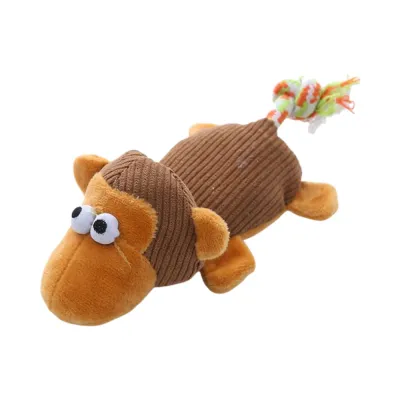
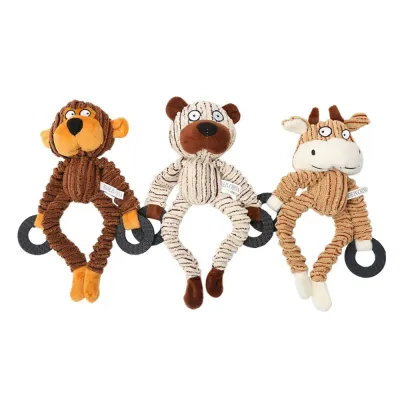
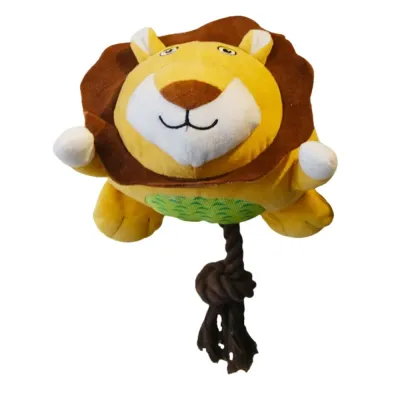
Dog toys are consistently one of the fastest-moving categories in the entire pet retail space, and for small business owners, they are practically the perfect test product. Unlike large pet beds or heavy equipment, interactive dog toys are compact, lightweight, and extremely affordable to source in small batches. They also offer some of the highest profit margins in pet retail, typically between 40% and 60% per unit.
What makes these toys even more powerful is their viral marketing potential. Countless dog toy designs blow up on TikTok and Instagram Reels every season, creating sudden organic demand that small retailers can capitalize on without paid advertising. Enrichment toys, puzzle feeders, durable chew toys, and squeaky interactive designs remain customer favorites year-round.
For small store owners, mobile groomers, and online pet sellers, low MOQ wholesale interactive dog toys allow easy trial runs. You can test multiple styles with a tiny upfront investment, see which ones resonate with your audience, and scale only the top-performing SKUs.
Cat Teaser Toys: Ultra-Light, Trend-Driven, Fast-Moving Inventory
Cat products are an often-underestimated goldmine for small pet retailers. While dog product competition is fierce, cat accessory markets offer lower entry competition with consistently high customer engagement. Cat owners are extremely active on social media, and cat toy content consistently generates more shares, likes, and viral traction than almost any other pet category.
Cat teaser toys, feather wands, interactive catnip toys, and moving plush cat toys are incredibly low-risk inventory choices. They take up almost no shelf space, ship cheaply, and appeal to nearly every cat owner demographic. Retail price points sit perfectly for impulse purchases, making them ideal for counter displays, checkout upsells, social media shops, and subscription box additions.
From a testing perspective, cat teaser toys are ideal because you can refresh your store’s cat section monthly with new trending designs without worrying about leftover stock weighing you down.
Pet Cooling Mats: Predictable Seasonal Winners for Safe Testing
Seasonal pet products are some of the easiest items to test because their demand window is clear, predictable, and short. Summer pet accessories, especially dog and cat cooling mats, experience reliable annual demand spikes starting in late spring and lasting through summer. Pet parents actively search for ways to keep their animals comfortable during heatwaves, making cooling mats a must-have seasonal item.
The best part for small retailers is that seasonal testing is extremely low-risk. You only need to stock limited quantities for a fixed 2–3 month selling window. If a design sells well, you can reorder quickly. If it underperforms, you simply do not restock the following year, with almost no long-term inventory consequences.
Cooling mats also work great for cross-selling. You can pair them with travel accessories, grooming kits, summer hydration products, and outdoor pet gear to increase average order value during peak seasonal months.
Grooming Accessories: High Repeat Daily-Use Revenue Drivers
If trending toys drive excitement, grooming supplies drive consistent, stable business. Grooming accessories, including pet wipes, brushes, combs, nail care tools, and cleaning supplies, are essential daily-use products with extremely high repeat purchase rates. Industry data shows active pet families restock grooming goods every 1–3 months, creating dependable recurring revenue for retailers.
For small pet businesses — including grooming salons, mobile groomers, vet clinic retail spaces, and local boutiques — grooming tools are non-negotiable inventory. They never go completely out of style, do not rely on viral trends, and serve every type of pet owner customer. Testing new grooming tool variations is safe because even slower-selling items will eventually move, with zero seasonal expiration risk.
Data-Backed Strategies to Test Products Without Overstocking
Knowing which products to test is only half the battle. Smart small pet business owners use proven operational strategies to validate new items before committing serious capital. These five methods are industry-standard among successful independent retailers and online pet sellers looking to grow safely.
1. Source From Low MOQ Wholesale Suppliers
The biggest reason new pet stores end up overstocked is traditional wholesale distribution models that force large minimum order quantities. Old-school suppliers often require huge bulk purchases that lock new businesses into hundreds of identical units. Modern low-MOQ platforms completely reverse this problem.
By working with suppliers that offer single-carton minimums and mixed-SKU orders, you can test an entire lineup of new products for a fraction of the cost. You get to trial trending toys, seasonal goods, and updated grooming tools without gambling thousands of dollars on unproven demand.
2. Validate Demand With Pre-Orders and Waitlists
Pre-order testing is one of the most underrated zero-risk strategies available to small retailers. Instead of buying inventory first and hoping it sells, you collect customer interest upfront. You can run social media polls, email newsletter previews, exclusive waitlist sign-ups, and early-bird discount offers to gauge real customer enthusiasm.
If pre-order numbers are strong, you confidently place your wholesale order. If interest is weak, you skip the product entirely with zero inventory loss. This method eliminates nearly all guessing from retail buying decisions.
3. Test New Items Risk-Free With Dropshipping
Dropshipping is perfect for online pet sellers, social commerce creators, new Shopify store owners, and resellers who want to explore new categories without holding physical inventory. Dropshipping allows you to list brand-new, trending pet products in your store before you ever purchase a single unit.
If a product gains traction and starts generating consistent sales, you can transition to small-batch wholesale stocking for higher margins. If it fails to perform, you simply remove the listing with zero loss. It’s the ultimate low-risk product validation method for digital pet businesses.
4. Launch Small, Limited-Quantity Batches
Creating limited-stock product launches serves two critical purposes: it prevents overstocking and builds customer buying urgency. By releasing new items in controlled small batches, you avoid accumulating dead inventory while encouraging faster sales from customers who fear missing out on limited stock.
This strategy works exceptionally well for seasonal goods, newly designed toys, and trendy pet accessories that have short popularity cycles.
5. Use Social Media Feedback to Guide Scaling Decisions
Today’s pet retail market is driven entirely by social media trends. Successful small retailers continuously monitor TikTok, Instagram, Facebook groups, and pet community discussions to identify rising product demand before it becomes mainstream.
High engagement videos, viral product demonstrations, and positive community chatter all signal strong market potential. Low engagement and negative comments tell you exactly which products to avoid stocking. This free real-time market research helps you scale winning products and discard weak ones before you waste inventory budget.
Common Inventory Mistakes Small Pet Businesses Make (And How to Avoid Them)
After reviewing thousands of small pet retail business failures and growth setbacks, we’ve narrowed down the most destructive inventory mistakes new owners repeatedly make. Avoiding these errors is far more important than chasing the latest trending product.
1. Ordering too many SKUs at once — New owners often over-diversify their initial inventory, spreading capital thin across dozens of untested items. Instead, focus on 10–15 proven low-risk SKUs first.
2. Prioritizing viral trends over repeat-consumption goods — One-time viral products create quick bursts of sales but no long-term stability. Always balance trend items with high-repeat grooming and daily-use supplies.
3. Starting with large, bulky, high-cost inventory — Big furniture, heavy crates, and oversized accessories carry massive risk. Begin your testing journey with small, lightweight, low-cost goods.
4. Ignoring seasonal inventory cycles — Retailers often overstock seasonal items right before the season ends, guaranteeing unsold leftover inventory. Always order seasonally strategically and conservatively.
5. Relying on only one supplier — Single-supplier dependency creates stockout risks and prevents you from accessing better pricing, newer trends, and flexible MOQ terms.
Where Small Pet Businesses Find Low-Risk, Low-MOQ Wholesale Products
To execute all the low-risk testing strategies covered above, you need access to a flexible, modern wholesale platform built specifically for small-scale pet industry operators. This is where Petfairs fills a critical gap in the global pet supply market.
Traditional pet wholesale platforms are built for large retailers with big budgets and warehouse capacity. Petfairs is built specifically for small B and large C pet businesses: independent store owners, mobile groomers, dog trainers, veterinary retail clinics, online resellers, subscription box operators, and pet boutique owners across North America, Europe, and Australia.
Key advantages for small testers include:
Ultra-low 1-carton MOQ for safe product trials
Mixed-cart ordering to test multiple categories in one shipment
10,000+ trending pet SKUs covering dogs, cats, and exotic pets
Factory-direct pricing that eliminates middleman markup
Reliable global shipping covering most countries worldwide
Constantly updated trending inventory aligned with social media demand
For small pet businesses tired of choosing between “overstocking risky bulk orders” or “missing out on new trends,” Petfairs creates a safe middle ground for continuous product innovation.
FAQ
How do pet stores avoid overstocking?
Pet stores avoid overstocking by using low-MOQ wholesale suppliers, validating demand through pre-orders and social media feedback, utilizing dropshipping for trend testing, prioritizing high-repeat consumable goods, and launching new products in limited small batches.
What are the best low MOQ pet products for testing?
The safest low-MOQ test products are interactive dog toys, cat teaser and catnip toys, seasonal cooling mats, and lightweight grooming accessories. All offer low storage risk, steady demand, and strong profit potential.
Are interactive dog toys profitable for small retailers?
Yes. Interactive dog toys deliver 40–60% profit margins, require minimal storage, ship affordably, and regularly gain viral social media exposure, making them one of the most reliable high-profit categories for small pet businesses.
How much inventory should a new pet store buy initially?
New pet store owners should start with a small curated inventory budget of $2,000–$5,000 focused on proven low-risk SKUs, avoiding bulky, expensive, or untested product lines entirely.
Is dropshipping good for pet stores?
Dropshipping is an excellent low-risk testing method for online pet stores, social sellers, and new startups. It allows zero-inventory product trials, global order fulfillment, and fast trend validation without financial exposure.
What pet products sell the fastest for small retailers?
Fast-moving pet products include interactive dog toys, cat teaser toys, grooming wipes, small grooming tools, seasonal cooling accessories, and high-repeat daily pet consumables.
Conclusion
Successful modern pet retail is no longer about stocking massive amounts of inventory. It’s about making smarter, safer, data-backed product choices that protect your cash flow while letting your business continuously evolve with customer trends.
Small pet stores, groomers, trainers, and online sellers can absolutely compete with big-box retailers — not by copying their bulk inventory strategies, but by testing faster, adapting quicker, and offering unique trending products large chains overlook.
If you want to start testing new pet products safely, without overstock risk, explore the full range of low-MOQ trending pet supplies available at Petfairs.
 Popular Blogs