
TikTok Viral Pet Products 2026: How Retailers Can Test Trends
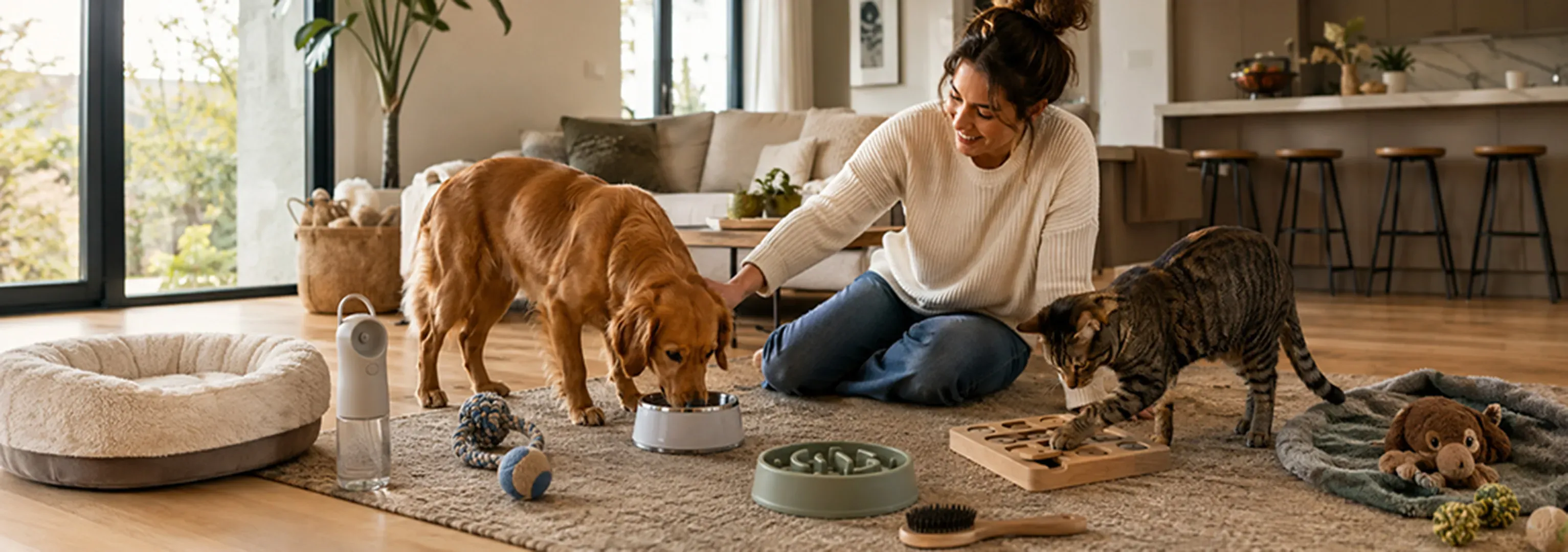
A pet product can attract millions of views before most independent retailers have even heard of it.
That does not mean they should immediately order hundreds of units.
For pet retailers in 2026, TikTok is best treated as a trend-detection tool rather than a purchasing forecast. A fast-rising video can reveal a new consumer problem, product format or use case. What it cannot tell a retailer on its own is whether local customers will pay the target retail price, whether the product will maintain demand after the trend slows, or whether the margin will justify the inventory risk.
The safer strategy is simple:
Spot the trend. Validate the need. Test a small assortment. Measure sell-through. Reorder the winners.
That approach matters especially for independent pet stores, online sellers, social-commerce sellers, groomers, trainers, subscription-box businesses and other smaller operators. Unlike national chains, these businesses usually cannot afford to leave significant working capital tied up in a viral product that stops moving after three weeks.
TikTok itself is signaling the same shift. Its 2026 trend forecast says impulse shopping is giving way to greater purchase intentionality. The platform describes an emerging “evidence economy,” in which shoppers use comments, reviews, demonstrations and creator opinions to validate a purchase before committing. TikTok goes even further: viral popularity alone is no longer enough to reliably win the shopping cart. (TikTok For Business)
For pet retailers, that creates an interesting opportunity. TikTok can show what is gaining attention faster than many traditional merchandising reports. Retail sales data can then determine whether that attention deserves inventory.
The Pet Market Is Growing, but Buyers Are Becoming More Selective
The first reason retailers should test trends instead of blindly following them is that the pet market is simultaneously large, resilient and increasingly value-conscious.
The American Pet Products Association reported that U.S. pet industry expenditures reached $158 billion in 2025, up 3.7%, and projects spending of approximately $165 billion in 2026. APPA also estimates that 95 million U.S. households owned at least one pet in 2025. (American Pet Products Association)
Yet the spending picture is more nuanced than simple market growth suggests. APPA reported that 22% of pet owners spent less on their pets in 2025, while roughly half kept spending unchanged. Its 2026 dog research also describes owners as increasingly budget-conscious and value-driven, while purchases connected to engagement, prevention and functional daily care remain relatively protected. (American Pet Products Association)
Pet Market Snapshot
| Signal | What it measures | What it does not prove |
| Video views | Attention | Purchase intent |
| Likes/comments | Engagement | Willingness to pay |
| Add-to-cart | Consideration | Completed demand |
| Sell-through | Actual inventory movement | Long-term repeat demand Sources: APPA 2026 State of the Industry and 2026 Dog Report preview. (American Pet Products Association) The numbers point toward a useful merchandising principle: Pet owners have not stopped caring about their animals. They are becoming more selective about which products deserve their money. That distinction is critical when evaluating social-media trends. |
Why TikTok Matters to Pet Product Discovery
TikTok has evolved beyond entertainment into a product-discovery and product-research environment.
TikTok's current commerce research reports that three in four shoppers on the platform say TikTok helps them discover new brands. A 2026 TikTok and Deloitte study further found that 83% of people who use TikTok for shopping inspiration say that inspiration ultimately led to a purchase, while 41% of people using the platform to decide where to buy eventually purchased directly through TikTok. (TikTok For Business)
These numbers should be interpreted carefully because they come from TikTok's own commercial research rather than an independent pet-retail study. They demonstrate the strength of TikTok as a discovery and commerce environment, not that every product receiving views will sell successfully.
TikTok Shop's continued international expansion reinforces that point. In May 2026, TikTok said more than 100,000 European businesses had joined TikTok Shop across several established European markets, with daily GMV showing triple-digit growth between August 2025 and February 2026. (TikTok Newsroom)
The scale creates both opportunity and risk.
More products can become visible quickly.
More sellers can respond quickly.
And trends can become crowded just as quickly.
That is why speed matters—but small-batch speed is usually safer than large-volume speed.
Attention Is Not the Same as Demand
One of the most important distinctions for a retail buyer is the difference between four signals:
| Signal | What it measures | What it does not prove | Trend risk | Suggested testing approach |
| Video views | Attention | Purchase intent | Medium | Small assortment |
| Likes/comments | Engagement | Willingness to pay | Low-Medium | Test multiple formats |
| Add-to-cart | Consideration | Completed demand | Low | Core + trend variants |
| Sell-through | Actual inventory movement | Long-term repeat demand | Medium | 2–4 styles |
| Moving cat toys | Very high | Medium | High | Low initial quantity |
| Funny squeaky toys | Very high | Medium | High | Rotate designs |
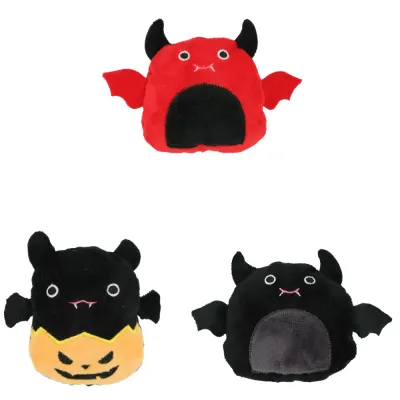
| Seasonal plush toys | High | Low | Very high | Short test window |
| Grooming tools | High | High | Low-Medium | Demo-led selling |
| Pet hair removers | Very high | High | Low-Medium | Problem/solution content |
| Portable water bottles | High | Very high | Low | Evergreen core product |
| Multifunction walking gear | High | High | Medium | Test feature combinations |
| Decorative pet beds | High | Medium-High | Medium | Test carefully due to size |
| Pet stairs/ramps | Medium | High | Low | Need-based merchandising |
| Novelty accessories | Very high | Low-Medium | Very high | Minimal starting stock A video with two million views may be commercially useful because it exposes a problem or new product concept to a large audience. But the number of views says nothing about the retailer's landed cost. It says nothing about local demand. It says nothing about return rates. And it says nothing about whether customers will still want the product two months later. TikTok's 2026 trend forecast is unusually relevant here. The platform says shoppers increasingly expect products to justify why they should buy, and that consumers are relying more heavily on reviews, comparisons, demonstrations and community feedback. (TikTok For Business) In other words:A viral video measures attention. Sell-through measures retail demand |
Retailers need both signals, but they should never confuse the two.
What Makes a Pet Product TikTok-Friendly?
Some products naturally perform better in short-form video because their value can be understood almost instantly.
A standard dog bowl sitting on a kitchen floor may be commercially useful, but it does not automatically create compelling content.
A slow feeder showing a dog taking noticeably longer to finish dinner creates a visible story.
A moving cat toy immediately triggering stalking behavior creates another.
A treat puzzle that forces a dog to investigate, paw, roll and retrieve food creates both product demonstration and pet reaction.
Those characteristics make several pet categories particularly compatible with TikTok.
Products With a Visible Pet Reaction
Pet products have one advantage most consumer categories do not have:
the end user can react on camera.
A squeaky toy gets squeezed.
The dog tilts its head.
A motion toy starts moving.
The cat pounces.
A puzzle is filled with treats.
The animal begins working out how to reach them.
This compresses the entire product explanation into a few seconds.
For social-commerce sellers in particular, that matters because the pet is effectively demonstrating the product.
Strong examples include:
- interactive cat toys
- squeaky toys
- wobble toys
- treat dispensers
- hide-and-seek plush toys
- teaser toys
- rolling feeding toys
These products can generate entertaining videos even before a creator begins explaining specifications.
Problem-to-Solution Products
The second category is arguably more commercially important.
These products are easy to demonstrate because the video begins with an obvious problem.
Dog eats too quickly → slow feeder
Indoor cat needs stimulation → interactive toy
Dog gets bored → treat puzzle
Pet hair covers furniture → hair-removal tool
Dog needs water during a walk → portable drinking bottle
The product does not have to be revolutionary. It only needs a use case that viewers understand immediately.
This fits TikTok's 2026 shift toward stronger “why-to-buy” justification. Products showing practical value have an advantage over novelty products that generate attention without solving a continuing need. (TikTok For Business)
Interactive and Enrichment Products
Enrichment deserves special attention because its growth is not purely a TikTok invention.
Pet Age's 2026 toy-industry coverage identifies interactive, durable and mentally stimulating products, including puzzle feeders, among areas retailers are emphasizing. The publication also notes that independent retailers increasingly use social media to identify emerging themes and products. (Pet Age)
GlobalPETS similarly reported in April 2026 that pet parents are showing increased interest in mental stimulation and interactive play rather than looking at toys as entertainment alone. (Global Pet Industry)
There is also a legitimate scientific basis behind the broader concept of enrichment.
A Veterinary Record study involving 1,750 usable survey responses found that popular forms of canine enrichment feeding included activity toys, chews and Kong-type products. Owners commonly used them to keep dogs occupied and provide perceived mental stimulation, although the researchers correctly caution that the survey design cannot establish causation. (PubMed)
Research on cats likewise identifies food puzzles as one method of environmental enrichment that can encourage species-appropriate feeding behavior. (PubMed)
The evidence should not be exaggerated. One controlled study of companion dogs found that short-term provision of retail toys did not significantly improve several measured welfare outcomes. That is a useful reminder that not every product marketed as “enrichment” automatically creates a measurable welfare benefit. (PubMed)
For a trustworthy retailer, the better claim is therefore:
Enrichment products can provide opportunities for interaction, foraging and mental activity.
Not:
This toy will solve anxiety or behavioral disorders.
That distinction improves both consumer trust and E-E-A-T.
Viral Product Categories Worth Testing in 2026
Rather than declaring a definitive “top 20,” a retailer can classify products according to viral potential and retail durability.
Trend Potential vs. Retail Durability
| Product type | TikTok demo potential | Repeat/evergreen potential | Trend risk | Suggested testing approach |
| Interactive pet toys | High | High | Medium | Small assortment |
| Puzzle feeders | High | High | Low-Medium | Test multiple formats |
| Slow feeders | High | High | Low | Core + trend variants |
| Treat dispensers | High | High | Medium | 2–4 styles |
| Moving cat toys | Very high | Medium | High | Low initial quantity |
| Funny squeaky toys | Very high | Medium | High | Rotate designs |
| Seasonal plush toys | High | Low | Very high | Short test window |
| Grooming tools | High | High | Low-Medium | Demo-led selling |
| Pet hair removers | Very high | High | Low-Medium | Problem/solution content |
| Portable water bottles | High | Very high | Low | Evergreen core product |
| Multifunction walking gear | High | High | Medium | Test feature combinations |
| Decorative pet beds | High | Medium-High | Medium | Test carefully due to size |
| Pet stairs/ramps | Medium | High | Low | Need-based merchandising |
| Novelty accessories | Very high | Low-Medium | Very high | Minimal starting stock This matrix is intentionally not a sales ranking. It asks a more useful question: If attention disappears tomorrow, does the product still solve something? That is often the difference between a fad and a sustainable SKU. |
My View: Portable Pet Water Bottles Are a Good Example of “Trend-Friendly but Evergreen”
One area where I would not rely heavily on TikTok popularity alone is portable pet hydration.
My view is that pet owners are increasingly thinking beyond simply feeding a dog or buying toys. They are paying more attention to how pets participate in daily life: walking, traveling, exercising, visiting parks, spending time outdoors and joining family activities.
That creates demand for products designed around care plus convenience.
A portable dog water bottle is a good example.
It works visually on TikTok because the use case is immediately understandable: an owner is outside, the dog needs water, and one compact product stores and dispenses it.
But I would not categorize the product primarily as a “viral gadget.”
Its stronger commercial characteristic is that the underlying need is recurring.
Dogs still go for walks when a social-media trend disappears.
People still travel with pets.
Groomers, trainers, daycare operators and pet owners still need practical walking and outdoor accessories.
That makes products combining portable + practical + multifunctional features particularly interesting from a retail perspective.
For a small retailer, the lesson is broader:
The best TikTok opportunity may not be the product with the highest viral spike. It may be an evergreen need presented in a more shareable format.
Viral vs. Evergreen: Retailers Should Know the Difference
Consider these two hypothetical products.
Product A: Novelty Dancing Dog Toy
- rapidly trending sound
- funny reaction videos
- high shareability
- narrow use case
- potential trend life: short
- intense copycat competition
Product B: Portable Dog Water Bottle
- useful demonstration content
- less explosive virality
- clear outdoor use case
- year-round functionality
- multiple customer segments
- easier long-term merchandising
Which should a retailer buy?
Potentially both—but not in the same quantity.
| Factor | Novelty viral toy | Portable water product |
| Short-form entertainment | 5 | 4 |
| Immediate pet reaction | 5 | 3 |
| Problem solved | 2 | 5 |
| Year-round usefulness | 2 | 5 |
| Trend dependency | 5 | 1 |
| Reorder potential | 2–3 | 4–5 |
| First-order risk | Higher | Lower This is the type of comparison that independent retailers should make before placing a large order. |
The 5-Signal Test Before You Buy
A retailer does not need expensive market research to perform basic trend validation.
A simple five-signal process can filter many bad bets.
Signal 1: Is the Trend Larger Than One Video?
One viral creator is a discovery signal.
Multiple unrelated creators showing the same product format is stronger.
Search for:
- different creators
- videos posted on different dates
- organic comments
- related search terms
- alternative brands offering the same concept
TikTok itself recommends examining adjacent searches and broader discovery journeys rather than looking at one isolated trend. (TikTok For Business)
A retailer should therefore ask:
Is the product trending—or did one video trend?
Those are very different situations.
Signal 2: Can You Explain the Product in One Sentence?
A strong test product normally solves a recognizable need.
For example:
“This bowl helps slow down fast eaters.”
“This toy makes cats chase and hunt indoors.”
“This bottle lets owners carry and dispense water during walks.”
“This puzzle makes pets work to retrieve treats.”
If a buyer cannot explain the product without a long technical pitch, converting social attention into retail demand may be harder.
Signal 3: Does Demand Exist Outside TikTok?
Before ordering, cross-check the product concept elsewhere.
Look at:
- Google search results
- marketplace reviews
- specialist pet retailers
- Reddit discussions
- customer questions
- local store requests
- competitor assortments
The goal is not to find identical numbers everywhere.
The goal is to determine whether the underlying problem exists outside a single social platform.
For example, scientific and veterinary literature discussing food puzzles and feeding enrichment provides evidence that the enrichment use case predates today's viral videos. (PubMed)
That makes the category structurally different from a toy that exists mainly because of a short-lived meme.
Signal 4: Do the Retail Economics Work?
A viral product with poor economics is still a poor retail product.
Before testing, calculate:
- unit cost
- freight or landed cost
- intended retail price
- gross margin
- marketplace fees
- creator commission where applicable
- expected return rate
- storage requirement
- replenishment lead time
Large or awkward items deserve additional scrutiny.
A bulky pet bed can sell for significantly more money than a small enrichment toy, but it also consumes more warehouse and retail space.
For small operators, cash tied up per SKU matters as much as gross margin percentage.
Signal 5: Can You Reorder Quickly?
Trend inventory creates a paradox.
Retailers are afraid of ordering too little because the item might sell out.
They are also afraid of buying too much because trends fade.
The solution is not necessarily a larger first purchase.
A more flexible supply chain can be more valuable.
If replenishment is reasonably fast and the minimum order is manageable, the retailer can make a smaller opening bet and increase stock only after real demand appears.
That is particularly relevant to smaller businesses, which often benefit more from inventory flexibility than maximum volume discounts.
How Much Should a Pet Retailer Test?
There is no universal first-order quantity.
The correct quantity depends on:
- store traffic
- online audience size
- historical category sales
- unit price
- margin
- product size
- seasonality
- supplier lead time
Instead of prescribing “buy 12 units” or “buy 50 units,” retailers can use a portfolio approach.
Example: $1,000 Trend-Testing Budget
| Product | Initial allocation | Reason |
| Puzzle feeder | $250 | Functional + demonstrable |
| Moving cat toy | $150 | High viral potential, higher trend risk |
| Treat dispenser | $200 | Strong interaction |
| Portable water product | $250 | Evergreen utility |
| Novelty squeaky toy | $150 | Cheap experimental trend |
| Total | $1,000 | Diversified test Compare that with placing the entire $1,000 into one viral moving toy. If the single product underperforms, nearly the whole experimental budget becomes slow-moving inventory. With five tests, the retailer gains information. Maybe the cat toy generates the most views. Maybe the portable bottle produces fewer views but twice the conversion. Maybe the puzzle feeder receives repeat purchases. The winner cannot always be predicted before launch. That is precisely why testing exists. |
What Should Retailers Measure?
The answer is not followers.
It is not likes.
And it is definitely not views alone.
Retailers should follow the customer journey from content to inventory performance.
Viral Product Test Scorecard
| Metric | What it tells you | Decision value |
| Video completion | Content quality | Low-Medium |
| Comments | Curiosity/questions | Medium |
| Saves/shares | Future interest | Medium |
| Product-page visits | Shopping interest | Medium |
| Add-to-cart rate | Purchase consideration | High |
| Conversion rate | Real purchasing behavior | Very high |
| Sell-through | Inventory demand | Very high |
| Returns/refunds | Product satisfaction | Very high |
| Reviews | User experience | High |
| Reorder requests | Durable demand | Very high The further down the table a signal appears, the closer it gets to actual retail economics. |
Sell-Through Matters More Than Virality
Sell-through measures the proportion of available or received inventory that actually sells during a defined period.
Shopify describes sell-through rate as a key measure of inventory health because it helps retailers identify demand, limit overstock, improve cash flow and make better replenishment decisions. Shopify's current guidance notes that targets vary considerably by category and lifecycle. Roughly 70–80% can be a healthy range for many in-period assortments, while evergreen products can reasonably move more slowly depending on the measurement period. (Shopify)
Square gives a broad retail rule of thumb: around 80% or higher is excellent, while below 40% can be concerning. It also explicitly warns that benchmarks vary by industry and product type. (Square)
That caveat matters enormously for pet retailers.
A Halloween dog plush and a portable water bottle should not be judged using the same timeframe.
Example Four-Week Test
Assume three products each begin with 30 units.
| Product | Units received | Units sold | Sell-through | Interpretation |
| Moving cat toy | 30 | 24 | 80% | Strong early candidate |
| Puzzle feeder | 30 | 18 | 60% | Keep testing |
| Novelty plush | 30 | 7 | 23% | Investigate/slow reorder The formula is straightforward: Sell-through = units sold ÷ units available × 100 The numbers are hypothetical, but the decision process is practical. Do not reorder because the cat toy received 300,000 views. Reorder because: |
- content generated interest,
- customers converted,
- sell-through remained healthy,
- complaints were acceptable,
- margin remained attractive.
Review New Products More Frequently Than Evergreen Products
Timing is another common mistake.
A retailer might wait three months to evaluate every SKU.
For a fast-moving TikTok trend, three months could represent the entire commercial window.
Shopify recommends reviewing sell-through more frequently for seasonal products, new launches and fast-moving inventory, with weekly reviews potentially appropriate, while more stable categories can be reviewed less often. (Shopify)
A practical approach might look like this:
| Product type | Review frequency |
| Viral/fast-moving experiment | Weekly |
| Seasonal toy | Weekly |
| New enrichment product | Every 1–2 weeks |
| Core walking accessory | Monthly |
| Established evergreen SKU | Monthly |
| Long-cycle specialty product | Monthly/quarterly The faster the trend risk, the faster the feedback loop should be. |
Scale, Continue or Stop
After the initial testing period, every test SKU should enter one of three buckets.
Scale
Reorder when several signals agree:
- strong sell-through
- positive margin
- low return rate
- customer feedback is positive
- demand continues beyond the original viral post
- inventory can be replenished reliably
Continue Testing
Maintain modest inventory when:
- engagement is strong
- conversion is developing
- customer reviews are positive
- sell-through is reasonable but not exceptional
- the product may need better positioning
Sometimes the product is not the problem.
A retailer may need a better demo video, clearer signage or a different price.
Pet Age specifically notes that interactive displays and demonstrations can help customers understand toy features that are difficult to communicate from packaging alone. (Pet Age)
Stop or Reduce
Reduce purchasing when:
- engagement does not turn into sales
- sell-through is persistently weak
- returns are high
- quality complaints appear
- customer interest was tied to one creator
- competitors have commoditized the product
- the seasonal window is closing
Stopping a test is not a failure.
The purpose of a small test is to make inexpensive mistakes.
Social Commerce Sellers Should Test Content and Product at the Same Time
For marketplace resellers and social-commerce sellers, product testing cannot be separated from content testing.
One product might fail with a simple studio shot but succeed with:
- a pet reaction
- before-and-after demonstration
- owner POV
- comparison video
- “three things I stopped carrying on walks” format
- problem/solution format
The goal should therefore be to test several creative angles without multiplying inventory.
TikTok's 2026 trend guidance explicitly recommends comparison, demo and how-to content because these formats help reduce uncertainty for shoppers. (TikTok For Business)
A pet brand case study published by TikTok illustrates the commercial potential. Finn used creator affiliates, reviews and shoppable content, generating more than 16 million impressions and over 5,500 TikTok Shop purchases in the reported campaign. (TikTok For Business)
That result is useful as a case study—not as a performance benchmark.
Finn's budget, category, creator network and execution are specific to its business.
Small sellers should copy the testing principle, not assume they will copy the result.
Different Pet Businesses Should Test Different Products
“Pet retailer” is not one customer type.
A groomer has different product-market fit from a boutique.
A trainer has different needs from a subscription-box seller.
A boarding operation has different requirements from an online marketplace reseller.
Product Fit by Business Model
| Buyer type | Strong test categories | Why |
| Pet boutique | novelty toys, enrichment, lifestyle accessories | Differentiation + gifting |
| Physical pet store | feeding, toys, walking, grooming | Broad everyday demand |
| Online seller | demonstrable gadgets, toys, problem-solvers | Content-friendly |
| Social seller | reaction products, compact gadgets | Strong video potential |
| Groomer/salon | brushes, grooming tools, accessories | Service-adjacent retail |
| Dog trainer | enrichment, treat pouches, training toys | Functional credibility |
| Boarding/daycare | enrichment, durable toys, feeding tools | Operational relevance |
| Subscription box | small toys, seasonal products, themed accessories | Rotation/newness |
| Shelter/rescue | enrichment, feeding and practical care products | Functional use |
| New store owner | lower-risk evergreen + limited trend tests | Protects initial capital This matters because the correct question is not: “Is this product viral?” It is: “Is this product relevant to my audience?” |
Pet Retailers Should Build Collections, Not Chase Individual Hits
Another way to reduce risk is to follow the product behavior rather than the exact SKU.
Suppose a burger-shaped squeaky toy becomes viral.
The weak strategy is:
Buy 500 burger toys
The stronger strategy is:
Consumers seem interested in humorous, food-inspired dog toys
That insight can produce a collection:
- burger
- fries
- pizza
- donut
- drink cup
- hot dog
If the exact burger meme disappears, the underlying merchandising story can survive.
The same principle applies to enrichment.
Instead of betting everything on one lick mat:
Enrichment Collection
- slow feeder
- treat puzzle
- licking product
- snuffle product
- rolling treat dispenser
TikTok reveals the theme.
The retailer builds the assortment.
Do Not Forget Cats—and Do Not Forget Other Pets
A common social-commerce mistake is to treat the pet market as another term for “dogs.”
APPA reported that 53 million U.S. households owned cats in 2025, with cat ownership increasing year over year and products representing an important part of owner spending. (American Pet Products Association)
Cats are particularly compatible with video-led product discovery because stalking, chasing, pawing, climbing and feeding behavior can be visually demonstrated.
But global pet retail extends well beyond cats and dogs.
Birds, reptiles, fish and small animals can also offer opportunities in:
- habitat enrichment
- feeding accessories
- climbing structures
- hiding products
- travel equipment
- toys and exercise products
- cleaning and maintenance accessories
The scientific evidence base is not equally strong across all species. A recent systematic review of environmental-enrichment research specifically notes that some animal groups—including fish, amphibians and reptiles—remain underrepresented in published research compared with commonly studied mammals and birds. (PubMed Central (PMC))
For retailers, that is another E-E-A-T reminder:
avoid turning a general wellness trend into unsupported health claims for every species.
A Better 2026 Buying Strategy: 70 / 20 / 10
One useful way for smaller retailers to manage uncertainty is to separate inventory into three roles.
This is a strategic model rather than an industry benchmark.
Example Inventory Allocation
| Allocation | Purpose | Examples |
| 70% | Proven/core demand | bowls, walking products, basic toys, grooming tools |
| 20% | Growing categories | enrichment, interactive feeding, new travel solutions |
| 10% | High-risk trend tests | viral novelty toys, unusual gadgets, seasonal social hits |
Visual Model
The percentages can change.
A TikTok-first seller may allocate more to experiments.
A grooming salon may allocate less.
But the principle is powerful:
Do not force the entire inventory strategy to behave like TikTok.
Stable products create cash flow.
Growth products create opportunity.
Trend products create optional upside.
What Smaller Retailers Need From a Supplier
For independent buyers, sourcing strategy directly affects how safely they can test trends.
The ideal supplier relationship for experimental inventory has four characteristics:
Low commitment
The retailer should not need to purchase hundreds of units merely to discover whether customers like the product.
Product variety
Testing three related product concepts is often safer than buying a large volume of one design.
Clear product information
Dimensions, materials, features, packaging and product imagery need to be reliable enough for ecommerce and social selling.
Replenishment capability
Winning products need to be reorderable before the opportunity disappears.
This is where an online sourcing platform such as Petfairs can play a practical role for smaller businesses: not by promising which TikTok trend will become the next bestseller, but by making it easier to compare pet-product categories, test assortments and source products for multiple retail models and pet types.
That positioning is more credible than saying:
“Buy viral products here.”
The better promise is:
“Test opportunities without having to bet your entire inventory budget on one trend.”
Final Takeaway: Let TikTok Find the Opportunity, Let Your Customers Validate It
The most important lesson for pet retailers in 2026 is not which squeaky toy, feeder or walking gadget happens to be trending this week.
It is learning how to distinguish attention from durable demand.
TikTok is valuable because discovery can happen quickly. Three in four TikTok shoppers surveyed by the platform say it helps them discover new brands, and TikTok Shop continues to expand its role in product-led social commerce. (TikTok Newsroom)
At the same time, pet owners are becoming more intentional. APPA's data shows a large and resilient industry, but also a consumer who increasingly cares about value, convenience, functionality and products that fit everyday life. (American Pet Products Association)
That combination changes the retailer's job.
The goal is no longer simply to discover a viral product first.
It is to discover it early and test it intelligently.
Watch the trend.
Identify the underlying need.
Compare several products.
Start with manageable inventory.
Create real demonstrations.
Measure conversion and sell-through.
Listen to customer feedback.
Reorder what works.
Exit what does not.
And remember that some of the strongest opportunities will not look like short-lived trends at all.
An interactive feeding product may ride the enrichment conversation while solving a long-term behavioral use case.
A portable pet water bottle may perform well in a 15-second outdoor video while meeting a need that exists every day of the year.
A funny plush toy may generate the most views, yet an ordinary functional accessory may generate the better repeat business.
That is the difference between chasing viral products and building a resilient pet assortment.
For smaller pet businesses, that difference can determine whether TikTok becomes an expensive source of excess inventory—or an effective radar for the next retail opportunity.
FAQ
What is the safest way for pet retailers to test TikTok trends?
Pet retailers should treat TikTok popularity as an early demand signal rather than proof of sales. Validate the underlying customer problem, compare demand across channels, begin with a small assortment, test different content angles and track conversion, sell-through, returns and customer feedback. Products with strong performance can then be reordered, while weak tests can be discontinued before they tie up significant inventory.
What types of pet products are easiest to test through TikTok?
Interactive toys, puzzle feeders, slow feeders, moving cat toys, treat dispensers, grooming tools, portable walking accessories and other products with visible reactions or clear problem-to-solution demonstrations are especially compatible with short-form video. However, viral visibility should still be evaluated against retail margin, customer fit and inventory performance.
Are viral pet products always good products to stock?
No. Viral content measures attention, not sustainable retail demand. A product may generate millions of views but still produce weak conversion, low sell-through or short-lived demand. Retailers should scale inventory only after their own sales data validates the trend.
Editorial Source Standard
This article deliberately separates three forms of evidence.
Market evidence comes primarily from APPA, which is useful for understanding U.S. pet ownership and spending. U.S. figures should not be presented as global pet-market statistics. (American Pet Products Association)
Platform evidence comes from TikTok and TikTok-commissioned studies. These sources are appropriate for understanding behavior and commerce on TikTok, but should not be treated as neutral third-party proof that every TikTok product converts. (TikTok For Business)
Animal-welfare evidence comes from published veterinary and scientific research. Those studies support the broader relevance of environmental and feeding enrichment while also showing that outcomes vary by animal, environment and enrichment method. Therefore, retailers should avoid unsupported medical or behavioral claims when merchandising toys and enrichment products. (PubMed)
 Popular Blogs