

2026 Pet Product Sourcing Guide: How to Avoid MOQ Traps, Pricing Pitfalls, and Supply Delays
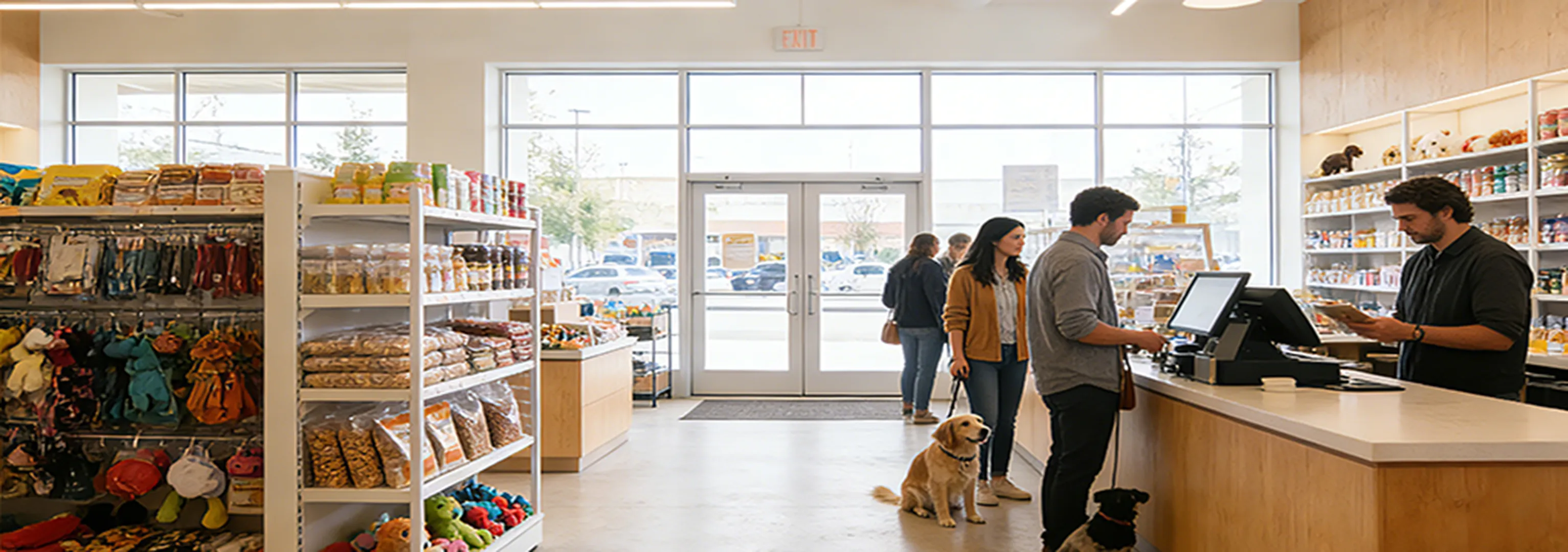
In 2026, running a pet business—whether a local pet shop, an Amazon brand, or a TikTok Shop storefront—is no longer about simply “having inventory.”
Today’s customers expect better quality, faster updates, and smarter design, and they expect it consistently.
For many small and mid-sized sellers, however, the supply chain has become the most painful bottleneck:
- High wholesale prices after multiple layers of middlemen
- Unrealistic MOQs that tie up cash for months
- Unreliable lead times that kill momentum just when a product starts selling
The reality is simple: most independent sellers are still sourcing like it’s 2018, while the market has already moved on.
This guide breaks down how successful sellers source inventory in 2026—without taking on the risk profile of large brands.
MOQ Is No Longer the Gatekeeper It Used to Be
For years, minimum order quantity (MOQ) has been the biggest psychological barrier in wholesale sourcing.
Factories traditionally demanded thousands of units just to justify running a production line.
That model is rapidly fading.
The Rise of Flexible Supply Chains
In 2026, the global pet industry is shifting toward flexible fulfillment. Instead of forcing sellers to gamble on volume, modern supply platforms allow sourcing at case-level quantities, even for factory-direct products.
For example, many sellers today start with one master carton, especially when using air freight or mixed SKUs. This approach dramatically reduces risk.
Why low MOQ matters:
- Market validation Trends in pet products move fast—smart litter boxes, eco-friendly scratchers, enrichment toys. Low MOQ lets you test real demand before scaling.
- Cash flow protection Capital sitting in a warehouse is dead capital. Smaller initial buys keep your cash liquid.
- Faster iteration You can adapt designs, packaging, or pricing based on early feedback instead of being locked into thousands of units.
Platforms like Petfairs are built around this model, making factory-direct sourcing accessible even to small operators—without forcing long-term commitments upfront.
Transparent Pricing Is About More Than Cost
One of the least discussed issues in pet product sourcing is pricing opacity.
Many suppliers still quote differently based on perceived buyer size, region, or experience. This creates uncertainty not just in procurement—but in retail pricing strategy.
Why Smart Sellers Demand Pricing Clarity
Knowing your unit cost is only half the equation. The real question is:
Modern sourcing platforms increasingly provide reference retail pricing (RRP) based on actual market data. This helps sellers:
- Set competitive prices without racing to the bottom
- Maintain healthy margins
- Avoid overpricing that kills conversion
On Petfairs, product listings typically show both factory-level pricing and market-informed guidance, allowing sellers to price with confidence rather than guesswork.
This is especially valuable for newer sellers who may not yet have historical sales data.
Data-Driven Product Selection Beats Intuition Every Time
In 2026, choosing products based on “what looks cute” is no longer a viable strategy.
The pet market is crowded. Saturation happens fast.
From Gut Feeling to Market Intelligence
Successful sellers now rely on real sales signals, not supplier claims.
Modern sourcing ecosystems increasingly integrate tools that track:
- Best-selling pet product categories across Amazon, Walmart, and other major platforms
- Actual transaction price ranges (not just list prices)
- Emerging trends before they peak
Instead of asking a supplier “What’s hot right now?”, sellers are asking:
- What’s gaining traction this quarter?
- Where is competition thinning?
- Which price bands convert best?
Petfairs’ internal PetMarketData system is an example of how sourcing and market intelligence are merging. Sellers can evaluate products before committing inventory, not after.
Why Factory-Integrated Partners Matter More Than Ever
Not all suppliers are created equal.
Many trading companies offer good communication, but they often lack direct control over production, quality consistency, and timelines.
The Advantage of Factory-Integrated Sourcing
Working with a supplier that operates its own manufacturing facilities provides several tangible benefits:
- Consistent quality standards Factories producing for large retailers must meet strict compliance requirements. Those same standards benefit smaller buyers.
- Lower sourcing cost Fewer intermediaries mean fewer markups.
- Predictable lead times When production is in-house, fulfillment schedules are far more reliable.
Petfairs operates on a factory-integrated model, supplying global retailers while also supporting independent sellers. For many fast-moving SKUs, shipping can occur within 3–7 days, which is critical for maintaining inventory velocity.
Petfairs’ Rigorous QA/QC: The Foundation of Trust in EU & US Markets
In the EU and US pet markets, quality compliance is not a competitive edge—it’s a non-negotiable entry barrier. Many platforms claim to prioritize safety, yet their oversight stops at surface-level inspections, leaving sellers exposed to regulatory penalties, product recalls, and eroded consumer trust.
Petfairs builds its QA/QC system on the factory-integrated model, embedding strict quality controls into every link of production to align with Western regulatory demands and pet parent expectations.
End-to-End QA/QC Protocols Tailored for EU & US Compliance
Petfairs’ quality framework is designed to eliminate uncertainty, with layered checks that cover regional standards and product safety at every stage:
- Source-to-Shipment Compliance Raw materials undergo IQC (Incoming Quality Control) against EU REACH regulations and US CPSIA standards, screening for SVHC substances, heavy metal limits, and toxic additives. For pet toys, this includes pre-production testing to EN 71 (EU) and ASTM F963 (US) standards, ensuring no sharp edges, small parts hazards, or non-compliant coatings.
- In-Process & Final Oversight IPQC (In-Process Quality Control) teams conduct real-time patrol checks on production lines, verifying process parameters and conducting SPC (Statistical Process Control) to prevent batch defects. FQC (Final Quality Control) performs 100% inspections for food-contact items (e.g., pet bowls) to meet FDA requirements, while all finished goods undergo OQC (Outgoing Quality Control) to confirm packaging, labeling, and certification (CE, UKCA, FCC) alignment.
- Transparent Traceability & Accountability Every batch is assigned a unique traceability code, linking raw material test reports, production records, and final certification documents. Sellers gain access to full quality dossiers, simplifying compliance checks for retailers like Amazon and Chewy, and enabling rapid response to any market inquiries.
This integrated approach ensures Petfairs products not only pass customs smoothly but also stand up to consumer scrutiny. For sellers targeting EU and US markets, Petfairs’ QA/QC system transforms quality from a risk point into a trust builder—reducing recall risks and strengthening brand credibility in a market where pet safety is paramount.
The New Definition of “Smart Sourcing” in 2026
The pet industry does not suffer from a lack of products.
It suffers from a lack of certainty.
In 2026, smart sourcing means securing:
- Predictable quality
- Clear margins
- Controlled risk exposure
Low MOQs, transparent pricing, and data-backed selection are no longer “nice to have”—they are operational necessities.
Whether you are launching your first pet brand, expanding an Amazon catalog, or stocking a local pet store, sourcing platforms like Petfairs exist to simplify what has traditionally been the most complex part of the business.
Even exploring current market data or trend reports can offer valuable insight before your next buying decision.
For sellers planning inventory for the next quarter, visiting petfairs.com can be a practical starting point—not as a commitment, but as a way to source more intelligently in a market that rewards precision.

 Popular Blogs