

Black Friday 2026 Pet Retail Guide: What Should Pet Stores Stock?

For pet owners, Black Friday can be a good time to stock up on food, litter, treats, grooming supplies, beds, toys, and other products they already know they need. For small pet businesses, however, Black Friday should not be the day preparation begins. Inventory has to be selected, sourced, received, listed, photographed, priced, bundled, and marketed before shoppers start comparing deals.
That distinction is especially important in 2026. Black Friday falls on November 27, 2026, followed by Cyber Monday on November 30. Adobe forecasts U.S. online holiday spending of $275.1 billion from November 1 through December 31, with $12.9 billion on Black Friday and $15.1 billion on Cyber Monday. More important for pet retailers, Adobe expects online sales of pet products during Cyber Week to rise 93% above average September 2026 sales levels.
So what should a small pet retailer stock?
Our answer: prioritize a mix of replenishable essentials, giftable products, proven enrichment items, selected higher-ticket products, and a controlled amount of seasonal merchandise. Treats, grooming and wellness consumables, litter-related products, toys, feeding accessories, beds, scratchers, walking gear, and selected pet-tech products all deserve attention. Food can be an important stock-up category, but smaller retailers should generally go deeper on proven repeat sellers rather than turning Black Friday into an experiment with unfamiliar food SKUs. Current pet-retail data shows that demand is increasingly omnichannel and that growth is concentrating around wellness, enrichment, premium care, and products that make pet ownership easier.
The objective is therefore not to stock everything.
It is to have the right products available when shoppers ask three different questions:
What should I stock up on while it is cheaper?
What should I buy my pet as a gift?
What expensive pet product is finally worth buying because it is on sale?
For independent pet stores, boutiques, marketplace resellers, social sellers, veterinary retail counters, subscription businesses, groomers with retail shelves, and online pet sellers, those three questions provide a more useful Black Friday buying framework than simply copying the assortments of the largest chains.
Why Pet Retailers Need to Prepare Before Their Customers Do
Black Friday is no longer a single-day shopping event.
Adobe expects U.S. online consumers to spend $47.5 billion during the five days from Thanksgiving through Cyber Monday, representing 17.3% of the entire 2026 online holiday season. Discounts are also expected to begin well before Thanksgiving: Adobe forecasts discounts of up to 14% in early November, rising to as much as 21% immediately before Thanksgiving and as much as 30% during Cyber Week across the categories it tracks.
The pre-holiday period is moving earlier as well. Adobe forecast approximately $95.8 billion in U.S. online spending during October 2026, including $9.9 billion during the October 6–7 Prime Day period. Adobe explicitly notes that this early promotional activity is changing the shape of the holiday season and requiring retailers to manage promotions and inventory before the traditional November peak.
The previous holiday season reinforces the same pattern. NRF found that 42% of U.S. holiday shoppers planned to begin shopping before November in 2025, mainly to spread their budgets and reduce last-minute stress. Then, during the five days from Thanksgiving through Cyber Monday, a record 202.9 million consumers shopped either online or in stores.
That is why I see Black Friday very differently depending on which side of the transaction you are on.
For a pet owner, it is a stock-up event. For a small business, it is an inventory deadline.
Shopify's 2026 BFCM guidance reaches essentially the same operational conclusion: merchants that depend on suppliers should select and order products intended for Black Friday promotions as early as possible, using their own historical product sales and inventory data rather than waiting for the sale weekend. Shopify merchants generated $14.6 billion during BFCM 2025, and Shopify also advises merchants to treat holiday selling as a longer period rather than a single weekend.
The 2026 Holiday Timeline for a Small Pet Business
Period | What Consumers Are Doing | What Retailers Should Already Be Doing |
September–early October | Researching, noticing early holiday offers | Finalize core SKU list and forecast quantities |
October | Responding to early promotional events | Place/replenish supplier orders; prepare product content |
Early November | Comparing early Black Friday offers | Inventory should be received or in final transit |
Pre-Thanksgiving | Deal comparison intensifies | Launch early-access, bundles, email and social campaigns |
Black Friday — Nov. 27 | High-intent deal shopping | Sell and monitor inventory, not begin sourcing |
Cyber Monday — Nov. 30 | Online-focused conversion | Push digital-friendly SKUs and remaining winners |
Early–mid December | Gifts + necessities | Replenish evergreen items; reduce seasonal exposure |
Late December | Last-minute / convenience-driven purchases | Favor ready-to-ship stock and evergreen products |
January | Replenishment and routine purchasing resume | Clear seasonal SKUs; retain repeat customers |
Why the Consumer and Retailer Timelines Are Different
Consumer Logic | Small-Business Logic |
"The price is good, so I'll buy two." | "I need those two units on my shelf before the sale starts." |
"I can wait until Black Friday." | "My supplier lead time means I cannot wait." |
"I'll compare several stores." | "My price, availability and product information must already be visible." |
"I'll stock up on familiar essentials." | "I should identify my proven replenishment SKUs first." |
"I'll finally buy the expensive bed/tree/feeder." | "I need enough high-ticket inventory without overexposing cash and storage space." |
"I'll buy gifts for my pet." | "Giftable products need photography, bundles and merchandising before November 27." |
What Pet Stores Should Stock for Black Friday 2026
The best Black Friday assortment is not simply the assortment with the deepest discounts.
A useful inventory mix balances four demand types: replenishment, giftability, high-ticket deal sensitivity, and year-round sell-through. A product becomes particularly attractive when it scores well on more than one dimension.
Current pet-retail data supports that approach. NIQ reports U.S. pet-care sales of $95.1 billion over the latest measured year, up 5.5%, while online pet-care sales grew 14.1% and in-store sales declined 1.4%. Nearly 70% of customers now shop both online and in stores, accounting for 87% of category dollars.
The implication for Black Friday is simple: the assortment should work on a store shelf and in a search result.
Recommended Black Friday Stocking Matrix
Product Category | Demand Type | Black Friday Stock Priority | Why It Deserves Attention | Main Inventory Risk |
Treats & chews | Replenishment + gifting | Very high | Frequent use, easy bundles, low purchase friction | Expiry, over-fragmented flavors |
Grooming consumables | Replenishment | High | Shampoo, wipes, dental/home-care products are consumable | Too many specialized SKUs |
Cat litter & cleanup | Replenishment | High | Essential stock-up behavior | Weight and shipping economics |
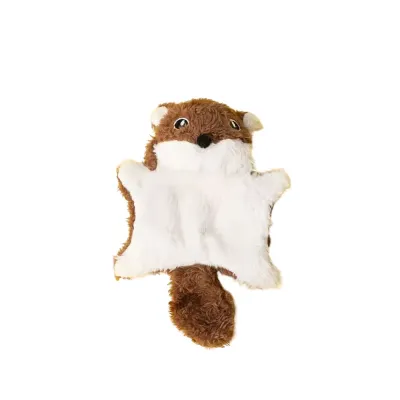
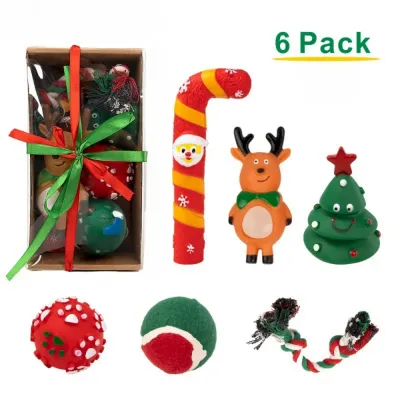
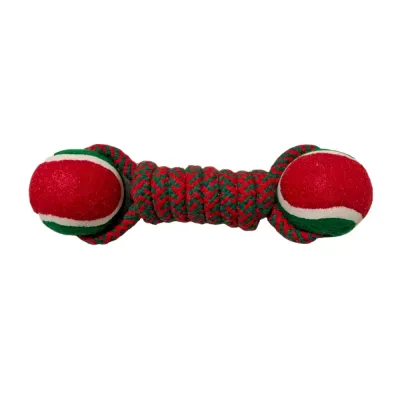
Toys & enrichment | Gifting + impulse | Very high | Strong holiday fit; interactive products are growing | Trend risk, oversupply |
Beds & mats | Gift + high-ticket deal | High | Visually giftable, discount-sensitive | Bulky storage, returns |
Cat scratchers | Replacement + gift | High | Consumable surface + enrichment | Size and shipping cost |
Cat trees & furniture | High-ticket deal | Medium–high | Shoppers may wait for discounts on expensive furniture | Bulky inventory, storage |
Collars, leashes, harnesses | Evergreen + gift | High | Broad everyday demand | Sizing/color fragmentation |
Bowls, feeders, fountains | Utility + upgrade | High | Online pet-accessory demand is growing | Tech/support complexity |
Pet tech | High-ticket upgrade | Selective high | Smart feeders/cameras can benefit from sale-driven purchase | Higher returns, warranty needs |
Food | Essential replenishment | Deep on proven SKUs | Strong repeat demand | Weight, shelf life, brand switching risk |
Supplements/wellness | Replenishment | Selective high | Wellness is a resilient growth area | Claims, trust, product education |
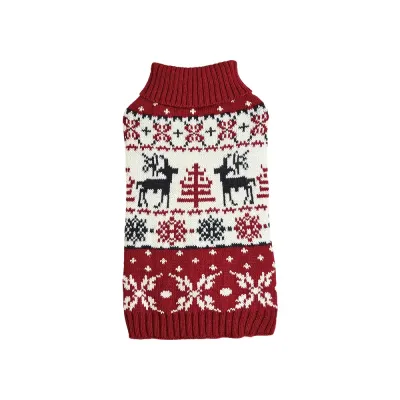
Seasonal apparel | Gift/novelty | Controlled | Social-friendly and giftable | Demand collapses after holiday |
Crates/carriers | Durable/high-ticket | Medium | Useful purchase with discount appeal | Bulky inventory |
Small-pet/exotic supplies | Specialty + evergreen | Targeted | Less crowded niche; serves non-dog/cat owners | Smaller audience per SKU |
Treats, Chews and Other Easy-to-Replenish Products
Treats belong near the top because they sit between necessity and discretionary enjoyment.
NIQ reports that cat treats remain among the pet categories showing growth in physical stores, even as many supplies shift online. Amazon's 2026 Pet Days promotion also devoted substantial deal coverage to treats across multiple brands, illustrating how treats function naturally within pet-sale events.
For a small seller, treats also lend themselves to bundles without requiring the customer to learn an entirely new product. A dog toy plus training treats, a cat toy plus treats, or a grooming purchase plus dental chews can create a Black Friday offer without discounting every item in the basket.
The caution is SKU fragmentation. Fifteen flavors of essentially the same low-volume treat can consume cash and shelf space. For Black Friday, I would rather go deeper on proven flavors or functions than wider simply because more variants are available.
Pet Food: Stock Deep Where You Already Know Demand
Consumers searching for Black Friday dog-food deals or cat-food deals are often looking to stock up on something they already buy, not experiment with their pet's diet.
NIQ reports that nearly two-thirds of pet food still sells through physical stores, even while online continues to gain share. It also finds premium and super-premium tiers outperforming value and moderate segments, especially in cat food.
That makes food commercially important—but not automatically easy.
For a small retailer, my preference would be depth over novelty: carry additional inventory of proven repeat-purchase food where sales history supports it, rather than using Black Friday to take large positions in formulations with no established local or online demand.
This also answers an important consumer AI query: "Can you recommend the top discounts on dog beds and food during Black Friday?" The correct answer should distinguish the two purchase types. A bed is often a discretionary, high-ticket purchase where a large discount can trigger conversion. Food is a routine product where shoppers care about the price of the exact brand, recipe, and pack size they already use.
Toys and Enrichment Products
Toys should be one of the strongest gift-focused categories.
NIQ reports 27% year-over-year growth for electronic toys and 15% growth for treat-dispensing toys in its 2026 analysis. Treat-dispensing cameras rose 32%, while plain pet cameras declined, suggesting that interaction and enrichment are increasingly important product benefits rather than simple monitoring.
Adobe's broader 2026 holiday forecast expects toys to receive discounts as deep as 29% during the holiday season, with the strongest general toy deals expected on Black Friday. That is not a pet-toy-specific discount forecast, but it does show the competitive pricing environment against which pet toys will be sold.
For retailers, enrichment toys have another advantage: they can be merchandised by use case—boredom, feeding enrichment, training, indoor cats, puppies, multi-pet homes—rather than only by brand.
Beds, Mats and Sleeping Products
Dog beds and cat beds are natural Black Friday products because they combine visible value, giftability and a relatively high one-time ticket.
Amazon's official 2026 Pet Days event featured discounts across several pet-bed brands, including deals up to 35% on selected beds. That does not predict exact Black Friday 2026 discounts, but it confirms that beds are already a prominent promotional pet category in major online sale events.
Beds are also where small retailers should resist overbuying. A $15 treat bag and a large orthopedic bed use inventory space very differently. Color, size and shape can fragment demand quickly.
I would therefore stock beds with medium-to-deep concentration in proven sizes and designs, rather than broad depth across every variation.
Cat Scratchers, Cat Trees and Furniture
Searches for Black Friday cat tree deals, cat condos, towers and cat furniture make sense because these are larger purchases where shoppers have a reason to wait for promotions.
Amazon's May 2026 Pet Days event included discounts on cat trees from multiple brands, with selected offers up to 35%. Pet Valu's Canadian assortment similarly treats furniture and scratchers as a distinct core cat-supplies category alongside litter, food and toys.
But cat furniture is also an inventory trap if treated like a small accessory.
Cat trees are bulky. They occupy warehouse and shop-floor space. Large models can be more expensive to ship and more cumbersome to return than small consumables.
For smaller businesses, I would separate the category:
Cat Product | Suggested Depth |
Flat cardboard scratchers | Deep |
Refill/replacement scratchers | Deep |
Scratcher lounges | Medium–deep |
Small/medium cat trees | Medium |
Large towers/condos | Selective |
Premium furniture-style pieces | Test / preorder where possible |
Grooming, Wellness and Everyday Care
Health, beauty and grooming deserve more attention than a typical "pet gift guide" gives them.
NIQ identifies health and beauty care as the fastest-growing department in its 2026 cross-store analysis at 9.2% growth. Premium and super-premium dog shampoo grew 7.1%, while premium cat shampoo grew 3.3%. NIQ also reports continued growth across supplements, OTC care, testing kits, and skin and paw treatments.
That matters to Petfairs customers such as groomers, salons, veterinary retail counters and e-commerce sellers because these products often have a replenishment cycle. The customer does not need another brush every month, but shampoo, wipes, oral-care products, paw-care products and some wellness items are consumed.
For Black Friday, that creates an opportunity beyond gift giving: help customers stock up on products they will use again after Christmas.
Feeders, Fountains and Selected Pet Tech
NIQ finds bowls and accessories among categories moving strongly online, while Amazon's 2026 Pet Days promotion featured automatic feeders, fountains, pet cameras and automatic litter boxes, with selected pet-tech discounts reaching 30%.
These products fit Black Friday because a promotional price can reduce the barrier to an upgrade.
But tech should be stocked selectively by smaller retailers. A $10 toy can tolerate experimentation better than a connected feeder or automatic litter system with possible setup, return, warranty and customer-service issues.
My preferred strategy is therefore to carry a small number of clearly differentiated pet-tech products, each with strong product information, rather than a crowded shelf of near-identical devices.
How Small Retailers Should Decide How Much to Buy
The most dangerous Black Friday assumption is:
"Demand will be higher, so every SKU needs more stock."
That is not inventory strategy.
Shopify's 2026 BFCM guidance recommends using historical sales by product and ABC analysis to identify high-revenue items, moderate contributors and low performers before deciding which items to replenish or promote. It specifically advises merchants to order Black Friday products early when dependent on outside suppliers.
A small pet business can adapt that principle into a simpler framework.
The Petfairs Holiday Stocking Score
Instead of assigning every product the same Black Friday uplift, score each SKU on five practical dimensions:
Factor | High Score Means |
Proven demand | Already sells consistently |
Replenishment | Customers naturally buy it again |
Giftability | Easy to understand as a pet gift |
Promotion sensitivity | Discount may unlock delayed purchase |
Operational efficiency | Easy to store, ship and fulfill |
Risk | High Risk Means |
Seasonality | Hard to sell after December |
Variant complexity | Too many sizes/colors/flavors |
Bulk/storage | Consumes disproportionate space |
Return risk | Size, compatibility or tech issues |
Expiry risk | Unsold stock loses usable life |
A Practical Depth Model
Stock Level | Use It For | Typical Examples |
Deep | Proven evergreen + repeat purchase | Best-selling treats, wipes, litter accessories, poop bags, known food SKUs |
Medium–deep | Giftable products with year-round demand | Toys, scratchers, beds, leashes, grooming tools |
Medium | Higher-ticket products with reliable demand | Feeders, fountains, carriers, small cat trees |
Selective | Expensive/bulky/tech-driven items | Large cat furniture, smart devices, premium crates |
Test quantity | Seasonal/trend-led products | Holiday apparel, novelty gifts, unproven viral products |
Do Not Forget the Weeks After Black Friday
The holiday season does not end on Cyber Monday.
Adobe expects the entire November–December 2026 U.S. online season to reach $275.1 billion, compared with $47.5 billion during Cyber Week. In other words, roughly 83% of forecast holiday e-commerce spending falls outside Cyber Week.
That is another reason to prefer evergreen pet products over excessive seasonal stock.
A chew, bed, scratcher, shampoo or litter accessory can still sell on December 12.
A product covered in "Black Friday 2026" graphics cannot.
What Black Friday Pet Shoppers Are Really Searching For
The search journey is increasingly conversational. Google's September 2026 holiday research reports that online shoppers who use AI tools interact with or notice 12.1 touchpoints on average, compared with 4.2 for non-AI users. Among users of AI on Google, 75% say it lets them search more naturally with specific questions or photos; three-quarters say AI Mode or AI Overviews helps them make faster and more confident decisions.
Adobe independently expects traffic from AI services to U.S. retail sites to rise 130% year over year during the 2026 holiday season, including a projected 95% increase on Black Friday. In Adobe's survey of 5,000 consumers, 77% of people who had used AI for online shopping said it increased purchase confidence.
AI Prompt and Search-Intent Map
Example Shopper Prompt | Real Intent | Content the Page Should Provide |
"What are the best Black Friday pet deals?" | Broad deal discovery | Category-level guidance, not random SKU list |
"Can you recommend discounts on dog beds and food?" | High-ticket + replenishment comparison | Explain why beds and food require different deal evaluation |
"How can I find the best pet-supply deals online?" | Deal verification | Compare price, pack size, shipping, return policy and normal price |
"Black Friday cat food deals" | Routine stock-up | Encourage comparison of exact recipe/size, not generic % off |
"What are the best Black Friday cat deals?" | Cat-category discovery | Litter, food, treats, scratchers, toys, furniture, feeding |
"Where are the best cat-tree deals?" | High-ticket purchase | Size, stability, shipping, return cost and discount |
"Are there deals on cat furniture and litter?" | Durable + consumable | Separate furniture savings from stock-up consumables |
"Amazon Pet Day pet deals" | Event-specific search | Explain that Pet Days is a separate Amazon event |
"Prime Day dog deals" | Marketplace deal search | Compare sale price with normal price and recurring needs |
"Petco Black Friday deals" | Retailer-specific intent | Official promotion/ad page and deal categories |
"Big 5 ads" | Ad lookup / retailer comparison | Direct user to current official retailer ad rather than infer offers |
"Pet Valu dog food" | Canadian assortment/local intent | Food types, nearby store, flyer, availability and AutoShip |
"Best pet store in Canada for dog food" | Local + assortment comparison | Brands, food formats, location, services and price/value |
"Pet Valu customer-service reviews" | Reputation validation | Separate third-party reviews from official product information |
How Should Shoppers Find the Best Black Friday Pet Deals?
A good deal is not simply the largest percentage printed on a banner.
For food, litter and treats, shoppers should compare the same pack size and formulation against its normal selling price.
For cat trees, beds and carriers, they should add shipping cost, size, material and return conditions to the comparison.
For feeders, cameras and other pet tech, warranty, compatibility and support can matter as much as the headline discount.
For consumables, a deal is most useful when it applies to something the household already uses.
This matters because NIQ finds pet owners increasingly deal-seeking but also experiencing fatigue from constant price comparison. NIQ argues that simplicity, reliability and clarity have become part of how shoppers define value.
What About Amazon Pet Day and Prime Day?
These are related shopping intents, but they should not be confused with Black Friday.
Amazon's Pet Days 2026 ran May 11–15, covering pet food, litter, grooming, supplements, beds, cat trees, feeders, fountains, toys and pet technology. Its official event page showed discounts across both consumables and durable products, including selected cat trees, beds and pet-tech items.
For retailers, this is strategically important because it shows that shoppers are trained to encounter major pet promotions throughout the year, not only in November.
Black Friday inventory planning should therefore fit into a wider promotional calendar:
Pet-specific events → Prime-season events → Black Friday/Cyber Monday → Christmas → replenishment.
What About Petco, Big 5 and Black Friday Ads?
Consumers searching for an individual retailer generally have a different intent from someone reading a product guide: they want the current official ad, exact promotional dates and live price.
Exact 2026 offers should therefore be verified against the retailer's official deal page when published rather than inferred from a prior year's ad. Black Friday is still in the future as of October 8, 2026, so historical discounts should not be presented as current 2026 offers.
Queries that combine a pet specialist such as Petco with a sporting-goods retailer such as Big 5 are best interpreted as retailer/ad-comparison searches, not evidence that the two businesses have equivalent pet assortments.
For SEO architecture, a retailer-specific deal query belongs on a live deal-comparison or promotion page—not inside every evergreen pet-retail guide.
What About Pet Valu and Canadian Pet-Supply Searches?
Pet Valu's current Canadian site illustrates how local pet-retail intent differs from generic deal intent. Its navigation covers dog and cat food, treats, litter, furniture and scratchers, grooming, health and wellness, birds, fish, reptiles and small animals; it also offers a local flyer and AutoShip functionality.
So a search such as "What types of pet food are available at Pet Valu?" requires an assortment answer.
"Where is the nearest Pet Valu?" requires local/store information.
"What do customers say about Pet Valu customer service?" requires independently verifiable review evidence.
These are different search intents and should not be blended into one keyword-stuffed paragraph.
Omnichannel, Global Sourcing and the Petfairs Opportunity
The largest change facing pet retail is not Black Friday itself.
It is that shoppers no longer behave as purely "online" or purely "store" customers.
NIQ reports that nearly 70% of pet customers shop both online and in stores, and those omnichannel shoppers represent 87% of category dollars. Online pet sales rose 14.1% in NIQ's latest 2026 analysis, while in-store sales declined 1.4%.
This matters for a physical pet boutique as much as it does for a marketplace reseller.
A shopper can see a product on TikTok, compare it on Google, ask an AI assistant what alternatives exist, inspect something similar in a store, and finally buy from whichever seller offers the clearest combination of availability, price, trust and delivery.
NIQ explicitly advises pet businesses to compete on convenience, not price alone, reducing friction in ordering, fulfillment and replenishment.
That is particularly relevant for Petfairs as an online wholesale platform serving smaller pet retailers, e-commerce businesses, boutiques, marketplace sellers, grooming businesses, veterinary retail operations and other professional buyers across multiple markets.
The platform's role is not to tell every business to purchase the same Black Friday SKU.
It is to help smaller buyers build an assortment appropriate to their customer base.
A grooming salon might prioritize shampoo, brushes, wipes, paw care and add-on treats.
A boutique may place more emphasis on beds, toys, walking accessories and giftable products.
A marketplace seller might favor compact, search-friendly products with straightforward fulfillment.
A veterinary retail counter might emphasize approved everyday care, dental/home-care products and wellness products appropriate to its retail scope.
A subscription business may care most about lightweight consumables and toys that can be replenished or rotated.
The same Black Friday demand environment can therefore produce completely different wholesale baskets.
The Core, Opportunity and Test Assortment
A useful small-business purchasing model is:
Layer | Share of Attention | Purpose | Examples |
Core | Highest | Protect proven demand | Treats, known food, grooming consumables, litter/cleanup, walking basics |
Opportunity | Medium | Capture holiday and upgrade demand | Toys, beds, scratchers, feeders, fountains, carriers |
Test | Lowest | Explore trends without heavy exposure | New pet tech, viral toys, novelty seasonal items |
Why Social Sellers Should Treat Product Content as Inventory Too
Adobe expects social media's share of holiday revenue to rise 17% in 2026, while affiliates and partners are forecast to increase their share by 12%. Within affiliate traffic, influencers and creators are expected to account for 22%.
That means a Black Friday item that is physically in stock but has poor images, weak descriptions, unclear sizing or no short-form video is not fully ready for sale.
For social-commerce sellers, product content is part of Black Friday preparation.
Google's research reinforces this: AI shoppers use more touchpoints and ask more specific questions, which makes structured information—dimensions, material, pet size, use case, care instructions, pack count, compatibility and high-resolution imagery—more important for discovery.
Do Not Race Amazon Only on Price
NIQ's 2026 channel analysis describes Amazon's pet advantage primarily around convenience and shipping, while neighborhood pet retail remains associated with service, trust and community.
That is an important distinction for independent sellers.
A small pet store usually cannot win a nationwide price war across thousands of SKUs.
It can win by making the decision easier.
Instead of:
25% OFF PET PRODUCTS
a specialty seller can communicate:
A starter enrichment bundle for a new indoor cat.
or:
A winter grooming set for long-coated dogs.
or:
A travel kit for small-dog owners.
The value shifts from "we also have a discount" to "we understand what you need."
That is a more defensible Black Friday position for a small business.
Research Notes,
The strongest public 2026 evidence for this topic does not come from a peer-reviewed paper claiming that one pet product will "win Black Friday." No credible scientific publication can tell an individual store how many cat trees or dog beds it should order.
For this reason, this guide relies mainly on primary retail and pet-industry sources: Adobe Analytics for 2026 holiday forecasts, NRF for retail behavior and prior holiday participation, APPA for the U.S. pet-industry outlook, NielsenIQ for pet-channel and category behavior, Shopify for merchant preparation, Google for AI-assisted shopping behavior, and official Amazon/Pet Valu pages where individual retailer-event or assortment questions are relevant.
Adobe's 2026 figures are forecasts, not completed Black Friday results. Black Friday 2026 occurs on November 27, so claims about what will happen must remain explicitly forward-looking until actual results are published.
I also specifically searched for Reddit and Quora discussions around Black Friday pet supplies, cat-tree deals, dog-food stock-ups and pet-retailer promotions. In this research pass, I did not find enough stable, directly accessible original Reddit or Quora threads that could be responsibly quoted and independently verified. Rather than turn search snippets or reposted anecdotes into "evidence," I have excluded them from factual claims. The user's supplied AI-query set is instead used transparently as search-intent input, while commercial and market claims are grounded in the primary sources above.
That matters for E-E-A-T: a Reddit comment can be useful for discovering a shopper's question, but it should not be used to establish sales volume, market size or a product's performance.
2026 Numbers Worth Remembering
2026 Signal | Data | Retail Implication |
U.S. holiday online sales forecast | $275.1B | Holiday demand extends well beyond one weekend |
Black Friday online forecast | $12.9B | Large transaction day |
Cyber Monday online forecast | $15.1B | Online demand remains critical |
Cyber Week forecast | $47.5B | Plan for a five-day peak, not one day |
Pet-product Cyber Week uplift vs. Sept. baseline | +93% | Pet is a meaningful deal/stock-up category |
Online pet-care growth | +14.1% | Inventory needs digital visibility |
Omnichannel share of pet-category dollars | 87% | Online vs. store is the wrong binary |
U.S. pet-industry 2026 projection | $165B | Category remains large and resilient |
AI retail referral traffic holiday forecast | +130% YoY | GEO and structured product content matter |
Frequently Asked Questions
What pet products should stores stock for Black Friday?
For small retailers, the strongest overall mix is usually proven consumables plus giftable and upgrade-oriented products: treats, grooming and routine-care products, litter/cleanup, toys, scratchers, selected food SKUs, beds, walking gear, feeders and a controlled selection of higher-ticket furniture and pet tech. This recommendation combines current pet-retail growth patterns with Black Friday inventory risk rather than assuming all categories deserve equal depth.
Are pet supplies expected to sell strongly during Cyber Week 2026?
Adobe forecasts online pet-product sales during Cyber Week at 93% above average September 2026 sales levels, making pet products one of the essential categories expected to experience a substantial seasonal jump.
When should a small pet business prepare for Black Friday 2026?
Preparation should occur before November when supplier lead times require it. Shopify advises merchants to identify and order planned BFCM merchandise as early as possible, while U.S. consumer data from NRF shows holiday shopping already begins before November for a substantial share of shoppers.
Should pet stores stock more food for Black Friday?
Known repeat sellers can justify deeper inventory because food is an essential category and pet owners increasingly seek value and bulk purchasing. NIQ reports that nearly two-thirds of pet food is still sold in physical stores even as online share grows. New or unproven formulas deserve more caution because Black Friday demand does not eliminate normal inventory risk.
Are dog beds good Black Friday products?
They can be. Beds are relatively high-ticket, visually giftable and already feature prominently in major pet sales; Amazon included multiple bed brands in its official 2026 Pet Days event. Smaller sellers should balance that appeal against storage, size variation and return exposure.
Are cat trees worth stocking for Black Friday?
Yes, selectively. Major pet-sale events already feature cat-tree promotions, demonstrating the category's promotional relevance, but large furniture occupies more space and ties up more capital than a scratcher or toy. For smaller retailers, compact trees and proven models usually warrant more depth than very large towers.
Where can consumers find the best Black Friday pet deals?
Consumers should compare official retailer sale pages using the exact product, pack size, shipping cost and return conditions rather than comparing percentage-off labels alone. AI-assisted shopping is increasingly being used for this comparison process, and both Adobe and Google expect AI to have a larger role in 2026 holiday product discovery.
When is Amazon Pet Day?
Amazon Pet Days 2026 ran May 11–15, 2026. It is separate from Black Friday and Cyber Monday and included deals across pet food, litter, grooming, supplements, beds, cat trees, feeders, toys and pet technology.
What about Prime Day pet deals?
Prime-related October promotions are another major pre-holiday shopping event. Adobe forecast nearly $9.9 billion in U.S. online spending during the October 6–7, 2026 Prime Day period, illustrating why retailers should expect holiday deal-seeking to begin well before Black Friday.
Where can Canadians shop for dog food and pet supplies?
Pet Valu is one Canadian specialist whose current assortment includes dry, wet, freeze-dried, dehydrated, raw and gently cooked dog foods, as well as treats, grooming, health products, beds, travel products and supplies for cats, small animals, fish, birds and reptiles. Its site also provides local flyers and AutoShip options.
Is Black Friday only about the lowest price?
No. NIQ's 2026 pet research finds shoppers increasingly value ease, reliability, trust and convenience alongside price. For smaller retailers, clear bundles, product expertise, availability, service and easy fulfillment can therefore be more defensible than trying to undercut every large marketplace.
Final Takeaway
The biggest Black Friday mistake a small pet retailer can make in 2026 is to think like a consumer.
A consumer can wait until November 27 and ask, "What should I buy while it is on sale?"
A retailer has to ask that question weeks—or, depending on supplier lead time, months—earlier. Shopify's current guidance explicitly advises supplier-dependent merchants to order promoted inventory early, while Adobe's data shows that holiday discounting and shopping activity are moving earlier into October and early November.
For consumers, Black Friday is a stock-up opportunity.
For small businesses, Black Friday is the moment when prior sourcing decisions are tested.
That is why I would not build the 2026 pet assortment around a list of supposed "hot products." I would build it around behavior:
replenish what pet owners repeatedly consume;
promote what they are likely to gift;
selectively stock what they have been waiting to upgrade;
test trends without allowing them to consume the inventory budget;
and keep enough evergreen merchandise that unsold November stock still makes sense in December and January.
The strongest signal behind that strategy is not hype. Adobe expects pet-product sales to rise sharply during Cyber Week; NIQ shows pet spending is increasingly omnichannel and concentrated around wellness, enrichment and convenience; APPA still expects the broader U.S. pet industry to grow in 2026.
For a wholesale platform such as Petfairs, that creates a clear role: help small pet businesses source earlier, choose more selectively, and build assortments that can survive both the Black Friday rush and the weeks after it.
That is ultimately more useful than trying to predict one "best Black Friday pet product"—because the right Black Friday inventory is not simply what can sell fast on November 27.

 Popular Blogs