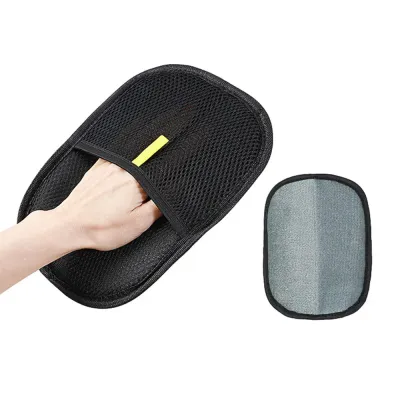

Pet Glove vs Pet Brush: Which Grooming Tools Actually Sell Better for Pet Retailers in 2026?
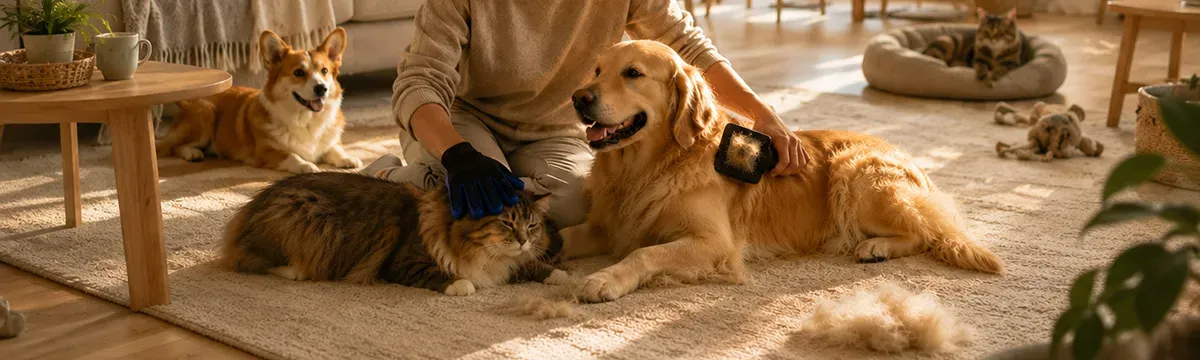
Pet grooming gloves are often easier to sell, while grooming brushes usually generate higher average order values and stronger professional demand. For most pet retailers, the best strategy is not choosing one over the other—it is understanding which grooming tools solve different customer problems and stocking a balanced mix of products.
Over the last few years, grooming gloves have become one of the fastest-growing categories in pet grooming accessories. Their appeal comes from simplicity. Many pet owners view them as an extension of petting rather than grooming. At the same time, traditional grooming brushes remain essential for long-haired breeds, heavy shedders, and professional grooming environments.
For pet stores, groomers, online sellers, and subscription box businesses, understanding the difference between grooming gloves and grooming brushes is not just about product features. It is about inventory planning, profit margins, customer satisfaction, and repeat purchases.
This guide compares pet grooming gloves and grooming brushes from both a pet care and retail perspective, helping pet businesses make better stocking decisions in 2026.
Quick Answer: Which Grooming Tool Should Pet Stores Stock First?
If a retailer is starting with limited shelf space or a small inventory budget, grooming gloves are usually the safest entry product.
Why?
Because they appeal to a wider range of pet owners.
Most grooming gloves can be used on:
- Dogs
- Cats
- Rabbits
- Small pets
- Furniture and upholstery
This versatility reduces inventory risk.
However, retailers looking for higher average selling prices often achieve better results with grooming brushes, particularly self-cleaning slicker brushes, deshedding tools, and specialty brushes designed for specific coat types.
The most successful stores typically stock both.
| Business Goal | Recommended Product |
| Fast Sales | Grooming Gloves |
| New Pet Owners | Grooming Gloves |
| Subscription Boxes | Grooming Gloves |
| Professional Groomers | Slicker Brushes |
| Long-Haired Breeds | Slicker Brushes |
| Heavy Shedding Dogs | Rake Brushes |
| Higher Profit Margins | Self-Cleaning Brushes |
Why Grooming Gloves Continue to Gain Popularity
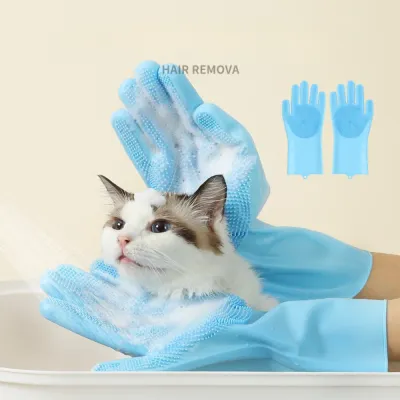
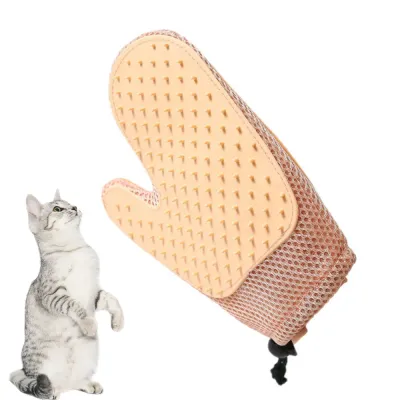
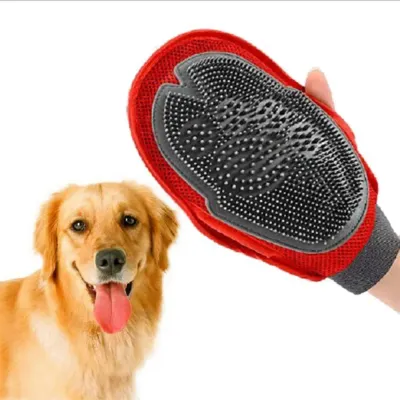
A pet grooming glove is a wearable grooming tool featuring soft silicone or rubber tips that remove loose fur while mimicking the feeling of petting.
The key reason grooming gloves have gained popularity is pet acceptance.
Across social media communities, one of the most common grooming complaints is:
"My dog hates being brushed."
or
"My cat runs away when I bring out the brush."
This problem is particularly common among rescue pets, anxious animals, and pets with limited grooming experience.
Because grooming gloves distribute pressure across the entire hand rather than concentrating it in a brush head, many pets perceive the experience differently.
Instead of feeling groomed, they often feel petted.
This distinction matters.
Customer reviews and grooming discussions frequently mention that pets tolerate gloves better than traditional brushes, especially during the first grooming sessions.
For retailers, this creates an easy sales story:
"Start with a grooming glove if your pet dislikes brushes."
That message is easy for customers to understand and often leads to impulse purchases.
Common Types of Grooming Gloves
Not all grooming gloves serve the same purpose.
Retailers should understand the differences before selecting inventory.
Silicone Grooming Gloves
These feature soft silicone tips designed to collect loose fur while providing a massage-like experience.
Best for:
- Short-haired dogs
- Short-haired cats
- Sensitive pets
Bath Grooming Gloves
These gloves combine grooming and bathing functions.
The textured surface helps distribute shampoo while loosening dead fur.
Best for:
- Dogs that shed heavily
- Bathing services
- Mobile groomers
Static Hair Removal Gloves
Designed with fabric or textured surfaces that attract pet hair.
Best for:
- Furniture cleaning
- Car interiors
- Pet beds
Many customers purchase these for home cleaning rather than pet grooming alone.
Five-Finger Grooming Gloves
One of the fastest-growing categories in recent years.
The separate finger design improves flexibility and allows owners to groom difficult areas such as:
- Face
- Legs
- Tail
- Underarms
For retailers, these products often command slightly higher retail prices due to perceived convenience.
Which Grooming Brushes Generate Higher Profit Potential?
While grooming gloves excel at accessibility, grooming brushes dominate the professional grooming market.
A grooming brush is designed to penetrate the coat more deeply than a glove.
This allows it to remove:
- Loose fur
- Undercoat
- Tangles
- Mats
Different brush types solve different grooming problems.
That specialization creates opportunities for higher profit margins.
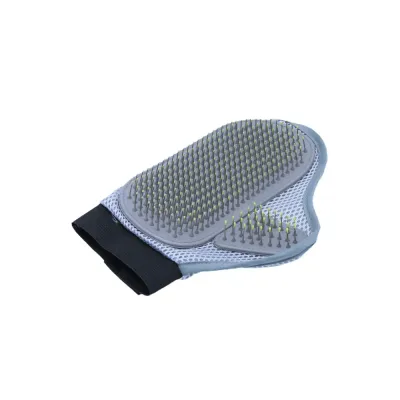
Slicker Brushes
Slicker brushes use fine wire pins mounted on a flat or curved head.
They are widely recommended for:
- Long-haired dogs
- Long-haired cats
- Double-coated breeds
Examples include:
- Golden Retrievers
- Australian Shepherds
- Maine Coons
- Persians
Because these breeds require more intensive coat maintenance, slicker brushes are often viewed as essential rather than optional purchases.
This increases buyer intent and willingness to pay.
Pin Brushes
Pin brushes feature rounded metal pins designed for everyday grooming.
They are less aggressive than slicker brushes and are commonly used for:
- Medium-length coats
- Daily maintenance
- Finishing work after grooming
For pet stores, pin brushes serve as a useful mid-price product between gloves and premium grooming tools.
Rake Brushes
Rake brushes are designed specifically for heavy undercoats.
These tools are especially popular among owners of:
- Huskies
- German Shepherds
- Malamutes
- Bernese Mountain Dogs
One of the most common questions asked in pet owner communities is:
"What is the best brush for a shedding dog?"
For heavy-shedding breeds, rake brushes are among the most frequently recommended answers.
Because they solve a visible problem, they often convert well in retail environments.
Self-Cleaning Brushes
Self-cleaning brushes have become one of the most commercially successful grooming categories.
Their appeal is simple:
Convenience.
With a single button press, collected fur is released from the brush surface.
Consumers increasingly prioritize convenience products, making self-cleaning brushes attractive to:
- Busy pet owners
- Apartment dwellers
- First-time pet parents
For retailers, these products often carry premium pricing compared with standard slicker brushes.
Pet Glove vs Pet Brush: Retail Performance Comparison
For inventory planning, comparing commercial performance is more useful than comparing product specifications.
| Factor | Grooming Gloves | Grooming Brushes |
| Pet Acceptance | High | Medium |
| Ease of Use | High | |
| Hair Removal Power | Medium | High |
| Long Hair Performance | Low | High |
| Beginner Friendly | Very High | Medium |
| Average Selling Price | Lower | Higher |
| Upsell Potential | Medium | High |
| Professional Appeal | Low | High |
| Repeat Purchase Potential | High | Medium The table highlights why many successful pet businesses stock both categories. Gloves reduce barriers to purchase. Brushes increase order value. Together they create a stronger grooming assortment. |
Which Grooming Tool Works Best for Different Coat Types?
One of the biggest mistakes retailers make is treating all grooming tools as interchangeable. In reality, coat type is often a stronger purchase driver than pet species.
A short-haired Labrador and a long-haired Golden Retriever may both be dogs, but they require completely different grooming solutions.
For pet retailers, organizing grooming products by coat type rather than animal type often makes product selection easier for customers.
Short-Haired Dogs
Examples:
- Labrador Retriever
- Beagle
- Boxer
- French Bulldog
- Dachshund
These breeds typically do not suffer from severe matting, but many shed heavily throughout the year.
One of the most common social media questions is:
"Why is my short-haired dog shedding everywhere?"
Many owners mistakenly believe short-haired breeds shed less. In reality, some short-coated dogs can shed continuously.
For these customers, grooming gloves often perform surprisingly well.
Why?
Because loose surface hair is the primary problem.
Customers generally prioritize:
- Ease of use
- Pet acceptance
- Fast cleanup
Recommended products:
| Product Type | Recommendation |
| Grooming Glove | Excellent |
| Rubber Curry Brush | Excellent |
| Pin Brush | Good |
| Slicker Brush | Moderate |
| Undercoat Rake | Usually Not Needed For retailers, grooming gloves frequently outperform traditional brushes in short-haired dog categories because they solve the most visible customer complaint: hair on furniture and clothing. |
Double-Coated Dogs
Examples:
- Golden Retriever
- German Shepherd
- Husky
- Border Collie
- Australian Shepherd
These breeds generate some of the highest grooming-related spending in the pet industry.
Their dense undercoats create seasonal shedding events that many owners describe as "fur explosions."
During spring and fall coat changes, social media platforms are flooded with questions such as:
"What's the best brush for my Husky?"
"Why does my Golden Retriever shed so much?"
"Do grooming gloves actually work on double coats?"
The answer is usually no.
At least not by themselves.
While gloves can remove loose surface hair, they typically cannot penetrate the dense undercoat where the majority of shedding originates.
Recommended products:
| Product Type | Recommendation |
| Grooming Glove | Good Secondary Tool |
| Slicker Brush | Excellent |
| Undercoat Rake | Excellent |
| Deshedding Tool | Excellent |
| Self-Cleaning Slicker Brush | Excellent This category often generates some of the highest average order values because customers frequently purchase multiple grooming tools rather than a single product. |
Long-Haired Cats
Examples:
- Maine Coon
- Persian
- Ragdoll
- Norwegian Forest Cat
Long-haired cats present a different challenge.
The primary issue is not simply shedding.
It is matting.
Matting occurs when loose hair becomes trapped within the coat and forms dense tangles.
Once mats develop, grooming becomes more difficult and sometimes painful.
This explains why professional groomers and veterinarians frequently recommend regular brushing for long-haired cats.
One recurring question on cat owner forums is:
"My cat loves grooming gloves. Can I stop using brushes?"
The answer is usually no.
Gloves may improve compliance, but brushes remain necessary for coat maintenance.
Recommended products:
| Product Type | Recommendation |
| Grooming Glove | Good Supplement |
| Slicker Brush | Excellent |
| Pin Brush | Very Good |
| Dematting Tool | Excellent |
| Rubber Brush | Limited Use Retail takeaway: Long-haired cat owners often represent repeat buyers because grooming is an ongoing necessity rather than an occasional activity. |
Short-Haired Cats
Examples:
- British Shorthair
- American Shorthair
- Russian Blue
- Bengal
Among all pet categories, short-haired cats may be the strongest grooming glove customers.
Why?
Because many cats dislike traditional brushes.
A frequent comment seen across pet communities is:
"My cat thinks the grooming glove is just petting."
That perception matters.
Customer satisfaction often increases when grooming feels less intrusive.
For short-haired cats, grooming gloves can sometimes become the primary grooming tool rather than a secondary accessory.
Recommended products:
| Product Type | Recommendation |
| Grooming Glove | Excellent |
| Rubber Brush | Excellent |
| Pin Brush | Good |
| Slicker Brush | Moderate |
| Dematting Tool | Rarely Needed For retailers, this category supports strong repeat purchases because gloves gradually wear out and are often purchased as gifts by cat owners. |
Why Many Pets Prefer Grooming Gloves
Understanding pet behavior helps retailers explain product differences more effectively.
One reason grooming gloves have gained popularity is that they reduce perceived grooming pressure.
Traditional brushes concentrate contact through a relatively small brush head.
Gloves distribute contact across the entire hand.
From the pet's perspective, this often feels closer to physical affection than grooming.
This distinction is particularly important for:
- Rescue animals
- Nervous pets
- Senior pets
- First-time grooming experiences
Many groomers use gloves as an introduction tool before transitioning pets to more effective brushes.
For retailers, this creates an important positioning opportunity:
Do not sell grooming gloves as replacements for all brushes.
Sell them as the easiest starting point.
What Real Pet Owners Are Asking Online
Understanding customer questions is one of the best ways to identify high-converting product categories.
Below are some of the most common questions appearing repeatedly across pet communities, forums, and social media discussions.
Do Grooming Gloves Actually Work?
This is probably the most common grooming glove question online.
The answer:
Yes, but expectations matter.
Grooming gloves work exceptionally well for:
- Loose fur
- Daily maintenance
- Sensitive pets
- Short coats
They are less effective for:
- Severe matting
- Dense undercoats
- Professional grooming tasks
This balanced answer builds trust with customers.
What Is the Best Brush for Shedding Dogs?
This question appears constantly among owners of:
- Huskies
- German Shepherds
- Golden Retrievers
The most common recommendation is not a grooming glove.
It is usually:
- Slicker brush
- Undercoat rake
- Deshedding tool
This insight helps retailers avoid over-positioning gloves for situations where brushes perform significantly better.
Why Does My Dog Hate Being Brushed?
Many owners assume their dog dislikes grooming.
In reality, some dogs simply dislike specific tools.
Factors include:
- Excessive pulling
- Incorrect brush type
- Sensitive skin
- Lack of grooming training
Because grooming gloves are gentler, they often become a successful entry point for reluctant pets.
Can Grooming Gloves Replace Brushes?
For some short-haired pets:
Possibly.
For most long-haired pets:
No.
Retailers who explain this honestly tend to build stronger customer trust than those promising a single product solution.
Which Grooming Tool Is Best for New Pet Owners?
For beginners, grooming gloves are often the easiest product to understand.
There is almost no learning curve.
Brush selection, by comparison, requires understanding:
- Coat type
- Shedding level
- Hair length
- Skin sensitivity
This simplicity is one reason grooming gloves remain popular among first-time pet owners.
Which Grooming Products Are Easiest for Small Pet Businesses to Sell?
Not all grooming products perform equally in retail environments.
Based on market demand patterns, the following categories generally offer the lowest selling resistance.
| Product Category | Ease of Sale |
| Grooming Gloves | Very High |
| Self-Cleaning Brushes | Very High |
| Grooming Kits | High |
| Slicker Brushes | High |
| Undercoat Rakes | Medium |
| Specialty Brushes | Medium The products that sell fastest are not always the most profitable. However, they often help retailers attract new customers into the grooming category, creating future upsell opportunities. For this reason, many successful pet stores use grooming gloves as entry products and professional brushes as upgrade products. |
Recommended Grooming Product Mix for Small Pet Businesses
One of the biggest mistakes new pet retailers make is overcomplicating their grooming inventory.
Many stores start by purchasing dozens of grooming SKUs, only to discover that a small number of products generate the majority of sales.
For small pet businesses, simplicity often performs better than variety.
The goal is not to stock every grooming tool available. The goal is to stock products that solve the most common customer problems.
Starter Inventory for New Pet Stores
For stores launching a grooming category, the safest approach is a balanced mix of beginner-friendly products.
Recommended starter assortment:
| Product Category | Purpose |
| Grooming Gloves | Entry-Level Grooming |
| Self-Cleaning Brush | Convenience Buyers |
| Slicker Brush | Long-Haired Breeds |
| Pet Comb | Daily Maintenance |
| Grooming Kit | Gift & Bundle Sales This combination covers the majority of pet owners while minimizing inventory complexity. Because grooming gloves appeal to a broad audience, they often serve as the first grooming purchase for new pet owners. |
Inventory Strategy for Online Sellers
Online sellers face a different challenge.
Customers cannot physically touch products before buying.
This makes visual simplicity important.
Products that communicate their value immediately often perform best online.
Examples include:
- Five-finger grooming gloves
- Self-cleaning brushes
- Deshedding tools
- Grooming kits
These products generate stronger click-through rates because customers understand their function instantly.
Many successful e-commerce sellers prioritize products with obvious visual benefits rather than highly specialized brushes that require education.
Inventory Strategy for Groomers
Professional groomers usually prioritize performance over novelty.
Their buying decisions focus on:
- Time savings
- Grooming efficiency
- Durability
- Coat-specific performance
For this audience, professional brushes remain essential.
Recommended assortment:
| Product Category | Priority |
| Slicker Brushes | Very High |
| Pin Brushes | High |
| Undercoat Rakes | High |
| Grooming Gloves | Medium |
| Self-Cleaning Brushes | Medium Many groomers still keep grooming gloves available because they can help calm anxious pets during the initial stages of grooming. |
Inventory Strategy for Mobile Groomers
Mobile groomers operate under unique constraints.
Space is limited.
Every tool must justify its presence.
Multi-purpose products perform particularly well in mobile grooming environments.
Examples include:
- Grooming gloves that double as bathing tools
- Self-cleaning brushes
- Multi-function grooming kits
Products that serve multiple functions reduce storage requirements and improve operational efficiency.
Which Grooming Products Generate Repeat Sales?
Repeat sales matter more than one-time purchases.
A product that sells once is useful.
A product category that generates repeat purchases builds a business.
Among grooming products, repeat purchase behavior is typically driven by three factors:
- Wear and tear
- Multi-pet households
- Upgrading behavior
High Repeat Purchase Categories
Grooming Gloves
Many pet owners purchase additional gloves for:
- Multiple pets
- Different locations
- Replacement after extended use
Self-Cleaning Brushes
Customers often upgrade from basic brushes once they experience the convenience benefits.
Grooming Kits
Bundles encourage future accessory purchases.
Many customers eventually purchase additional combs, brushes, or replacement grooming tools.
Why Many Successful Retailers Stock Both Gloves and Brushes
One of the most common retailer questions is:
"Should I focus on grooming gloves or brushes?"
The most successful answer is usually:
Both.
Because they solve different problems.
Grooming gloves reduce purchase barriers.
Brushes solve advanced grooming needs.
Think of them as serving different stages of the customer journey.
| Customer Stage | Product |
| First-Time Pet Owner | Grooming Glove |
| Routine Maintenance | Pin Brush |
| Heavy Shedding | Rake Brush |
| Long Hair Care | Slicker Brush |
| Convenience Upgrade | Self-Cleaning Brush Retailers who understand this progression can create natural upsell opportunities without appearing overly sales-focused. |
Wholesale Buying Guide: What Retailers Should Evaluate
When sourcing grooming products, many buyers focus only on cost.
This is often a mistake.
Successful retailers evaluate products across multiple dimensions.
Product Versatility
Can the product serve multiple purposes?
For example:
A grooming glove may function as:
- Grooming tool
- Bathing accessory
- Hair removal tool
- Furniture cleaning tool
Versatile products generally appeal to a broader audience.
Customer Learning Curve
Products that require extensive explanation often sell more slowly.
Grooming gloves have one of the lowest learning curves in the category.
Most customers understand how to use them immediately.
Shelf Appeal
Products with obvious visual benefits often outperform products requiring technical explanations.
Examples:
- Self-cleaning brushes
- Five-finger grooming gloves
- Deshedding tools
These products communicate value quickly.
SKU Consolidation
Many smaller retailers benefit from carrying fewer but stronger-performing SKUs.
Instead of stocking five similar brushes, retailers often achieve better results by carrying:
- One grooming glove
- One slicker brush
- One self-cleaning brush
- One grooming comb
This approach simplifies inventory management.
Final Thoughts
The debate between pet gloves and pet brushes often assumes that one tool must be better than the other.
In reality, they serve different purposes.
Grooming gloves excel at comfort, accessibility, and ease of use.
Grooming brushes excel at performance, precision, and advanced coat care.
For pet retailers, the strongest strategy is rarely choosing one category over the other.
It is building a grooming assortment that addresses multiple customer needs.
New pet owners often start with grooming gloves.
Experienced owners frequently upgrade to specialized brushes.
Professional groomers depend on performance-focused tools.
By understanding these different buying journeys, retailers can build a grooming category that supports stronger customer satisfaction, higher average order values, and more repeat purchases.
For businesses looking to source grooming products, a balanced mix of grooming gloves, slicker brushes, self-cleaning brushes, and grooming accessories often provides the most effective foundation for long-term growth.
FAQ
Do grooming gloves actually remove pet hair?
Yes.
They are particularly effective for removing loose surface fur from short-haired pets.
However, they are generally less effective than slicker brushes or undercoat rakes for dense coats and heavy shedding breeds.
Why do many cats prefer grooming gloves?
Grooming gloves often feel similar to petting.
The larger contact area and softer pressure can make grooming less stressful for some cats.
Are grooming gloves good for dogs that hate brushes?
Often, yes.
Many pet owners use grooming gloves as an introduction to grooming because they are less intimidating than traditional brushes.
What is the best grooming tool for heavy shedding dogs?
For breeds with dense undercoats, slicker brushes, undercoat rakes, and deshedding tools usually provide better results than gloves alone.
Can grooming gloves replace grooming brushes?
For some short-haired pets, they may handle most grooming needs.
For long-haired pets, double-coated breeds, and pets prone to matting, brushes remain essential.
Which grooming products are easiest for new pet stores to sell?
Grooming gloves, self-cleaning brushes, grooming kits, and basic slicker brushes are generally among the most beginner-friendly categories.
Is a grooming glove better than a grooming brush?
Neither tool is universally better. Grooming gloves are easier for beginners and pets that dislike brushing, while grooming brushes provide deeper coat maintenance and better performance for long-haired or heavy-shedding breeds.
Do grooming gloves actually work?
Yes. Grooming gloves are effective at removing loose surface fur, reducing shedding around the home, and helping pets become comfortable with grooming. However, they are less effective for mat removal and dense undercoats.
Can a grooming glove replace a brush?
For some short-haired pets, a grooming glove may handle most grooming needs. For long-haired dogs, long-haired cats, and double-coated breeds, a brush is still necessary for proper coat maintenance.
Why do cats like grooming gloves?
Many cats tolerate grooming gloves better because the motion feels similar to petting. The larger contact area creates a gentler grooming experience than many traditional brushes.
Are grooming gloves good for shedding dogs?
Grooming gloves work well for light to moderate shedding. For heavy-shedding breeds such as Huskies, German Shepherds, and Golden Retrievers, slicker brushes or undercoat rakes are usually more effective.
What is the best brush for a shedding dog?
The best brush depends on coat type. Slicker brushes, deshedding tools, and undercoat rakes are commonly recommended for dogs with dense coats and seasonal shedding.
What is a slicker brush used for?
A slicker brush is designed to remove loose fur, tangles, and mats. It is particularly useful for long-haired breeds and dogs with thick undercoats.
Are self-cleaning dog brushes worth it?
Many pet owners find self-cleaning brushes worth the extra cost because they make fur removal faster and more convenient. These brushes are especially popular among households with multiple pets.
Which grooming tool is best for long-haired cats?
Long-haired cats generally benefit from slicker brushes and pin brushes. Grooming gloves can be used as a supplement but are rarely sufficient on their own.
Which grooming tool is best for short-haired dogs?
Short-haired dogs often respond well to grooming gloves, rubber curry brushes, and soft-bristle brushes because these tools effectively remove loose fur without irritating the skin.
Why does my dog hate being brushed?
Many dogs dislike brushing because the brush pulls on their coat, feels uncomfortable, or was introduced too quickly. Grooming gloves are often used as a gentler starting point.
Why is my dog still shedding after brushing?
Brushing removes loose hair but does not stop natural shedding. Breed, season, diet, and coat type all influence how much a dog sheds.
My cat loves the glove but hates the brush. Is that normal?
Yes. Grooming gloves feel more like petting, while brushes create concentrated pressure on the coat. Many cats show a stronger preference for gloves.
Do groomers use grooming gloves?
Some groomers use grooming gloves during bathing or for nervous pets. However, most professional groomers still rely on brushes and combs for detailed coat work.
What grooming tool should I buy first?
For first-time pet owners, a grooming glove is often the easiest starting point. It has a low learning curve and works for many short-haired pets.
Are expensive grooming brushes better?
Not always. The best grooming brush is the one that matches the pet's coat type. A high-quality slicker brush may outperform a premium pin brush if the pet has a dense undercoat.
Why does my Golden Retriever shed so much?
Golden Retrievers have a double coat that naturally sheds throughout the year, with heavier seasonal shedding periods. Grooming gloves can help remove surface fur, but undercoat tools are usually more effective.
What is the difference between a slicker brush and a pin brush?
A slicker brush is designed for removing tangles, loose fur, and undercoat hair. A pin brush is better suited for daily maintenance and coat smoothing.
Which grooming products sell best in pet stores?
Grooming gloves, self-cleaning brushes, slicker brushes, and grooming kits are among the most commonly stocked grooming categories because they appeal to a wide range of pet owners.
Should pet stores stock both grooming gloves and brushes?
Yes. Grooming gloves appeal to beginners and short-haired pet owners, while grooming brushes serve long-haired breeds and customers looking for advanced grooming solutions.
What grooming products are best for new pet stores?
Many new pet stores begin with a mix of grooming gloves, self-cleaning brushes, slicker brushes, and basic grooming combs because these categories cover the largest customer base.
What grooming tools do professional groomers buy most often?
Professional groomers typically prioritize slicker brushes, pin brushes, undercoat rakes, grooming combs, and specialty coat-care tools.
Which grooming products are easiest to sell online?
Products with obvious visual benefits, such as grooming gloves, self-cleaning brushes, and deshedding tools, often perform well online because customers immediately understand their purpose.
What should retailers consider when sourcing grooming products?
Retailers should evaluate product versatility, coat-type compatibility, customer demand, packaging quality, minimum order quantities, and overall inventory risk.
Are grooming gloves a good product for subscription boxes?
Yes. Grooming gloves are lightweight, broadly compatible, and easy for customers to understand, making them popular additions to pet subscription boxes.
Which grooming tools generate the highest repeat purchases?
Grooming gloves, self-cleaning brushes, replacement grooming accessories, and grooming kits often generate repeat purchases due to wear, upgrades, and multi-pet households.
 Popular Blogs