

Trend Pet Products for Retailers: Why Smart Pet Businesses Source Early
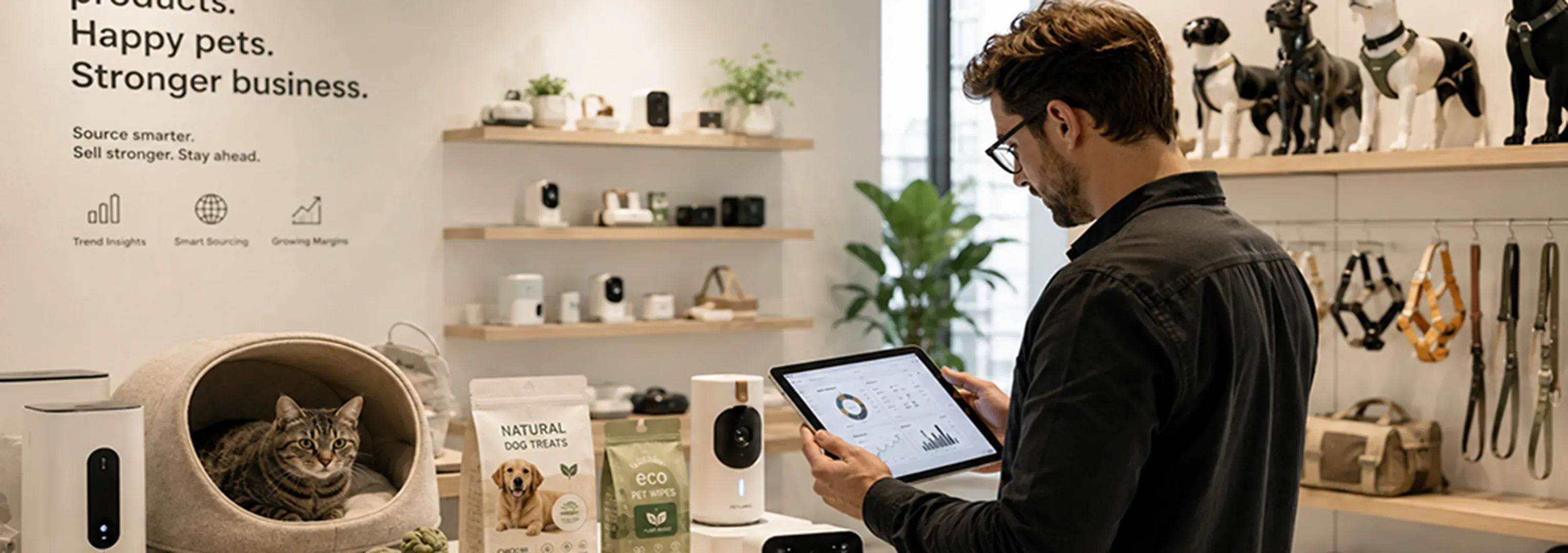
The global pet market is no longer growing in a slow, predictable line. It is moving in waves—faster product cycles, faster consumer attention shifts, and much shorter windows for retailers to capture profitable demand.
According to the latest data from the American Pet Products Association, U.S. pet industry spending reached $158 billion in 2025 and is projected to climb to $165 billion in 2026, confirming that pet ownership remains resilient while buying behavior continues to evolve.
But here is the part many pet businesses miss:
Market growth does not automatically create equal profit for every seller.
In fact, as more sellers flood marketplaces with the same standard inventory, the margin on “safe products” is getting thinner.
Basic feeding bowls, ordinary collars, generic plush toys, and low-differentiation accessories are easy to source—but they are also easy to copy.
That is why the most successful pet businesses today are not simply asking:
“What pet products are selling now?”
They are asking a much smarter question:
“Which pet products are about to sell next—and how can we test them before everyone else does?”
That difference in sourcing timing is where early profit is made.
For fast-moving online pet sellers, boutique retailers, grooming businesses, veterinary retail corners, subscription box operators, and emerging pet distributors, early sourcing has become less of a gamble and more of a strategic inventory discipline.
And increasingly, those smart buyers are using flexible online wholesale channels instead of relying only on traditional large-volume factory ordering.
Why Buying After a Trend Peaks Usually Means Lower Margins
Many small and mid-sized pet businesses still source inventory based on visible proof:
- Amazon bestseller charts
- TikTok viral product lists
- competitor hot-selling pages
- trade distributor recommendation sheets
- customer repeated inquiries
This feels safe.
But in reality, buying only after a product is “obviously hot” usually creates three expensive problems.
Price Competition Starts Immediately
When a product becomes visible everywhere, the first thing that happens is supplier duplication.
Factories produce more copies.
Marketplaces fill with lookalike listings.
Retailers begin comparing solely on price.
The exact same thing has happened repeatedly across pet categories:
- durable dog chew products
- calming plush toys
- cat donut beds
- pet travel bowls
- slow feeders
- rope tug toys
Once the trend becomes obvious, dozens of sellers rush in.
At that stage, the product may still generate sales volume—but its premium pricing power begins to disappear.
A seller sourcing standard dog chew toys, generic dog rope toy assortments, or common dog plush toy large designs after the market is already saturated often enters a race where every competitor has access to nearly identical supply.
Product Novelty Drops Fast in Modern Pet Commerce
Pet consumers—especially younger millennial and Gen Z pet owners—buy increasingly based on:
- emotional enrichment
- convenience
- pet lifestyle enhancement
- novelty interaction
- visual appeal
This means pet products are no longer only utility purchases.
They are discovery purchases.
Consumers are buying because a product feels:
- fun
- useful
- premium
- comforting
- trend-aware
That novelty window is often short.
For example:
A standard chew product is easy to ignore.
But a fresh functional variant like:
- textured chew toys for teething puppies
- extra-durable dura chew dog toys
- natural-looking branch-style best chew toys for dogs
- compact chew toys for small dogs
- reinforced dog chew toys for large dogs
creates a much stronger initial “newness” response.
The same logic applies in plush and interactive inventory:
- an interactive bunny toy
- a themed dragon plush toy
- a novelty goat plush toy
These products often perform well not because they are revolutionary inventions—
but because they hit the market before they become visually ordinary.
Late Buyers Usually Pay More for Less Attention
This is the hidden cost few retailers calculate.
When a product trend has already peaked:
you often pay:
- higher PPC ad costs
- higher social traffic costs
- lower organic click-through
- lower perceived uniqueness
- slower repeat purchase urgency
Because consumers have already seen versions of it.
In other words:
late sourcing means you are not just buying the same product— you are buying weaker customer excitement
For any pet business that depends on:
- organic marketplace exposure
- social commerce conversion
- subscription box surprise value
- boutique differentiation
that weaker excitement directly reduces margin.
The Smartest Pet Businesses Track Demand Signals Before Customers Start Asking
This is where advanced pet wholesalers and modern retailers behave differently from traditional buyers.
Traditional buyers often wait for demand confirmation.
Smart buyers watch demand signals.
These are not the same thing.
Demand confirmation = the product is already selling.
Demand signal = multiple market clues suggest the product is about to enter a growth phase.
And those clues usually appear in four places first.
Signal 1: Consumer Lifestyle Changes
APPA’s latest market analysis notes that pet spending is not simply increasing—it is becoming more intentional, with pet owners prioritizing wellness, comfort, enrichment, and lifestyle-based purchasing.
This matters because trend products are increasingly born from owner behavior, not just pet necessity.
Examples:
When more consumers travel with pets, demand rises for:
- portable bowls
- foldable carriers
- travel comfort mats
When more pet owners focus on chewing safety and indoor stimulation, demand rises for:
- textured TPR chew products
- rope tug products
- durable enrichment toys
When pet owners seek premium home aesthetics, demand rises for:
- boutique plush loungers
- elevated cat nests
- calming sofa beds
This is why smart sourcing teams continuously monitor not only pet categories—
but lifestyle category shifts.
Signal 2: Supplier New Arrival Patterns
Many trend products show up in factory catalogs months before they become visible on retail bestseller pages.
This is especially true in large manufacturing ecosystems such as China pet supplies, where hundreds of OEM suppliers release:
- revised chew toy structures
- seasonal plush concepts
- cat bed redesigns
- improved TPR molds
- new interactive toy combinations
every quarter.
A buyer looking through a modern online wholesale platform can often detect:
- what factories are producing more aggressively
- what shapes are being repeated
- what materials are being upgraded
- which themes are appearing across multiple suppliers
That pattern matters.
Because when ten suppliers begin launching similar reinforced tpr dog toy structures or hybrid dog toy with ball and rope combinations, it usually indicates an upstream confidence in future retailer demand.
Factories react to trend whispers before retailers react to trend proof.
Smart buyers know this.
Signal 3: Trade Show Product Direction
Large pet expos remain one of the strongest trend discovery environments because they reveal not only current inventory, but supplier confidence.
When manufacturers consistently highlight:
- multifunction chew lines
- interactive plush character toys
- orthopedic cat sleep products
- premium eco material beds
- mixed material tug toys
that is rarely random.
It usually means the supply side expects buyer appetite there.
This is why many experienced importers now build sourcing calendars around:
- quarterly online new arrivals
- expo release catalogs
- supplier sampling windows
instead of annual static ordering.
Signal 4: Repeated Category Movement Across Different Buyer Types
A product trend becomes especially interesting when it begins appealing to multiple pet business models simultaneously.
For example:
A reinforced dog toy wholesale chew line may work for:
- online pet sellers
- grooming add-on shelves
- dog trainers
- veterinary waiting room retail
- subscription boxes
A premium wholesale cat beds or bulk cat beds line may work for:
- boutique cat stores
- cat rescues
- online cat-focused shops
- marketplace resellers
- pet boarding businesses
This crossover matters because it signals broader sell-through potential.
The more buyer models a SKU can serve, the lower the risk of early testing.
What Trend Categories Smart Buyers Are Quietly Testing Right Now
The smartest pet businesses are not testing random products.
They are testing categories that combine:
- visual novelty
- repeat utility
- emotional owner appeal
- manageable shipping cost
- scalable wholesale replenishment
Here are several categories seeing strong early wholesale interest.
A. Reinforced Functional Dog Toys
Not generic toys—functional chew inventory with clearer use positioning:
- durable dog chew toys
- puppy-safe chew toys for teething puppies
- stronger dog chew toys for large dogs
- compact chew toys for small dogs
- premium dura chew dog toys
These products work because consumers understand immediately what problem they solve:
teething, boredom, destruction, chewing stress, dental cleaning.
That clarity improves conversion.
B. Multi-Material Rope and Tug Toys
Products like:
- heavy dog rope toy
- cotton toy ropes for dogs
- combo dog toy with ball and rope
continue performing well because they combine:
- bite resistance
- owner interaction
- toss-and-fetch usability
- low damage risk
These are especially attractive for trainers, groomers, and everyday add-on retail counters.
C. Character Plush and Emotional Play Toys
Novel plush categories with shape storytelling are becoming stronger in:
- social commerce
- boutique gift pet stores
- pet adoption bundles
especially when tied to:
- bunny
- dragon
- goat
- forest/farm characters
Character toys convert emotionally better than anonymous plush forms.
D. Comfort Sleep Products for Cats and Small Pets
The growth in premium cat rest inventory is significant because cat owners are highly design-driven repeat buyers.
Buyers are increasingly sampling:
- wholesale cat bed
- cat bed wholesale
- layered wholesale cat beds
- enclosed bulk cat beds
- seasonal wholesale pet beds
alongside rabbit and small-animal rest accessories.
This category also carries a relatively strong average order value with low usage explanation required.
Why Flexible Wholesale Sourcing Matters More Than Ever in Trend Buying
Spotting a trend early is only half of the equation.
The second half—and often the part that determines whether a business actually profits—is this:
Can you test those products fast enough without locking too much money into inventory
This is where many pet businesses fail.
They may correctly identify a promising category:
- stronger dog chew toys
- upgraded tpr dog toy collections
- fresh interactive bunny toy plush lines
- premium wholesale cat products
- orthopedic wholesale pet beds
…but they still hesitate to move.
Why?
Because traditional sourcing usually demands one thing:
volume commitment before market validation
And that model no longer fits the pace of modern pet retail.
Traditional Bulk Ordering vs. Flexible Early Trend Sourcing
For years, many buyers depended on the old import formula:
attend trade show
collect factory catalog
negotiate MOQ
place large order
wait several weeks or months
hope the trend is still alive on arrival
This system works for stable replenishment items.
It works far less effectively for trend-sensitive inventory.
Because trend-sensitive inventory rewards:
- speed
- SKU diversity
- repeat testing
- small failures
- quick reorders
rather than single massive bets.
A Quick Comparison of Old vs. Smart Sourcing Models
| Sourcing Model | MOQ Pressure | Trend Response Speed | Cash Flow Risk | SKU Testing Flexibility | Reorder Efficiency |
| Traditional Factory Bulk Buying | High | Slow | High | Low | Medium |
| Flexible Online Wholesale Sourcing | Low | Fast | Lower | High | Fast This is exactly why more modern pet businesses are shifting toward online wholesale sourcing hubs that allow: |
- lower carton commitments
- mixed category testing
- easier product rotation
- faster repeat replenishment
- consolidated global packing and shipping
Instead of trying to guess one winning product every quarter, they can test ten potential winners with controlled exposure.
That changes the economics completely.
Data Snapshot: Why Early Trend Sourcing Matters in 2026
According to the latest APPA State of the Industry data, the U.S. pet market reached $158 billion in 2025 and is projected to grow to $165 billion in 2026, with pet supplies, OTC medicine, and accessories continuing to hold a major share of spending.
At the same time, APPA notes that consumer spending is becoming more selective: pet owners are prioritizing products that improve comfort, wellness, enrichment, and everyday convenience rather than simply buying generic replacements.
That shift creates a clear opportunity for businesses that source trend products earlier.
Pet Market Trend Comparison: Standard Replenishment vs. Early Trend Inventory
| Inventory Type | Buyer Motivation | Margin Potential | Repeat Purchase Opportunity | Competition Level |
| Generic Standard Pet Supplies | Basic replacement | Medium-Low | Medium | Very High |
| Early Trend Functional Toys | Enrichment / behavior solving | High | High | Medium |
| Premium Comfort Beds | Emotional comfort / design appeal | High | Medium-High | Medium |
| Seasonal Interactive Plush Toys | Novelty / social share / gifting | Medium-High | Medium | Lower in early cycle |
Wholesale Buying Speed Comparison
| Sourcing Method | Average MOQ Pressure | New SKU Testing Ability | Reorder Speed | Inventory Risk |
| Traditional Factory Bulk Purchase | High | Low | Slow | High |
| Flexible Online Wholesale Platform | Lower | High | Fast | Lower |
2026 Pet Categories Seeing Faster Buyer Testing Activity
- Durable dog chew and rope toys
- TPR interactive dog toys
- Character plush emotional toys
- Premium cat beds and calming sleep nests
- Grooming-side add-on impulse toys
- Portable travel accessories
- Small animal & exotic pet comfort products
Why Smaller Test Orders Often Create Bigger Long-Term Margins
Many buyers still assume:
“Bigger volume always means better cost.”
That is only partially true.
Yes, a larger order may reduce the unit price.
But if the product underperforms, the total inventory cost becomes far more expensive than the unit savings.
Smart buyers now focus on:
validation cost, not just purchase cost.
For example:
Ordering 3,000 identical low-differentiation chew toys because the price looks attractive may freeze cash for months.
Ordering 8–12 mixed SKUs including:
- best chew toys for dogs
- dog rope toy
- dog toy with ball and rope
- dragon plush toy
- goat plush toy
- wholesale cat bed
- bulk cat beds
gives the buyer far more market learning with much lower long-term risk.
One or two weak sellers can be replaced quickly.
One or two breakout products can be reordered immediately.
That speed of learning is often worth far more than a slightly lower FOB unit cost.
The Pet Businesses Winning Today Are Testing More Categories, Not Just Buying More Units
This is an important distinction.
The fastest-growing pet sellers in 2026 are not necessarily those buying deeper inventory.
They are often those buying wider intelligence.
Meaning:
they are spreading smaller sourcing bets across more categories to identify:
- which toy concepts trigger repeat purchase,
- which cat comfort items carry higher average basket value,
- which plush novelty shapes generate social clicks,
- which chew formats reduce product return complaints,
- which lightweight SKUs are easiest to ship internationally.
This is particularly useful for:
- pet e-commerce operators,
- marketplace resellers,
- subscription box businesses,
- mobile groomers,
- boutique pet shops,
- veterinary retail counters.
Because these business models survive on:
frequent product freshness
A stale product page loses traffic.
A repetitive shelf loses impulse sales.
A predictable subscription box loses retention.
Trend sourcing solves freshness.
Flexible sourcing makes trend sourcing possible.
Why Online Wholesale Platforms Have Become a Strategic Sourcing Advantage
This shift is one of the biggest changes happening quietly in the B2B pet industry.
Instead of sourcing through:
- fragmented WhatsApp factory chats,
- old PDF catalogs,
- offline fair follow-up emails,
- or one-supplier dependency,
buyers increasingly prefer centralized online wholesale systems where they can:
compare faster
test faster
reorder faster
ship globally faster
This is especially true when a platform can combine:
- dog products
- cat products
- exotic pet products
- grooming accessories
- bedding
- seasonal toys
- transport gear
under one sourcing ecosystem.
Because trend buying rarely happens in one SKU.
It happens in clusters.
A buyer testing a new chew toy line may also want:
- a matching rope tug line,
- a related plush emotional toy,
- a calming pet bed,
- a cat-side comfort collection,
to create broader inventory freshness across the store.
This is why online category-rich sourcing platforms are becoming more valuable than single-factory purchasing.
Why More Global Buyers Are Looking Toward Digitized China Pet Supply Networks
There is a practical reason this matters.
China remains one of the most responsive manufacturing ecosystems for:
- pet toys
- TPR molded products
- plush pet accessories
- rope products
- cat beds
- pet bedding
- grooming add-ons
- bird and small animal accessories
But the old challenge was always:
access friction
Buyers had to spend too much time:
- collecting supplier contacts,
- requesting quotations manually,
- negotiating fragmented shipping,
- comparing uncertain quality.
Modern digitized China pet supplies channels reduce that friction by offering:
- visible product updates,
- lower wholesale entry barriers,
- easier category browsing,
- consolidated order management,
- streamlined global packing and shipping.
That means buyers can spend less time hunting factories—
and more time reading market movement.
That is a major strategic difference.
What Smart Pet Businesses Actually Need From a Wholesale Supplier in 2026
The question is no longer simply:
“Who can sell me pet products cheaply?
The better question is:
“Who helps me test, rotate, and restock trend inventory with the least operational drag?
A modern wholesale partner should ideally provide:
Broad category coverage
from dog toys to wholesale cat products, from chew lines to beds, from common pets to exotics.
Low minimum order flexibility
so buyers can test products before scaling.
Fast new arrival visibility
so trend detection happens upstream.
Repeat reorder convenience
so breakout products can be restocked while demand is hot.
Reliable global fulfillment
so overseas buyers do not need to rebuild shipping processes every time.
Without those five pieces, early trend sourcing becomes much harder to execute consistently.
Why Petfairs Fits This New Wholesale Buying Model
For many growing pet businesses, the challenge is not knowing that trend sourcing matters.
The challenge is finding a sourcing channel built for that speed.
Petfairs was developed around exactly this need:
an online wholesale sourcing platform where buyers can access:
fish,
- reptile,
- rabbit,
- and other exotic pet categories
through one centralized B2B marketplace.
Instead of forcing buyers into single large factory negotiations, Petfairs supports:
- lower carton-level MOQ testing,
- broad SKU comparison,
- frequent new product updates,
- easier category expansion,
- simplified global packing and shipping to most major regions.
This is particularly useful for businesses that need to keep inventory fresh without overcommitting cash:
- online pet sellers,
- groomers,
- pet boutiques,
- subscription box curators,
- veterinary retail buyers,
- pet trainers,
- new pet store operators,
- local distributors.
Whether testing:
- dog toy wholesale assortments,
- new tpr dog toy launches,
- seasonal plush toys,
- wholesale cat beds,
- bulk cat beds,
- or upgraded wholesale pet beds,
buyers can move with much smaller decision friction.
And in trend commerce, lower friction usually means earlier movement.
Earlier movement usually means better margin.
Final Thought: In Pet Retail, The Earliest Smart Test Often Wins
The pet industry is still growing.
But growth is no longer rewarding the slowest buyers.
It is rewarding the fastest learners.
The businesses winning today are not simply stocking what already sells.
They are building systems to identify:
- what pet owners are starting to want,
- what suppliers are starting to release,
- what categories are beginning to repeat,
- and what products can be tested with low inventory exposure.
That is why smart pet businesses source trend products earlier than others.
Not because they guess better.
But because they have built a sourcing model that allows them to test earlier, fail smaller, and reorder faster.
And in a market where product novelty fades quickly, that sourcing speed becomes one of the strongest profit advantages a buyer can own.
FAQ
Why do smart pet retailers source trend products earlier?
Because early trend sourcing gives pet businesses more time to test demand before the market becomes crowded. Once a product is widely visible, price competition usually rises and product novelty begins to fade. Early sourcing allows sellers to capture higher margins while customer attention is still fresh.
What pet product categories are trending fastest for wholesale buyers right now?
Fast-moving wholesale categories include durable dog chew toys, TPR dog toys, dog rope toys, novelty plush toys, wholesale cat beds, premium pet bedding, and interactive enrichment accessories. These categories combine repeat utility with strong emotional or visual appeal.
Is buying trend inventory early too risky for small pet businesses?
Not necessarily. The risk becomes manageable when buyers use low-MOQ wholesale sourcing, mixed SKU testing, and faster reorder systems instead of committing to one large factory order. Smart buyers often test multiple products in small quantities before scaling winners.
Why are more buyers using online wholesale pet sourcing platforms instead of traditional factory orders?
Because online wholesale platforms provide faster product discovery, easier category comparison, lower entry barriers, and more flexible global shipping options. This helps pet businesses react to trends much faster than traditional offline sourcing methods.
What should pet businesses look for in a trend-focused wholesale supplier?
A trend-focused wholesale supplier should offer:
- broad product categories,
- low carton MOQ,
- frequent new arrivals,
- quick reorder support,
- and reliable global packing and shipping.
These factors make it easier to test and rotate new inventory with less cash pressure.


 Popular Blogs