
When Should Pet Stores Stock Halloween Products? A 2026 Retail Guide
Quick Answer: When Should Pet Stores Stock Halloween Products?
For most pet retailers, Halloween inventory planning should begin between April and June, merchandise should start arriving in July or early August, and a soft customer-facing launch can begin from late July through August. A full Halloween assortment should normally be visible by early September.
October should be treated mainly as a conversion, replenishment and urgency period—not the month when a retailer first starts thinking about Halloween.
That recommendation is supported by a clear shift toward earlier seasonal shopping. In 2025, the National Retail Federation found that 49% of U.S. Halloween shoppers began buying in September or earlier, compared with 47% in 2024. NRF also reported that 33% of early shoppers wanted to avoid missing desired products, while another 33% wanted to avoid the stress of last-minute shopping.
The trend has continued into 2026. A Mars study conducted by Morning Consult among 3,001 U.S. adults planning to celebrate Halloween found that 57% agreed Halloween is no longer just one day but a full season. Mars released its 2026 Halloween range in July as part of the 100-day countdown to October 31.
For small pet stores, boutiques, groomers with retail shelves, marketplace sellers and independent e-commerce businesses, however, “stock early” should not mean “buy everything early.”
The smarter strategy is:
Plan early → receive early → launch selectively → expand in September → replenish proven winners → clear Halloween-only inventory immediately after the holiday.
The 2026 Pet Store Halloween Stocking Calendar
Here is the practical timeline I would use for a small or midsize pet retailer.
| Period | Recommended Retail Action | Main Goal |
| March–April | Review previous seasonal sales and identify themes | Decide what deserves shelf space |
| April–May | Plan custom, private-label or long-lead products | Protect production time |
| May–June | Place main wholesale orders for imported seasonal goods | Build logistics buffer |
| June–July | Prepare product pages, photography and campaigns | Be searchable before demand peaks |
| July–Early August | Receive first inventory | Check sizing, quality and assortment |
| Late July–August | Soft launch online and in selected displays | Capture early shoppers without overcommitting |
| Late August–Early September | Build full Halloween assortment | Enter the major shopping period |
| September | Main selling period and first replenishment decisions | Protect winning SKUs |
| Early October | Reorder proven fast sellers only | Avoid late-season overstock |
| Mid–Late October | Push easy-fit products, toys and last-minute items | Capture urgency demand |
| October 31 | Events, pickup, social content and final-day sales | Maximize Halloween traffic |
| November 1 onward | Clear Halloween-only products; retain usable fall items | Recover cash and shelf space This calendar is a retail planning framework, not an industry rule. A U.S. boutique buying from a local warehouse may be able to order later than an online seller importing seasonal inventory internationally. The important principle is to work backward from the date you want the product available to customers. |
Why Halloween Deserves a Real Buying Plan in Pet Retail
Halloween is no longer a minor novelty promotion for the U.S. retail market.
NRF expected total U.S. Halloween spending to reach a record $13.1 billion in 2025, up from $11.6 billion in 2024. About 73% of consumers planned to celebrate, and average spending reached a record $114.45 per person.
Pet participation is meaningful inside that larger market.
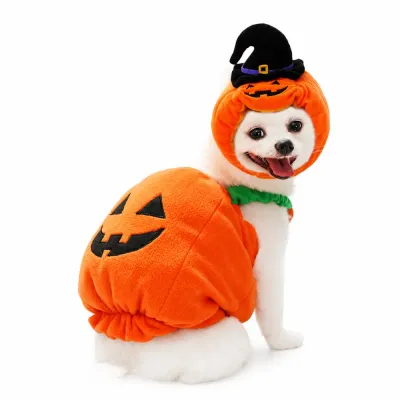
NRF found that 23% of consumers planned to dress their pets for Halloween in 2025, while projected spending on pet costumes reached $860 million. The most popular pet costume ideas included pumpkins, hot dogs, bumblebees, ghosts and superheroes.
The broader pet economy also gives seasonal merchandising a strong foundation. The American Pet Products Association reported that U.S. pet industry expenditures reached $158 billion in 2025 and projected spending of $165 billion in 2026. APPA also reported that 95 million U.S. households owned at least one pet in 2025.
That does not mean every pet store should turn into a Halloween store.
It means Halloween gives retailers an additional reason for customers to buy products that are emotional, visual, giftable and highly shareable.
Pet Parents Increasingly Want Their Pets Inside the Celebration
From my perspective, the most important reason Halloween pet products are becoming more relevant is not the costume itself.
It is participation.
Many people increasingly treat pets as members of the household who should be present in family memories. If the family celebrates Halloween, Christmas, a birthday or another holiday, the pet is often expected to participate in some way too.
The product might be a full costume.
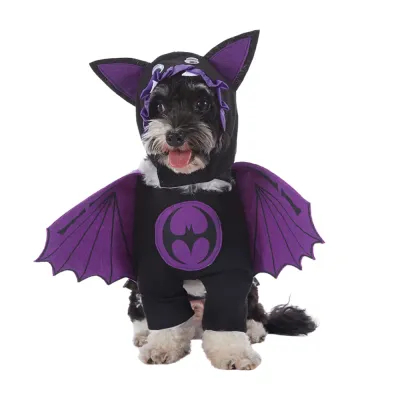
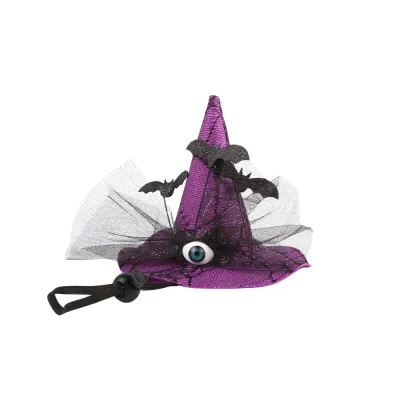
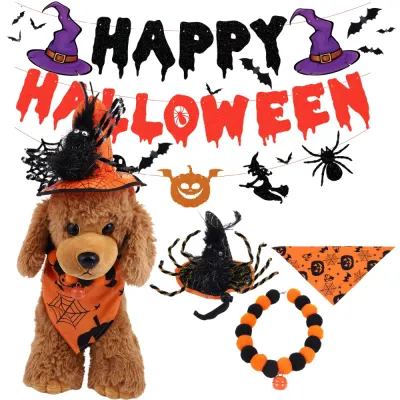
But it could just as easily be a pumpkin bandana, a Halloween collar, a bat-wing accessory, a themed plush toy, a seasonal bed or a photo prop.
The emotional purchase is essentially:
“I want my pet to be part of this moment.”
That creates a different buying environment from ordinary functional pet supplies.
Consumers may compare every dollar when buying an everyday bowl or leash. During a celebration, however, emotion, novelty, appearance and the desire to create a memorable photo can become much more important.
Seasonal merchandise can therefore create one of the relatively rare situations in pet retail where shoppers may be more willing to accept a premium for a product that feels special, limited or memorable.
The numbers do not prove that every Halloween pet SKU commands a higher margin. They do show that consumers are willing to dedicate substantial spending specifically to including pets in the holiday.
Chart: Halloween Shopping Is Moving Earlier
NRF's historical data shows why waiting until October is increasingly risky.
Share of U.S. Halloween shoppers starting before October
| Year | Percentage | Visual bar |
| 2014 | 32% | ████████████████ |
| 2024 | 47% | ███████████████████████ |
| 2025 | 49% | ████████████████████████ NRF reported that only 32% of consumers started Halloween shopping before October in 2014. That increased to 47% by 2024 and 49% in 2025. |
| Year | Started Halloween Shopping by September or Earlier |
| 2014 | 32% |
| 2024 | 47% |
| 2025 | 49% That is a 17-percentage-point increase in eleven years. For retailers, the implication is straightforward: September is no longer merely the month when stores start preparing for demand. For many shoppers, September is already part of the buying season. |
Stocking Is Not the Same as Displaying
One of the biggest mistakes in seasonal inventory planning is treating “stocking Halloween” as a single event.
Retailers should separate at least four dates:
- Order date — when inventory is purchased from the wholesaler.
- Receiving date — when the merchandise reaches the business.
- Launch date — when customers can first discover or purchase it.
- Full merchandising date — when Halloween receives prominent website or store space.
A business might therefore receive Halloween products in July but display only a small preview.
That approach matters because early Halloween merchandising produces mixed reactions.
Reddit discussions repeatedly show both sides. Some consumers dislike seeing Halloween displays in July because they feel seasonal retail starts too early; other Halloween enthusiasts deliberately shop early because they fear popular products will disappear. These discussions are anecdotal rather than representative consumer research, but they illustrate the tension retailers are trying to manage.
More reliable behavioral data points in the same direction. Reddit Business reports that Halloween discussion on its platform begins as early as July, rises sharply by September and reaches roughly five times normal conversation volume during the final two weeks before October 31.
The solution is not choosing between “July” and “October.”
The solution is progressive merchandising.
Soft Launch in August, Full Launch by September
For most independent pet retailers, I would recommend making Halloween discoverable before making Halloween dominant.
During late July and August, a retailer might introduce:
- several hero costumes;
- pumpkin or ghost dog toys;
- Halloween cat toys;
- bat wings;
- bandanas;
- seasonal collars;
- small-animal accessories;
- selected fall products that can continue selling after October 31.
Online stores can launch the Halloween category even earlier than a physical store changes its main merchandising wall.
That is especially important because NRF found that online search was the leading source of Halloween inspiration in 2025, used by 37% of consumers, while 27% found inspiration inside retail or costume stores.
A product page cannot generate organic discovery if it does not exist.
For online sellers, social-commerce businesses and marketplace resellers, the customer-facing buying cycle therefore begins before the physical holiday display would traditionally take over a storefront.
By late August or early September, the assortment should become substantially more visible.
That is the point when the business should have enough depth to satisfy shoppers without waiting for October.
Major Pet Retailers Are Already Launching Halloween in July
Petco offers a useful benchmark.
On August 7, 2025, Petco announced a Halloween and fall assortment containing more than 400 products across costumes, toys, treats, apparel, beds and other seasonal categories.
In 2026, the public launch arrived even earlier.
Petco announced its 2026 Halloween collection on July 27, offering more than 300 Halloween products across owned and national brands, with products starting around $3 and most priced below $20.
| Petco Halloween Launch | Public Launch Date | Announced Assortment |
| 2025 | August 7 | 400+ Halloween/Fall products |
| 2026 | July 27 | 300+ Halloween products |
| Marketplace reseller | Listings + stock availability | August–October |
| Physical pet store | Inventory receiving | Full display by September |
| Pet boutique | Curated preview | August–October |
| Groomer/salon | Appointment add-ons + accessories | September–October |
| Subscription box seller | Product acquisition | Earlier than customer delivery month |
| Boarding/daycare | Event merchandise | September–October |
| Veterinary retail area | Low-risk accessories/toys | September–October The assortments are not directly comparable, so the product-count difference should not be interpreted as a demand trend. The timing is more useful. It shows that one of the largest specialty pet retailers in the United States believes customers can be meaningfully engaged with Halloween merchandise approximately three months before October 31. An independent store does not need to copy Petco's scale. But ignoring what major category retailers are doing creates another risk: by the time a small store starts displaying Halloween, customers may already have discovered and purchased seasonal products elsewhere. |
2026 Is Especially Interesting Because Halloween Falls on Saturday
Halloween falls on Saturday, October 31, 2026 in both the United States and Australia.
There is not yet reliable evidence showing exactly how much a Saturday Halloween will increase pet-product spending, so retailers should avoid inventing a “Saturday sales lift.”
Operationally, however, the calendar matters.
A Saturday Halloween creates a full final weekend for:
- costume contests;
- adoption events;
- grooming promotions;
- pet photography;
- daycare parties;
- dog-training community events;
- same-day pickup;
- last-minute accessories;
- social-media content.
For that reason, I would avoid aggressive clearance of proven Halloween sellers several days before October 31 in 2026.
Keep enough winners available through Saturday.
Which Halloween Pet Products Should Be Ordered Earliest?
Not every Halloween SKU carries the same inventory risk.
The more sizing, fitting, production complexity or trend dependence involved, the earlier the buying decision should be made.
Halloween Pet Inventory Risk Matrix
| Product Category | Order Priority | Size Risk | Late Reorder Potential | Post-Halloween Risk |
| Full pet costumes | Early | High | Low–Medium | High |
| Sized Halloween apparel | Early | High | Medium | High |
| Adjustable bat wings/capes | Early–Mid | Low–Medium | High | Medium |
| Bandanas/bow ties | Mid | Low | High | Medium |
| Halloween collars | Mid | Medium | High | Medium |
| Dog plush toys | Mid | None | High | Medium |
| Cat teasers/plush toys | Mid | None | High | Medium |
| Seasonal chews/treats | Mid | None | High if shelf life allows | High |
| Fall-themed toys/beds | Mid | None | High | Lower |
| Small-animal Halloween accessories | Early–Mid | Varies | Medium | Medium–High The biggest caution category is size-specific apparel. If a retailer sells out of medium costumes but still owns a large quantity of XS and XXL inventory, the SKU may technically remain “in stock” while commercially being broken. That makes costume buying different from toy buying. |
Pet Costumes Should Be Available Earlier Than Halloween Toys
Costumes have another timing problem: pets need time to try them.
The American Kennel Club recommends purchasing a dog's Halloween costume at least two weeks before the event so the dog can gradually become accustomed to wearing it. AKC also advises buyers to avoid outfits that restrict movement, breathing or vision or create overheating and choking risks.
That means a pet store waiting until mid-October to offer a complete costume range is compressing the customer's decision window.
Customers need time to:
choose a theme;
check measurements;
try the costume;
return or exchange the wrong size;
introduce the pet to the garment;
and potentially choose an alternative.
For that reason, full costumes deserve their strongest merchandising push during September and early October—not only Halloween week.
Do Not Build a Halloween Range Around Full Costumes Alone
The ASPCA recommends that pets wear costumes only if they are comfortable doing so. Costumes should not restrict movement, sight, breathing, barking or meowing, and retailers and owners should watch for dangling pieces that could become choking hazards. ASPCA specifically suggests a festive bandana as an alternative for animals uncomfortable in costumes.
That advice leads to a strong merchandising concept:
Build a “Halloween Participation Ladder”
| Participation Level | Product Examples | Size Risk | Late Reorder Potential | Post-Halloween Risk |
| Full transformation | Pumpkin, ghost, spider or character costume | High | Low–Medium | High |
| Light costume | Cape, bat wings, tutu | High | Medium | High |
| Wearable accessory | Bandana, bow tie, collar | Low–Medium | High | Medium |
| No clothing required | Halloween toy, bed or scratcher | Low | High | Medium |
| Environment participation | Seasonal décor, feeding accessories, photo props | Medium | High | Medium |
| Dog plush toys | Mid | None | High | Medium |
| Cat teasers/plush toys | Mid | None | High | Medium |
| Seasonal chews/treats | Mid | None | High if shelf life allows | High |
| Fall-themed toys/beds | Mid | None | High | Lower |
| Small-animal Halloween accessories | Early–Mid | Varies | Medium | Medium–High This is more inclusive than assuming every pet wants to wear a costume. It also gives the retailer more ways to convert a shopper. A customer whose Labrador refuses to wear a headpiece may still happily buy a pumpkin bandana and a ghost plush toy. |
Large-Dog Sizing Is a Real Consumer Friction Point
Community discussions also reveal a recurring issue around costume sizing.
Pet owners on Reddit repeatedly ask where they can find costumes for genuinely large breeds, with examples involving Golden Retrievers, Mastiffs, Akitas, Saint Bernards and dogs with chest measurements well beyond typical mass-market costume ranges.
Reddit does not establish how large the commercial opportunity is, so retailers should not turn those posts into invented market-share statistics.
They do reveal a customer problem worth testing.
A small pet boutique can differentiate through:
- clearer chest and back measurements;
- adjustable closures;
- selected XL and XXL products;
- fewer headpieces;
- capes and wings that work across body shapes;
- model photography showing real breed sizes.
For online sellers, measurement information is particularly important because “Large” does not mean the same thing across manufacturers.
What Should Pet Stores Reorder in October?
October replenishment should become progressively more selective.
Early in the month, a retailer may still safely reorder proven costume sizes if delivery is fast.
Later in October, the better candidates are generally low-sizing-risk products such as:
- Halloween dog toys;
- cat toys;
- bandanas;
- bow ties;
- collars;
- small accessories;
- seasonal treats;
- giftable items;
- products available through fast domestic or local fulfillment.
The closer a retailer gets to October 31, the less attractive a long-lead seasonal purchase becomes.
This is where small businesses should separate availability from inventory ownership.
If your wholesale source lets you replenish small quantities quickly, you can respond to demand.
If replenishment requires large case commitments or international ocean freight, October is usually too late for speculative Halloween buying.
Work Backward From Shipping Time
International buyers need a longer planning window.
Maersk states that ocean freight can generally range from 20 to 45 days, while noting that actual door-to-door time also includes documentation, customs clearance, loading and unloading. Peak periods and disruptions can make transit longer.
That 20–45-day range is not a production lead time.
It is transportation.
If products still need to be manufactured, labeled, inspected, consolidated or packaged before departure, those days must be added separately.
A simple purchasing rule is therefore:
Required order date = desired receiving date − production time − transport time − customs/handling time − safety buffer
For example, a retailer wanting imported Halloween products safely available in early August should not wait until late July to place the initial order.
Businesses sourcing from a local warehouse or domestic distributor can operate with a much shorter cycle.
That distinction is especially important for small retailers that cannot afford either large seasonal overstocks or Halloween merchandise arriving after the selling window.
A Better Buying Strategy for Small Businesses: Keep Some Open-to-Buy Capacity
Large chains can commit millions of dollars to seasonal inventory.
A boutique, groomer, new online pet seller or marketplace reseller usually cannot.
Small businesses therefore gain an advantage from flexibility.
Instead of committing the entire Halloween budget to one purchase months ahead, a retailer can divide the decision into:
Core buy: proven, evergreen Halloween themes.
Test buy: new designs and trend-driven products.
Replenishment budget: money intentionally left available for the products that demonstrate real demand.
This is an operational recommendation rather than a published industry benchmark, so there is no universal percentage that every store should follow.
The exact split depends on:
- minimum order requirements;
- delivery speed;
- historical sell-through;
- available cash;
- available shelf space;
- online versus physical sales;
- return policies;
- the ability to replenish.
For small businesses, flexibility itself is a form of inventory protection.
Classic Halloween Themes Usually Deserve More Confidence Than One-Year Trends
NRF's pet costume rankings repeatedly feature familiar Halloween concepts.
In 2025, pumpkin led pet costumes at 9.8%, followed by hot dog, bumblebee, ghost and superhero. In 2024, popular costumes again included pumpkin, hot dog, bat, ghost and bumblebee.
That consistency supports a sensible merchandising principle.
Buy more confidently into recognizable Halloween imagery:
- pumpkin;
- ghost;
- bat;
- spider;
- witch;
- vampire;
- black cat;
- orange-and-black seasonal designs.
Buy more cautiously into highly specific memes, characters or temporary social trends unless you have evidence from your own customers.
Classic products can also be photographed and promoted again in future seasons if inventory survives.
A one-year novelty may have much lower recovery value.
Look for Products That Can Survive November 1
The best seasonal inventory is not always the item with the strongest Halloween identity.
Sometimes it is the product with the strongest fall crossover.
Consider the difference between:
“Happy Halloween 2026” printed costume
and
orange pumpkin plush toy
The first loses most of its relevance immediately.
The second may continue selling through autumn.
The same principle applies to:
- plaid beds;
- orange toys;
- pumpkin designs;
- fall leaves;
- neutral seasonal sweaters;
- brown and orange collars;
- harvest-themed accessories.
Retailers should therefore evaluate seasonal products using two questions:
How strongly will this sell before October 31?
and
How sellable is it after October 31?
That second question is one of the easiest ways to reduce markdown risk.
Physical Stores and Online Sellers Should Not Use the Same Calendar
An online seller should usually begin Halloween preparation earlier than a purely physical merchandiser.
Product pages need to be uploaded.
Images need to be produced.
Collections need to be created.
Marketplace listings may need approval.
Search engines need to discover product and category pages.
Social-commerce sellers need time to test content.
Subscription-box businesses may need inventory before boxes are assembled and shipped.
A physical pet store, by contrast, can receive inventory in the back room and wait before giving Halloween prime floor space.
Recommended Launch Timing by Business Model
| Seller Type | Earlier Priority | Main Halloween Window |
| E‑commerce pet seller | Product pages + SEO content | July/August–October |
| Social commerce seller | Video/product testing | August–October |
| Marketplace reseller | Listings + stock availability | August–October |
| Physical pet store | Inventory receiving | Full display by September |
| Pet boutique | Curated preview | August–October |
| Groomer/salon | Appointment add‑ons + accessories | September–October |
| Subscription box seller | Product acquisition | Earlier than customer delivery month |
| Boarding/daycare | Event merchandise | September–October |
| Veterinary retail area | Low‑risk accessories/toys | September–October The customer does not need to know your inventory arrived in July. They simply need to find the right product when their purchase intent begins. |
Groomers Have a Different Halloween Opportunity
Pet groomers do not need an enormous costume wall to participate.
Halloween can become a service-linked retail event.
A groomer might combine:
- seasonal grooming;
- a Halloween bandana;
- a bow tie;
- a photo;
- a small take-home toy.
Petco's 2025 seasonal program offers a useful example: its fall grooming promotion included seasonal grooming elements and a fall-themed bandana running from September 2 through November 1.
For an independent groomer, the lesson is not to copy a national chain.
It is to recognize that a seasonal product can increase the perceived value of a service.
Halloween Is Smaller in Australia—but It Is No Longer Negligible
For globally oriented wholesalers and online sellers, the United States should not automatically be the only market considered.
Halloween is much more established commercially in the United States, but Australia continues to grow.
The Australian Retailers Association, using research with Roy Morgan, estimated that more than 4.8 million Australian adults—over one in five—planned to participate in Halloween in 2025, with spending projected to increase 11% to approximately A$500 million.
Compare that with the U.S.:
| Seller Type | Earlier Priority | Main Halloween Window |
| E‑commerce pet seller | Product pages + SEO content | July/August–October |
| Social commerce seller | Video/product testing | August–October |
| Marketplace reseller | Listings + stock availability | August–October |
| Physical pet store | Inventory receiving | Full display by September |
| Pet boutique | Curated preview | August–October |
| Groomer/salon | Appointment add‑ons + accessories | September–October |
| Subscription box seller | Product acquisition | Earlier than customer delivery month |
| Boarding/daycare | Event merchandise | September–October |
| Veterinary retail area | Low‑risk accessories/toys | September–October The currencies, populations and survey methodologies differ, so the spending figures should not be directly divided or treated as an apples-to-apples market-size ratio. The strategic conclusion is simply that the U.S. remains the stronger Halloween retail market, while Australia can represent a growing secondary opportunity. Australian buyers may also prefer assortments suited to spring weather rather than assuming American fall conditions. |
Why July Can Be Both “Too Early” and “Exactly Right”
The answer depends on what the retailer does in July.
A full-store Halloween takeover may be too aggressive for a general pet shop.
A small online collection, pre-order page or two-foot seasonal fixture is different.
The 2026 Mars research helps explain why.
Mars found that 57% of U.S. adults surveyed viewed Halloween as a full season, while nearly 60% of Gen Z respondents were aware of or had participated in the “Summerween” trend.
At the same time, community conversations show that some consumers still resent aggressive seasonal creep.
Both can be true.
That is why the best small-retailer strategy is usually:
Early availability without early overexposure.
The September Rule: Your Halloween Range Should Be Ready, Not Arriving
If there is one month pet retailers should protect, it is September.
By September:
- early shoppers are already active;
- Halloween searches are increasing;
- social inspiration is accelerating;
- customers are selecting costumes;
- pet owners have enough time for sizing and exchanges;
- retailers still have enough time to replenish winners.
NRF found that 49% of Halloween shoppers were already buying by September or earlier in 2025.
Reddit Business separately found Halloween conversation accelerating sharply by September.
Therefore, if your main Halloween purchase is only arriving at the end of September, you are entering the season with less flexibility than a retailer whose assortment is already live.
October Should Be About Conversion, Not Discovery
By October, your focus should change.
Stop asking:
“What Halloween products should we buy?”
Start asking:
“What has already proven that customers want it?”
Use early sales data to identify:
- winning designs;
- strong size runs;
- high-converting price points;
- popular pet types;
- top search terms;
- frequently paired products.
Then replenish only where your supply chain can support a profitable sale before the holiday.
October is also when urgency becomes useful in marketing.
Messaging can shift from:
“Halloween collection is here.”
to:
“Get your pet ready for Halloween.”
and later:
“Last chance for Halloween delivery/pickup.”
The assortment stays similar.
The customer's reason to buy changes.
When Should Halloween Pet Products Go on Clearance?
For products that are exclusively Halloween, markdown decisions should begin immediately after the holiday unless there is a compelling reason to hold inventory for next year.
On November 1, separate the remaining assortment into three groups:
Halloween-only inventory
Examples:
dated products;
highly specific costumes;
“Happy Halloween” merchandise.
These are the strongest clearance candidates.
Fall crossover products
Examples:
pumpkin toys;
orange beds;
plaid apparel;
autumn-themed products.
These may continue selling without deep markdowns.
Reusable evergreen products
Examples:
black collars;
orange rope toys;
neutral accessories;
products with broad autumn colors.
These can often return to normal merchandising.
This segmentation is better than putting the entire Halloween collection on the same discount.
What Small Pet Businesses Should Stock for Halloween in 2026
For a smaller retailer, I would build the assortment around five layers.
Hero Costumes
Use visually distinctive products to attract attention and create social content.
Do not overbuy every size.
Easy-Fit Wearables
Bat wings, vampire capes, bandanas and adjustable accessories reduce size risk.
These can serve customers whose pets dislike full clothing.
Toys
Dog plush toys, ropes, squeakers, crinkle toys, cat teasers and small-animal toys make Halloween accessible without requiring a costume.
Treat and Gift Products
Where regulations, shelf life and local distribution permit, seasonal consumables support repeat and last-minute purchasing.
Fall Crossover
Use products that can remain relevant after October 31 to protect cash.
For retailers serving multiple pet categories, Halloween does not have to stop with dogs.
Cats, rabbits, guinea pigs, reptiles and other companion animals can participate through toys, habitat accessories, bandanas, props and species-appropriate seasonal products.
A Practical Inventory Decision Table
Before placing a Halloween wholesale order, score each product on these questions.
| Question | Lower-Risk Answer | Higher-Risk Answer |
| Does it require exact sizing? | No | Yes |
| Can it sell after Halloween? | Yes | No |
| Can it be reordered quickly? | Yes | No |
| Is the theme evergreen? | Pumpkin/Ghost/Bat | Short-lived trend |
| Is the MOQ manageable? | Small/flexible | Large commitment |
| Can multiple customer types buy it? | Yes | Narrow use |
| Is it easy to photograph online? | Yes | No |
| Does it solve a comfort/safety concern? | Yes | No |
| Does it have demonstrated demand? | Existing seller | Untested design A small business should not ask only: “Will this sell?” It should ask: “What happens if this sells slowly?” Seasonal buying is as much about downside control as upside opportunity. |
What This Means for Petfairs Buyers
For small businesses buying through an online wholesale platform such as Petfairs, the biggest advantage is not trying to compete with a national chain by holding thousands of Halloween SKUs.
The opportunity is assortment flexibility.
A boutique may need costumes and toys.
A groomer may mainly need bandanas and retail add-ons.
An online seller may want visually distinctive products suitable for social content.
A subscription-box business may prioritize compact toys and seasonal accessories.
A breeder, daycare, trainer or rescue-related seller may only need a small seasonal selection.
Because Petfairs covers common dog and cat supplies as well as products for other companion animals and serves buyers across many international markets, Halloween planning should be based on each buyer's sales model, destination and delivery window rather than one universal stocking date.
That is especially important for small-B and prosumer-style customers who need seasonal opportunity without carrying national-chain levels of inventory.
Final Recommendation: The Best Time to Stock Halloween Pet Products in 2026
For most pet stores and online pet retailers, the best answer is:
Start planning in spring.
Place long-lead or imported orders in late spring or early summer.
Receive initial Halloween inventory by July or early August.
Begin a selective soft launch in late July or August.
Have the full customer-facing assortment ready by early September.
Use September sales to decide what deserves replenishment.
In October, reorder only products that can still arrive and sell before Halloween.
Keep strong sellers available through Saturday, October 31, 2026.
Clear Halloween-only products after the event while keeping fall crossover items in rotation.
Early inventory protects availability.
Progressive merchandising protects shelf space.
Small initial tests protect cash.
Fast replenishment protects sales.
And fall crossover products protect the retailer after Halloween ends.
For small pet businesses, that balance is more valuable than trying to guess one perfect “Halloween stocking date.”
2026 Halloween Pet Retail Checklist
Before the season starts, confirm that you have:
- reviewed previous seasonal sales;
- selected core Halloween themes;
- separated sized costumes from low-size-risk accessories;
- included alternatives for pets that dislike costumes;
- considered larger-dog sizing;
- calculated international shipping and production time;
- launched Halloween product pages before peak shopping;
- reserved budget for replenishment;
- identified fall crossover products;
- planned September merchandising;
- prepared October urgency campaigns;
- planned October 31 events or promotions;
- created a November 1 clearance strategy.、
Data and Source Notes
National Retail Federation / Prosper Insights & Analytics — Primary source for U.S. Halloween spending, participation, early-shopping behavior and pet costume statistics. NRF's 2026 Halloween survey had not yet been released at the time of writing; NRF states that results are released annually in late September.
Mars / Morning Consult — 2026 research among 3,001 U.S. adults planning to celebrate Halloween; useful for the emerging “full season” and Summerween trend.
American Pet Products Association — Used for broader U.S. pet-industry size and pet-household context.
Petco — Used as a specialty-pet retail benchmark for actual Halloween launch timing and assortment strategy.
American Kennel Club and ASPCA — Used for pet costume fit, acclimation and safety recommendations.
Maersk — Used for broad international ocean-freight timing context. Actual transit time varies by route, service, customs and peak-season conditions.
Australian Retailers Association / Roy Morgan — Used for Australian Halloween participation and spending context.
Reddit and Reddit Business — Individual Reddit posts are used only to identify shopper frustrations and questions, not as representative market statistics. Reddit Business platform-level data is separately identified where used.
Frequently Asked Questions
When should pet stores put out Halloween products?
For most pet retailers, a small Halloween preview can begin in late July or August, while the full assortment should generally be visible by early September. NRF data shows nearly half of U.S. Halloween shoppers were already buying by September or earlier in 2025.
Is July too early to sell Halloween pet products?
Not necessarily. July can work for online previews, early-access merchandise and small seasonal displays. Petco publicly launched more than 300 Halloween products on July 27, 2026, while Mars began releasing its Halloween portfolio during the 100-day countdown in July.
Is August too early for Halloween merchandise?
No. For many pet retailers, August is an appropriate soft-launch period. It captures early enthusiasts while leaving summer merchandise visible.
When should retailers order Halloween inventory?
Domestic inventory may be ordered relatively close to launch when replenishment is fast. Imported or custom products should be ordered much earlier. Ocean transport alone can commonly take 20–45 days before production, customs and handling are considered.
When should pet stores order Halloween costumes?
Costume buying should normally occur earlier than toy replenishment because sizes can sell unevenly and pets need time to try garments. AKC recommends purchasing a costume at least two weeks before the pet needs to wear it.
What are the most popular Halloween costumes for pets?
NRF's 2025 survey listed pumpkin, hot dog, bumblebee, ghost and superhero among the leading pet costume choices.
What Halloween pet products have lower sizing risk?
Bandanas, bow ties, adjustable bat wings, capes, toys, cat teasers and many seasonal accessories usually carry less size risk than full-body costumes.
Should a pet store sell Halloween products for cats?
Yes, if the store has meaningful cat traffic. Participation does not need to mean wearing a full costume. Cat toys, scratchers, collars, bow ties and seasonal accessories can create Halloween purchasing opportunities without forcing apparel.
When should Halloween pet products go on sale?
Avoid treating every seasonal SKU the same way. Halloween-only products are logical clearance candidates after October 31, while pumpkin, plaid and general fall products may remain commercially relevant into November.
Is Halloween popular enough for small pet stores?
In the U.S., the scale is substantial: NRF projected $13.1 billion in total Halloween spending for 2025, including $860 million specifically for pet costumes. The opportunity for a small store is not matching mass retailers in assortment size; it is selecting seasonal products appropriate for its customer base.
 Popular Blogs