

Animal Shelter Supply Checklist: Essential Products for Dogs and Cats
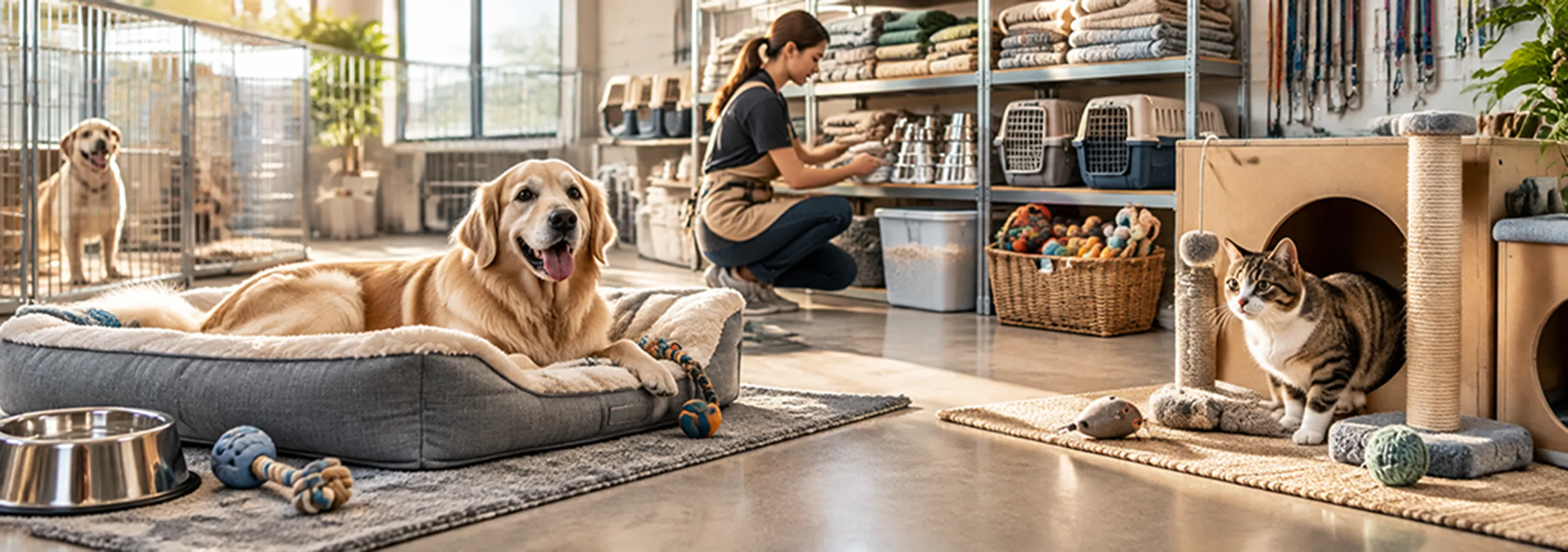
Animal shelters need more than food, bowls, and comfortable beds. A well-prepared shelter must have the right supplies to support animal nutrition, hygiene, disease prevention, safe handling, behavioral enrichment, and everyday comfort. The essential checklist includes feeding equipment, bedding, cleaning products, litter supplies, carriers, leashes, toys, and specialized items for puppies, kittens, and foster animals.
However, the best animal shelter supply checklist is not simply the longest shopping list. It is a practical inventory of products that meet the needs of the animals in care, support staff and volunteers, and make daily shelter operations more manageable.
A municipal shelter housing dozens of dogs and cats may need large quantities of food, litter, cleaning products, and reusable equipment. A smaller rescue organization may prioritize portable carriers, washable bedding, feeding supplies, and foster-care kits. Adoption centers may need additional leashes, identification products, and enrichment items to prepare animals for their new homes.
From my perspective, caring for pets involves much more than it might appear at first. Even seemingly simple products, such as a cat bed, food bowl, or dog toy, can make a meaningful difference when selected for the right animal and environment. For shelter animals, this matters even more because they may be experiencing unfamiliar surroundings, changes in routine, and limited opportunities for normal activities.
This guide provides a practical supply checklist for dog and cat shelters, rescue organizations, foster programs, and pet welfare professionals. It also explains how to prioritize purchases, compare product types, and build a more organized supply plan.
What Supplies Does an Animal Shelter Need Most?
Most animal shelters need supplies across eight main categories: food and feeding equipment, bedding, housing and handling products, cleaning and sanitation materials, enrichment toys, cat-specific supplies, puppy and kitten foster products, and transportation equipment.
The Association of Shelter Veterinarians (ASV), in its 2022 Guidelines for Standards of Care in Animal Shelters, emphasizes that appropriate shelter care must address nutrition, physical health, environmental conditions, behavior, and mental well-being.
The guidelines apply to different types of organizations, including municipal shelters, nonprofit humane societies, SPCA organizations, foster-based rescues, and hybrid shelter programs.
Essential Animal Shelter Supply Categories
| Supply Category | Essential Products | Main Purpose |
| Food & Feeding | Dog food, cat food, bowls, food containers, measuring scoops | Support proper nutrition and hydration |
| Bedding & Comfort | Dog beds, cat beds, blankets, kennel pads | Provide comfortable resting areas |
| Housing & Handling | Crates, carriers, collars, leashes, harnesses | Support safe housing and animal handling |
| Cleaning & Sanitation | Detergents, disinfectants, gloves, paper towels, laundry supplies | Maintain hygiene and reduce disease transmission |
| Dog Enrichment | Chew toys, food puzzles, treat-dispensing toys | Encourage appropriate activity and mental stimulation |
| Cat Enrichment | Scratchers, hiding boxes, cat trees, teaser toys | Support natural feline behaviors |
| Puppy & Kitten Care | Milk replacers, nursing bottles, scales, playpens | Support specialized foster-care needs |
| Transport & Adoption | Carriers, transport crates, identification tags, leashes | Prepare animals for safe transportation and placement Not every shelter needs every product in equal quantities. Purchasing priorities should depend on the number and type of animals, current inventory, health protocols, available facilities, and budget. |
Dog Shelter Supplies Checklist
Dogs in shelters need suitable nutrition, clean resting spaces, safe handling equipment, and opportunities for exercise and behavioral enrichment.
A useful dog shelter checklist should distinguish between everyday necessities and products that support additional activities.
A. Dog Food & Feeding Supplies
Proper nutrition is one of the foundations of animal shelter care. ASPCApro recommends that shelters establish written feeding protocols covering food selection, feeding quantities, feeding frequency, appetite monitoring, and body condition monitoring.
Dogs should receive nutritionally complete food appropriate for their age and individual needs. Puppies, adult dogs, senior dogs, and animals with specific medical requirements may need different diets.
Source: ASPCApro — Shelter Nutrition for Cats and Dogs.
| Product | Purpose | What to Consider |
| Dry Dog Food | Everyday feeding | Complete and balanced nutrition |
| Wet Dog Food | Feeding and dietary variety | Storage and serving requirements |
| Puppy Food | Supporting growth and development | Appropriate life-stage formulation |
| Stainless Steel Dog Bowls | Food and water | Nonporous, easy to clean |
| Water Bowls | Continuous hydration | Appropriate size and accessibility |
| Food Storage Containers | Protecting stored food | Airtight, pest-resistant storage |
| Measuring Scoops | Consistent food portions | Clear capacity and easy cleaning |
| Slow Feeder Bowls | Feeding enrichment for suitable dogs | Appropriate design and cleaning |
| Food Puzzle Feeders | Combining feeding with enrichment | Safe, washable construction Why are stainless steel bowls commonly recommended? ASPCApro recommends feeding dishes that can be cleaned and disinfected easily. Nonporous materials such as stainless steel are particularly practical in group-care environments because they are durable and less likely to retain food residue than damaged or porous surfaces. The guide also notes that fresh, clean water should remain available unless a veterinarian provides different instructions for an individual animal. |
B. Dog Beds & Bedding Supplies
Rest is an essential part of shelter care. Dogs need a comfortable area where they can lie down, relax, and move away from hard flooring.
| Product | Primary Use | Shelter Considerations |
| Washable Dog Beds | Everyday resting | Removable or washable covers |
| Kennel Pads | Kennel comfort | Suitable dimensions |
| Waterproof Pet Mats | Protecting floors | Easy cleaning |
| Dog Blankets | Warmth and comfort | Washable materials |
| Crate Mats | Resting inside transport crates | Appropriate fit |
| Elevated Dog Beds | Providing an alternative resting surface | Suitable for the individual dog |
| Towels | Drying and daily cleaning | Reusable when properly laundered For shelters, bedding should be evaluated by more than softness. The material should be practical to clean, dry, inspect, and replace. Damaged bedding that cannot be adequately sanitized should be removed from use. |
C. Dog Collars, Harnesses & Walking Supplies
Shelter staff and volunteers frequently need to move dogs between kennels, outdoor areas, veterinary appointments, and adoption spaces.
Useful products include:
| Product | Purpose |
| Adjustable Dog Collars | Identification and suitable everyday wear |
| Dog Harnesses | Appropriate walking and handling |
| Standard Dog Leashes | Controlled movement |
| Slip Leads | Specific supervised handling situations |
| Waste Bags | Outdoor sanitation |
| Exercise Pens | Creating controlled activity areas |
| Portable Dog Crates | Temporary housing and transportation |
| Dog ID Tags | Identifying individual animals |
| Grooming Brushes | Routine coat care Not every restraint product is appropriate for every dog. Equipment should be selected according to the dog's size, behavior, health, and handling requirements. Animals with fear, aggression, mobility limitations, or medical conditions may need individualized handling plans established by trained personnel. |
D. Dog Toys & Enrichment Products
Dog enrichment is an important part of shelter care. It can provide opportunities for appropriate chewing, exploration, problem-solving, and interaction.
| Product | Enrichment Function | Purchasing Considerations |
| Rubber Chew Toys | Appropriate chewing activity | Size and material suitability |
| Food Puzzle Toys | Problem-solving and foraging | Easy to clean |
| Treat-Dispensing Toys | Feeding enrichment | Suitable openings and construction |
| Durable Balls | Interactive play | Appropriate size |
| Rope Toys | Supervised interactive play | Regular inspection for damage |
| Snuffle Mats | Encouraging scent exploration | Washable construction |
| Food-Filled Toys | Making meals more engaging | Individual suitability and hygiene |
| Scent Enrichment Products | Providing olfactory stimulation | Appropriate use and supervision A 2014 randomized controlled trial published in the Journal of the American Veterinary Medical Association examined environmental enrichment in 107 shelter dogs. The experimental group received daily food-filled toys and twice-daily positive-reinforcement cage-behavior training. The researchers found improvements in several desirable behaviors compared with the control group. |
| Observed Behavioral Change | Enrichment Group | Control Group |
| Increased sitting or lying down | 65% (17/26) | 22% (7/32) |
| Increased quiet behavior | 35% (9/26) | 13% (4/32) |
| Decreased jumping behavior | 58% (15/26) | 9% (3/32) The researchers did not find a statistically significant difference in adoption rates between the two groups. The study therefore supports the behavioral value of an enrichment program, not a claim that purchasing toys automatically increases adoption. Research source: Journal of the American Veterinary Medical Association — Effects of Environmental Enrichment on the Behavior of Shelter Dogs. For shelter managers, the practical lesson is that toys should be considered part of a structured care program. They should be appropriate for individual dogs, inspected regularly, and cleaned according to shelter procedures. |
Cat Shelter Supplies Checklist
Cats have different environmental and behavioral needs from dogs. A suitable cat shelter environment should provide access to food, water, litter facilities, comfortable resting areas, hiding opportunities, scratching surfaces, and appropriate enrichment.
A. Cat Food & Litter Supplies
| Product | Purpose | Important Considerations |
| Dry Cat Food | Everyday feeding | Complete feline nutrition |
| Wet Cat Food | Everyday feeding | Storage and serving |
| Kitten Food | Growth and development | Appropriate life-stage formula |
| Stainless Steel Cat Bowls | Feeding and hydration | Easy cleaning |
| Shallow Cat Dishes | Comfortable feeding | Sufficient width for whiskers |
| Food Storage Containers | Food preservation | Airtight storage |
| Cat Litter Boxes | Providing toilet facilities | Adequate size and accessibility |
| Cat Litter | Everyday hygiene | Shelter-approved type |
| Litter Scoops | Removing waste | Easy cleaning |
| Disposable Litter Trays | Specific temporary or isolation needs | Convenient replacement ASPCApro recommends species-appropriate feeding plans and notes that cats generally benefit from shallow, sufficiently wide dishes. It also emphasizes that cat litter boxes need to be large enough for comfortable use. |
B. Cat Beds, Caves & Hideouts
Cats entering a shelter may encounter unfamiliar sounds, smells, people, and other animals. Providing suitable hiding and resting spaces can help them manage the new environment.
| Product | Purpose |
| Cat Beds | Comfortable resting |
| Felt Cat Caves | Enclosed hiding spaces |
| Cardboard Hideout Boxes | Simple, replaceable hiding opportunities |
| Cat Hammocks | Alternative resting positions |
| Elevated Cat Perches | Vertical space |
| Cat Condos | Combining resting, hiding, and climbing |
| Washable Blankets | Comfort and warmth |
| Cat Carriers | Safe transportation |
Scientific Evidence: Why Do Shelter Cats Need Hiding Boxes?
A 2019 randomized controlled trial published in PLOS ONE studied 23 adult cats entering a Dutch animal shelter.
The cats were divided into two groups:
- 12 cats received hiding boxes.
- 11 cats were assigned to a control group without hiding boxes.
Researchers monitored their behavioral stress scores during the first 12 days of shelter quarantine.
The study found that cats with hiding boxes reached a lower, stable behavioral stress-score level seven days earlier than cats without hiding boxes.
| Research Detail | Result |
| Total cats | 23 |
| Hiding-box group | 12 |
| Control group | 11 |
| Earlier lower stress-score plateau | 7 days |
| Observation period | 12 days |
| Significant improvement in adoption rate | Not demonstrated Importantly, the hiding boxes did not significantly prevent weight loss or increase adoption rates. The research specifically supports the value of hiding opportunities for behavioral adaptation, not a guaranteed improvement in every aspect of health. Source: PLOS ONE — The Effect of a Hiding Box on Stress Levels and Body Weight in Dutch Shelter Cats. This is an important purchasing consideration. A relatively simple product such as a cardboard hiding box can serve a meaningful behavioral purpose when included in an appropriate shelter environment. |
C. Cat Scratchers & Enrichment Products
Cats naturally perform behaviors such as scratching, climbing, exploring, and hunting-like play. Shelter environments should provide suitable opportunities for these activities.
| Product | Primary Purpose |
| Cardboard Cat Scratchers | Scratching activity |
| Sisal Scratching Posts | Alternative scratching surfaces |
| Cat Trees | Climbing and vertical exploration |
| Cat Wand Toys | Interactive play |
| Cat Teaser Toys | Encouraging chasing behavior |
| Catnip Toys | Optional sensory enrichment |
| Cat Kicker Toys | Grabbing and kicking play |
| Interactive Cat Toys | Mental and physical stimulation |
| Food Puzzle Feeders | Foraging and feeding enrichment A 2017 study published in Behavioural Processes examined environmental enrichment choices among 26 shelter cats over ten days. The cats were able to access different areas, including a hiding compartment, a toy compartment, a perch, and an empty control area. Researchers found that the median percentage of time spent in the hiding compartment was 55%, compared with 2% in the toy compartment and 4% in the empty control compartment. |
| Enrichment Area | Median Time Spent |
| Hiding space | 55% |
| Toy space | 2% |
| Empty control space | 4% The findings suggest that hiding opportunities deserve serious consideration when planning shelter environments, particularly for newly admitted cats. They do not mean toys are unnecessary. Scratching surfaces, climbing areas, and interactive toys remain useful parts of a broader enrichment plan. Research source: Environmental Enrichment Choices of Shelter Cats — Behavioural Processes. |
Cleaning & Sanitation Supplies for Animal Shelters
Cleaning and sanitation are among the most important operational requirements in an animal shelter. Shared equipment, contaminated surfaces, food residue, waste, and improperly cleaned bedding can contribute to the spread of infectious diseases.
ASPCApro explains that sanitation involves three distinct stages:
- Cleaning: Physically removing organic material such as feces, urine, and mucus.
- Disinfecting: Applying an appropriate product to inactivate remaining pathogens.
- Drying: Allowing surfaces to dry according to the product instructions before animals return.
Source: ASPCApro — Sanitation for Disease Prevention in Animal Shelters.
Essential Shelter Cleaning Checklist
| Product | Purpose | What to Check |
| Detergents | Removing dirt and organic material | Surface compatibility |
| Veterinary-Appropriate Disinfectants | Reducing pathogen contamination | Effective pathogen spectrum |
| Disposable Gloves | Staff protection | Appropriate material and size |
| Protective Gowns and Aprons | Reducing contamination of clothing | Suitable coverage |
| Paper Towels | Cleaning and drying | Regular availability |
| Laundry Detergent | Washing bedding and towels | Suitable washing process |
| Garbage Bags | Waste disposal | Strength and size |
| Covered Trash Bins | Waste management | Easy-to-clean construction |
| Spray Bottles | Applying cleaning products | Clear product identification |
| Scrub Brushes | Removing surface contamination | Appropriate brushes for each area |
| Squeegees | Cleaning kennel floors | Facility compatibility |
| Laundry Baskets | Transporting soiled textiles | Separation of clean and dirty items |
| Cleaning Carts | Moving supplies | Separate equipment for different wards |
Why Shelter Disinfectants Require Careful Selection
Not every cleaning product is suitable for every shelter environment.
ASPCApro warns that some commonly used disinfectants may not reliably eliminate certain pathogens, including parvovirus, feline panleukopenia virus, and calicivirus.
It also warns against mixing disinfectants and using products containing phenols or pine oils around animals, as these substances can be toxic to many animals, including cats.
When selecting a disinfectant, verify:
- Which pathogens the product is effective against.
- The required dilution.
- The required contact time.
- Whether rinsing is necessary.
- Whether the surface must be completely dry before animals return.
- Human and animal safety precautions.
The shelter's veterinarian and infection-control protocol should guide product selection.
Cleaning vs. Disinfecting: An Important Comparison
| Activity | Cleaning | Disinfecting |
| Main objective | Remove organic material and dirt | Inactivate remaining pathogens |
| Typical products | Detergent and water | Appropriate disinfectant |
| Required sequence | First | After cleaning |
| Contact time | Depends on the cleaning method | Must follow the product label |
| Final step | Prepare the surface for disinfection | Rinse or dry as required Cleaning and disinfecting are not interchangeable. Applying disinfectant directly to a heavily soiled surface may reduce its effectiveness. |
How Much Cleaning Time Should a Shelter Plan For?
ASPCApro recommends allocating at least nine minutes per animal per day for routine enclosure cleaning, while recognizing that facilities may need more time depending on their size, animal population, and sanitation requirements.
For a hypothetical shelter housing 30 animals, this baseline allocation represents:
That equals 4.5 hours of routine enclosure-cleaning time per day.
This is an operational planning example, not a complete estimate of total shelter cleaning labor. Deep cleaning, laundry, food preparation, waste removal, and other sanitation tasks require additional time.
ASPCApro also recommends spot cleaning when the same animal remains in an enclosure and deep cleaning when a different animal occupies a vacated kennel, or at least every two weeks for longer-stay residents.
Source: ASPCApro — Sanitation for Disease Prevention.
Puppy, Kitten & Foster Care Supplies
Not every animal stays in a shelter facility. Many organizations rely on foster homes to care for young animals, animals recovering from illness or surgery, and animals requiring additional socialization.
ASPCApro describes foster homes as an extension of the shelter system. They therefore need suitable equipment, approved supplies, and clear care protocols.
Source: ASPCApro — Foster Animal Health Care.
Puppy & Kitten Foster Supply Checklist
| Product | Puppies | Kittens | Main Purpose |
| Age-Appropriate Food | Yes | Yes | Nutrition |
| Milk Replacer | Specific cases | Specific cases | Specialized feeding |
| Nursing Bottles | Specific cases | Specific cases | Feeding young animals |
| Small Food Bowls | Yes | Yes | Feeding |
| Water Bowls | Yes | Yes | Hydration |
| Portable Playpens | Useful | Useful | Controlled activity area |
| Puppy Pads | Useful | — | Hygiene and training |
| Litter Boxes | — | Yes | Toileting |
| Litter Scoops | — | Yes | Cleaning |
| Digital Scales | Useful | Useful | Weight monitoring |
| Washable Blankets | Useful | Useful | Comfort |
| Soft Toys | Useful | Useful | Appropriate enrichment |
| Pet Carriers | Yes | Yes | Transportation |
| Heating Equipment | Specific cases | Specific cases | Specialized care under professional guidance ASPCApro's foster kitten checklist includes kitten food, litter, playpens, litter scoops, disposable litter boxes, kitchen scales, cat scratchers, carriers, toys, and other supplies. Source: ASPCApro — Foster Kitten Supply Wish Lists and Checklists. Important: Milk replacers, feeding bottles, heating pads, and other specialized equipment should be selected and used according to the animal's age, health, and veterinary or shelter-provided care plan. These products are not universal requirements for every puppy or kitten. |
Transport & Adoption Supplies
Shelter animals may need to travel between facilities, veterinary clinics, foster homes, and adoption appointments.
Appropriate transport supplies help staff manage these transitions while maintaining hygiene and animal safety.
| Product | Purpose | Selection Consideration |
| Hard-Sided Cat Carriers | Cat transportation | Appropriate dimensions and ventilation |
| Soft-Sided Carriers | Suitable supervised transport situations | Structure and secure closure |
| Dog Transport Crates | Dog transportation | Size and ventilation |
| Dog Collars | Identification and handling | Correct fit |
| Dog Harnesses | Appropriate walking equipment | Individual suitability |
| Leashes | Controlled movement | Reliable connections |
| ID Tags | Animal identification | Clear and accurate information |
| Washable Blankets | Comfort during transport | Easy cleaning |
| Portable Bowls | Food and water during transport | Easy sanitation |
| Waste Bags | Transport hygiene | Adequate supply |
| Cleaning Equipment | Post-transport sanitation | Appropriate disinfectant and procedure The ASV guidelines emphasize that transport containers should allow animals to stand, turn, and lie down naturally, while maintaining suitable ventilation and safety. Transport cages and vehicle compartments should be cleaned and sanitized after use according to the organization's protocols. For adoption programs, collars, leashes, identification tags, and suitable carriers can also help prepare animals for the transition to their new homes. |
Which Animal Shelter Supplies Should Be Prioritized First?
Shelters often operate with limited budgets and storage capacity. They cannot necessarily purchase every desirable product at once.
A practical purchasing strategy should separate daily necessities from reusable equipment, enrichment products, and specialized supplies.
Suggested Shelter Purchasing Priorities
| Priority | Category | Products | Purchasing Reason |
| Essential | Food & Feeding | Food, water bowls, storage containers | Daily animal care |
| Essential | Cleaning & Sanitation | Detergents, disinfectants, gloves, paper towels | Hygiene and infection control |
| Essential | Housing & Comfort | Beds, blankets, kennel pads | Basic resting conditions |
| Important | Handling & Transport | Carriers, crates, leashes, harnesses | Safe animal movement |
| Important | Enrichment | Chew toys, scratchers, hideouts, food puzzles | Behavioral welfare |
| Specific Needs | Foster Care | Milk replacers, bottles, scales, playpens | Specialized animal care |
| Operational | Organization | Storage bins, labels, carts, inventory records | Efficient daily management These are suggested procurement priorities, not an official ASV ranking. The actual purchasing order should be determined by current animal needs, existing inventory, veterinary protocols, and facility capacity. |
Consumables vs. Reusable Equipment
This is another distinction that helps shelters plan purchasing more effectively.
| Inventory Type | Examples | Purchasing Strategy |
| Frequently Replenished | Food, cat litter, waste bags, paper towels, gloves | Track average consumption and reorder regularly |
| Reusable Equipment | Bowls, carriers, crates, cleaning carts | Prioritize durability and cleanability |
| Enrichment Supplies | Toys, scratchers, puzzle feeders | Inspect, clean, rotate, and replace when needed |
| Foster Kits | Playpens, small bowls, blankets, scales | Prepare according to active foster capacity |
| Emergency Supplies | Extra carriers, bedding, cleaning equipment | Maintain according to emergency plans For example, a shelter may use reusable stainless steel bowls for daily feeding while purchasing food, litter, paper towels, and waste bags continuously. This distinction is useful for both shelter managers and organizations that purchase supplies in larger quantities. |
What Do Animal Shelters Actually Need? Real Wishlist Examples
Professional guidelines explain what shelters should provide, but actual organization wishlists help show which products are currently requested by real facilities.
Two useful examples are spcaLA and Pasadena Humane.
spcaLA: Dogs, Cats, Kittens, Puppies & Small Animals
The current spcaLA Needed Items list includes separate requirements for dogs, cats, puppies, kittens, small animals, and general shelter programs.
Its cat and kitten list includes:
- Cat and kitten food.
- Cat carriers.
- Cardboard scratchers.
- Scratching posts.
- Cat trees with hiding compartments.
- Cat litter.
- Litter boxes.
- Washable beds.
- Stainless steel bowls.
- Kitten milk replacer.
- Nursing supplies.
- Foster playpens and scales.
Its dog and puppy needs include:
- Dog food.
- Dog beds.
- Dog toys.
- Collars and leashes.
- Harnesses.
- Exercise pens.
- Training pads.
- Grooming products.
- Towels and other general supplies.
The organization also lists small-animal products, including hay, rabbit pellets, water bottles, chew sticks, and appropriate toys.
Pasadena Humane: What Is on Its Public Wishlist?
Pasadena Humane publishes separate wishlists for dogs, cats, and other animals.
Its current greatest-need dog supplies include towels, dry and wet food, toys, treats, and beds.
Its cat wishlist includes food, litter, toys, treats, and specialized kitten supplies such as milk replacers and nursing equipment.
Source: Pasadena Humane — Official Wish List.
Comparing Two Real Shelter Wishlists
| Product Category | spcaLA | Pasadena Humane |
| Dog Food | Listed | Listed |
| Cat Food | Listed | Listed |
| Dog Beds | Listed | Listed |
| Cat Beds | Listed | Listed |
| Dog Toys | Listed | Listed |
| Cat Toys | Listed | Listed |
| Cat Litter | Listed | Listed |
| Cat Scratchers | Listed | Not explicitly listed in current wishlist |
| Cat Trees | Listed | Not explicitly listed in current wishlist |
| Carriers | Listed | Listed for selected needs |
| Puppy & Kitten Supplies | Listed | Listed |
| Cleaning & Laundry Supplies | Listed | Selected items listed This comparison illustrates that food, bedding, toys, and basic care supplies appear frequently across public shelter wishlists, while other products depend on each organization's facilities and programs. An important donation consideration: Not all shelters accept used products. Pasadena Humane currently accepts only new and unused drop-off donations, except for gently used towels and bedding. spcaLA accepts certain clean used items, including selected stainless steel bowls, but specifies new-only requirements for some other products. Always check the organization's latest wishlist before purchasing or donating supplies. A shelter may have plenty of one item but urgently need another. |
How to Build a Practical Animal Shelter Supply Checklist
A useful checklist should be based on the animals currently in care rather than a generic list of products.
The number of dogs and cats, the average length of stay, foster capacity, and daily consumption all influence how much inventory an organization needs.
Step 1: Count Animals by Type and Life Stage
Separate the population into relevant groups:
- Adult dogs.
- Puppies.
- Adult cats.
- Kittens.
- Animals requiring specialized care.
- Animals currently placed in foster homes.
This helps avoid purchasing the same quantities for animals with different requirements.
Step 2: Separate Daily Consumables From Reusable Products
Food, litter, gloves, waste bags, and paper towels need regular replenishment.
Carriers, crates, bowls, cleaning carts, and other reusable equipment need periodic inspection and replacement rather than daily replenishment.
Step 3: Track Consumption
For regularly used supplies, record how much the organization consumes over a defined period.
For example, if a shelter uses an average of 12 bags of cat litter per week, its approximate four-week requirement is 48 bags.
This is an illustrative calculation. Actual purchasing should also account for stock already available, incoming orders, storage space, and changes in the number of animals.
Step 4: Maintain a Wishlist Based on Current Needs
A public wishlist should be updated regularly.
ASPCApro recommends updating foster kitten wishlists frequently, particularly before promoting them to the public. This helps prevent donors from purchasing products the organization no longer needs.
Source: ASPCApro — Foster Kitten Supply Wish Lists.
Step 5: Organize Supplies by Category
A simple storage structure can separate:
| Storage Area | Products |
| Food Storage | Dry food, canned food, treats |
| Dog Supplies | Bowls, beds, leashes, toys |
| Cat Supplies | Litter, litter boxes, scratchers, hideouts |
| Cleaning Area | Detergents, disinfectants, gloves |
| Foster Kits | Playpens, bottles, scales, blankets |
| Transport Area | Carriers, crates, leashes |
| Emergency Storage | Extra cleaning supplies, carriers, basic equipment This makes it easier for staff and volunteers to locate supplies and monitor shortages. |
How Pet Businesses Can Support Animal Shelters and Rescue Organizations
Animal shelters are not the only organizations involved in animal welfare. Pet businesses can also support rescue organizations by providing products, coordinating donations, or helping make essential supplies more accessible.
Different business models may have different opportunities.
| Business Type | Potential Contribution |
| Independent Pet Stores | Organize donation drives and provide everyday essentials |
| Pet Boutiques | Support selected bedding, accessories, and enrichment needs |
| Online Pet Sellers | Create product bundles for rescue organizations |
| Marketplace Resellers | Help promote approved shelter wishlists |
| Groomers and Mobile Groomers | Support grooming and cleaning supplies |
| Dog Trainers | Provide suitable enrichment and training products |
| Veterinary Clinics with Retail Operations | Support approved care-related products |
| Pet Distributors | Coordinate bulk supply programs |
| Subscription Box Businesses | Create donation boxes containing approved products |
| Pet Boarding and Daycare Businesses | Donate suitable bedding, cleaning products, and toys These are possible partnership approaches rather than universal requirements. A shelter should determine what it needs and approve the products before a business organizes a large donation. |
Why Product Selection Matters More Than Donation Quantity
A large donation is not necessarily useful if the organization cannot use the products.
For example, an animal shelter may have limited storage space, established feeding protocols, or specific sanitation requirements. An unfamiliar food brand may complicate feeding consistency, while unsuitable cleaning products may create safety concerns.
A more effective approach is to ask the organization for its current wishlist, confirm acceptable brands and product conditions, and coordinate delivery quantities.
For businesses purchasing supplies in bulk, product consistency, packaging, storage, and replenishment availability should also be considered.
Frequently Asked Questions About Animal Shelter Supplies
What supplies do animal shelters need most?
Most animal shelters need food, water bowls, bedding, litter, cleaning supplies, waste bags, leashes, carriers, and appropriate toys. The exact priorities depend on the number of animals, existing inventory, and the shelter's care protocols.
What are the essential supplies for a dog shelter?
Dog shelters commonly need complete dog food, stainless steel bowls, washable beds, kennel pads, collars, leashes, harnesses, crates, waste bags, cleaning products, and suitable enrichment toys.
What supplies does a cat shelter need?
Cat shelters need cat food, water bowls, litter boxes, litter, scoops, carriers, comfortable beds, hiding boxes, scratchers, cat trees, and appropriate interactive toys.
Why do animal shelters need cleaning supplies?
Cleaning supplies help remove organic waste and dirt, while appropriate disinfectants help reduce environmental pathogens. Shelters need established sanitation procedures because shared equipment and contaminated surfaces can contribute to disease transmission.
What bedding is best for shelter dogs and cats?
Washable, appropriately sized bedding is often practical because it can be cleaned and reused. The material should suit the animal, facility, and sanitation process. Damaged bedding that cannot be adequately cleaned should be replaced.
Why do animal shelters need enrichment toys?
Enrichment products provide opportunities for appropriate play, chewing, exploration, and problem-solving. Research involving shelter dogs found behavioral improvements when food-filled toys were combined with positive-reinforcement training.
What supplies are needed for foster puppies and kittens?
Depending on their age and care requirements, foster animals may need appropriate food, milk replacers, nursing bottles, small bowls, playpens, bedding, scales, cleaning products, and transportation carriers. Specialized feeding and heating supplies should follow veterinary or shelter instructions.
What should I donate to a local animal shelter?
Start with the organization's current wishlist. Common requests include unopened food, cat litter, new toys, washable bedding, towels, cleaning supplies, carriers, and feeding bowls. Donation policies differ, so check whether used items are accepted.
Can I donate used blankets and pet beds?
Some organizations accept clean, gently used blankets and bedding, while others require new items. Always check the shelter's donation policy before purchasing or delivering supplies.
What are the best enrichment products for shelter cats?
Useful options include hiding boxes, cardboard scratchers, sisal scratching posts, cat trees, elevated perches, wand toys, and food puzzle feeders. The choice should reflect individual preferences, available space, and sanitation requirements.
How can a new animal rescue organization prepare its supply checklist?
Start by identifying the types and number of animals expected, then separate daily consumables from reusable equipment. Establish feeding, sanitation, handling, and foster-care protocols before purchasing larger quantities.
How do shelters prevent cross-contamination when cleaning?
Shelters should use written sanitation protocols, clean surfaces before disinfecting, select products effective against relevant pathogens, follow dilution and contact-time instructions, and separate cleaning equipment between wards. Cleaning and disinfecting should never be treated as interchangeable steps.
How often should animal shelters replenish supplies?
Consumables such as food, litter, gloves, and paper towels should be monitored continuously and reordered according to actual usage and supplier lead times. Reusable products should be inspected regularly and replaced when damaged or no longer suitable for sanitation.
Should animal shelters buy supplies in bulk?
Bulk purchasing can be useful for regularly consumed products when the organization has sufficient storage, predictable demand, and suitable pricing. However, purchasing too much of a specialized or slow-moving product can create waste and tie up funds.
Final Takeaway: The Right Supplies Help Shelters Provide Better Care
An animal shelter supply checklist should do more than list products. It should help organizations identify what their animals need, maintain clean and comfortable environments, support natural behaviors, and prepare dogs and cats for foster care or adoption.
For dogs, essential supplies include appropriate food, bowls, bedding, leashes, collars, crates, cleaning products, and enrichment toys.
For cats, the list should also include suitable litter boxes, litter, hiding spaces, scratchers, elevated resting areas, and interactive toys.
For both species, sanitation, proper nutrition, safe handling, and behavioral well-being should remain central to purchasing decisions.
From a practical purchasing perspective, I believe the most useful approach is to begin with everyday necessities, maintain sufficient cleaning and feeding supplies, and then expand into bedding, enrichment, and specialized foster products according to actual demand.
Animal shelters don't simply need more products. They need suitable, reliable supplies that help every animal receive safe, clean, comfortable, and compassionate care.
Sources & Editorial Notes
This article draws on the Association of Shelter Veterinarians' 2022 Guidelines for Standards of Care in Animal Shelters, ASPCApro shelter nutrition and sanitation resources, peer-reviewed studies published in PLOS ONE, Behavioural Processes, and the Journal of the American Veterinary Medical Association, as well as current public wishlists from spcaLA and Pasadena Humane.
Scientific findings are presented with their sample sizes and limitations. The research does not establish that any individual product guarantees adoption or improved outcomes for every animal.
Product recommendations are general purchasing guidance. Shelter-specific medical, feeding, handling, and infection-control protocols should be established by qualified veterinary and shelter professionals.



 Popular Blogs