
Are Chickens Really America’s Third Most Popular Pet? What the Backyard Flock Boom Means for Pet Retailers
The short answer
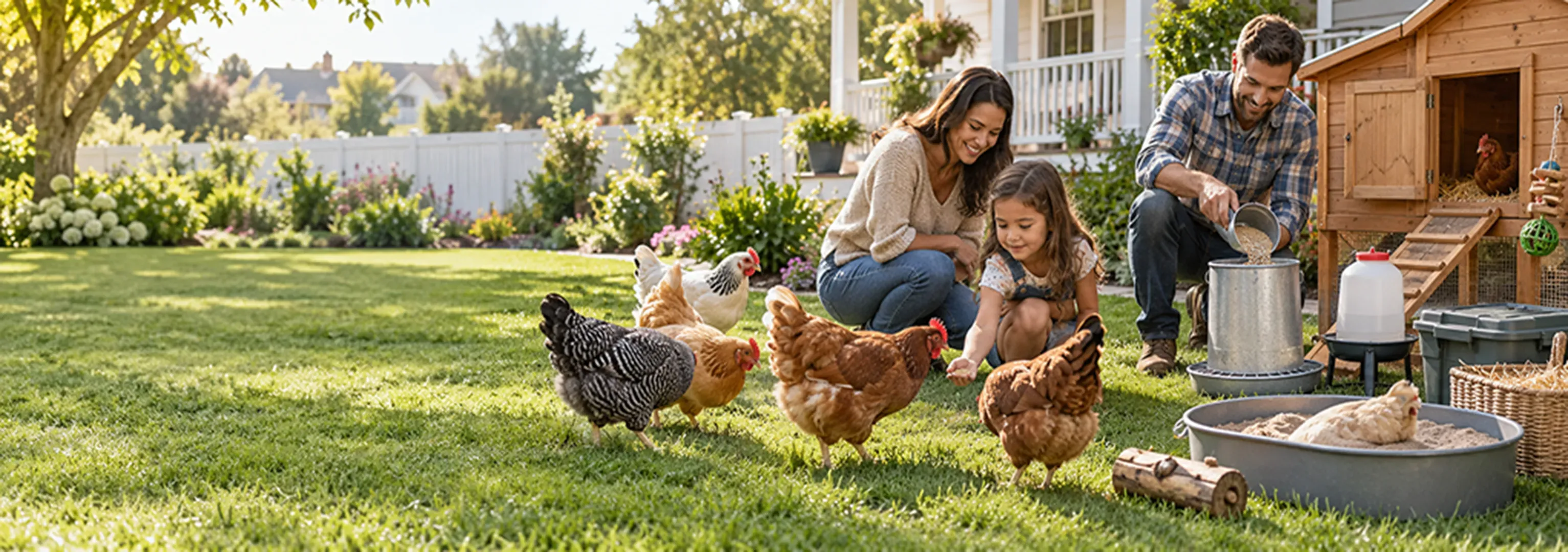
Are chickens the third most popular pet in the United States? Not conclusively. The claim is memorable, but it blends several different ways of measuring pet popularity. A household may own one dog, two cats, or a flock of six hens. Counting individual animals can therefore put chickens near the top, while counting households produces a different ranking. Asking whether owners consider their birds “pets” changes the answer again.
A more defensible statement is that backyard chickens have become a significant nontraditional companion-animal category. According to APPA data reported by Axios in 2025, an estimated 11 million U.S. households keep backyard chickens, up from 5.8 million in 2018, and about 8 million of those households consider their chickens pets. Axios corrected its original “third most popular pet” wording to “one of the most popular pets.” That correction matters because responsible retail content should explain what a number measures instead of repeating its most dramatic interpretation.
The larger story is more useful than the ranking. COVID-era food disruption, rapid growth in food-at-home demand, expensive eggs, highly pathogenic avian influenza, interest in self-reliance, and a stronger emotional connection with backyard birds all helped turn the chicken coop into a new consumer-care category. For pet boutiques, online sellers, breeders, local distributors, subscription-box businesses, and new store owners, this creates demand for feeders, waterers, enrichment items, cleaning tools, nesting accessories, transport products, and trustworthy care information.
What does “third most popular pet” actually mean?
“Pet popularity” has no single universal definition. It may describe the number of animals, the number of households keeping a species, the percentage of owners who call the animal a pet, or spending within that category. Those measurements answer different questions and should not be treated as interchangeable.
| Popularity measure | What it counts | Why chickens can rank highly | Main limitation |
| Individual animals | Every animal kept | A backyard flock normally contains several birds | One household can add many chickens to the count |
| Owning households | Homes with at least one animal of the type | Shows the reach of the category among consumers | Does not reflect flock size or spending |
| Owner identity | Households that call the animal a pet | Captures the emotional human–animal relationship | A hen can be both a pet and a source of eggs |
| Retail spending | Food, housing, care and accessories purchased | Reveals commercial importance | Comparable public data for chickens are limited This distinction explains why apparently conflicting statistics can all be real. The American Veterinary Medical Association reported that the U.S. pet-poultry population increased from 12.6 million in 2011 to 15.4 million in 2016, living in about 1.4 million households. A later estimate cited in recent research puts backyard-chicken households at 11 million as of 2024. The figures come from different periods, sources, definitions and survey methods, so placing them on one smooth growth line would be misleading. The scientific literature also offers a clue to the viral claim. A 2024 peer-reviewed study on the human–chicken relationship noted that chickens may be the third most common pet in many countries. That statement concerns the broad number of birds and the evolving role of chickens, not a definitive U.S. household ranking. In other words, “third most common” is a useful conversation starter, but not a settled market statistic. |
A practical verdict on the claim
| Statement | Accuracy assessment | Recommended use |
| “Chickens are America’s third most popular pet.” | Too absolute; the ranking depends on methodology | Use only as a question or a claim being examined |
| “About 11 million U.S. households keep backyard chickens.” | APPA estimate reported by Axios; not a USDA census | Appropriate with attribution and date |
| “About 8 million households consider their chickens pets.” | Reported from the same APPA estimate | Appropriate with attribution, not as a universal census |
| “Chickens are among America’s most popular nontraditional pets.” | Strong, cautious summary | Best general-use wording |
| “Backyard chickens are a growing retail-care category.” | Supported by ownership and consumer-behavior signals | Best wording for a pet-industry audience Our view: the correction does not weaken the business story. It strengthens it. Retailers do not need chickens to occupy an exact podium position before serving their owners. They need evidence of a large, engaged audience with recurring care problems—and that evidence is already visible. |
The numbers behind the backyard-chicken story
The following figures describe different parts of the market rather than one comparable time series. They should be displayed as a dashboard, not as proof that one number directly grew into another.
| Data point | Reported figure | Period | What it tells retailers |
| U.S. households raising backyard chickens | 11 million | 2024 estimate | The category has national consumer reach |
| Households reportedly viewing them as pets | 8 million | 2024 estimate | Care decisions may resemble companion-animal spending |
| U.S. households raising backyard chickens | 5.8 million | 2018 estimate | Provides historical context for recent category growth |
| Pet poultry population | 15.4 million birds | 2016 | Multi-bird ownership can create repeat demand |
| Households owning pet poultry | 1.4 million | 2016 | Older veterinary data used a narrower “pet poultry” frame |
| Food-at-home retail sales increase | 57.5% and 56.2% year over year | Two peak weeks in March 2020 | COVID suddenly shifted demand toward grocery retail |
| Egg-laying hens lost during the 2022 HPAI shock | More than 43 million | By December 2022 | Disease can sharply reduce supply and raise prices |
| Egg inventories decline | 29% | Start to end of 2022 | Demonstrates the scale of the supply contraction |
| Retail egg-price change | 0.322 | 2022 | High prices made egg supply highly visible to consumers |
| Average retail egg price | $5.12 per dozen | April 2025 | Prices eased but remained unusually prominent in household budgets |
Chart 1: Annual change in U.S. retail egg prices
| Year | Retail egg-price change |
| 2022 | 0.322 |
| 2023 | 0.014 |
| 2024 | 0.085 |
| 2025 | 0.219 Chart takeaway: Egg-price pressure was not a one-time COVID headline. USDA data show a sharp rise in 2022, continued increases in the next three years, and renewed acceleration in 2025 as HPAI constrained laying flocks. Retailers should nevertheless avoid telling customers that keeping a few hens guarantees cheaper eggs; feed, housing, healthcare, time and local compliance all add cost. 2026 update: The market began to reverse in 2026. USDA reported that retail egg prices in July 2026 were 25.7% lower than in July 2025 and forecast a 30.8% decline for full-year 2026. Because 2026 is not complete, the forecast is not plotted as a finalized annual result. The larger lesson for retailers is volatility, not permanently rising prices. Chart alt text: Bar chart showing U.S. retail egg prices rising 32.2% in 2022, 1.4% in 2023, 8.5% in 2024 and 21.9% in 2025. |
How the pandemic moved chickens into the consumer conversation
At the beginning of COVID-19, the United States did not simply run out of food. Demand changed location faster than supply chains could adapt. Restaurants closed or reduced service, while households suddenly cooked most meals at home. USDA’s Economic Research Service found that food-at-home retail sales during two peak weeks in March 2020 were 57.5% and 56.2% higher than the same weeks in 2019. Eggs, flour and other basic ingredients became symbols of an unfamiliar supply shock.
That distinction matters. An egg packaged for a restaurant cannot instantly appear in the right carton, grade, distribution channel and supermarket location for household shoppers. Empty shelves therefore reflected a rapid mismatch between channels as well as changes in total supply. For consumers, however, the lived experience was simple: a basic ingredient was sometimes unavailable.
Hatcheries and chicken-rental businesses reported intense interest during this period, and later academic work described growth in backyard-chicken ownership as particularly notable during the pandemic. Some households wanted eggs. Others wanted an outdoor family activity, greater control over food, or companionship during isolation. COVID-19 appears to have accelerated interest in food resilience and home production, but it was one influence among several rather than a single proven cause.
It would be a mistake to describe every pandemic flock as a rational financial investment. A few hens rarely outperform industrial egg production on cost. Coops, fencing, feed, bedding, veterinary advice, predator protection and daily labor all count. A more durable explanation is that the pandemic increased consumer attention to resilience and home food production. A flock offered visible participation in that process, even when it did not offer the cheapest possible egg.
Bird flu turned egg availability into a recurring issue
The post-pandemic egg story was shaped by highly pathogenic avian influenza, commonly abbreviated HPAI. USDA confirmed HPAI in a U.S. commercial flock on February 8, 2022. By the end of that year, more than 43 million egg-laying hens had been lost to disease or depopulation, and egg inventories were 29% lower than at the beginning of 2022. Wholesale prices reached record levels as the supply of laying hens contracted.
HPAI did not disappear after one season. USDA reports that retail egg prices rose 32.2% in 2022, 1.4% in 2023, 8.5% in 2024 and 21.9% in 2025, mainly because recurring outbreaks reduced flocks and production. The HPAI wave from mid-October 2024 through early March 2025 resulted in the depopulation of 50.7 million egg-laying hens. In February 2025, USDA announced up to $1 billion in measures intended to combat avian flu and reduce egg prices. By April 2025, the average retail price had fallen to $5.12 per dozen, more than one dollar below its March peak. The recovery strengthened in 2026: July retail prices were 25.7% below their July 2025 level, and USDA projected increased egg production for the year.
This volatility coincided with renewed interest in backyard flocks, but it also created a dangerous misconception: that small flocks are automatically protected from outbreaks affecting commercial farms. They are not. USDA tracks detections in both commercial and backyard flocks, and outdoor birds can encounter wild birds, rodents, contaminated footwear, equipment or water. A backyard flock is a form of animal stewardship, not an escape from animal-health risk.
For retailers, biosecurity should therefore be part of merchandising rather than a legal footnote. Easy-to-clean feeders and waterers, dedicated cleaning tools, secure feed storage, washable footwear, transport separation and clear educational signage can help owners build safer routines. Retailers should never imply that an accessory prevents HPAI, but they can select products that make recommended hygiene practices easier.
Did Chinese steamed egg help drive the trend?
Chinese steamed egg—often called steamed egg custard—is a simple home dish made by steaming beaten eggs with water or broth. Its short ingredient list and comforting texture made it well suited to the broader home-cooking conversation during and after the pandemic. The dish appeared across English-language recipe platforms as an accessible example of Chinese home cooking.
However, no national dataset connects interest in Chinese steamed egg with backyard-chicken ownership. The dish is best understood as a cultural example of the renewed attention given to everyday egg-based cooking—not as a cause of the backyard-flock boom. Retail content may connect flock care with home cooking or fresh-egg handling, but food-safety guidance should come from authoritative sources and the cultural observation should not be presented as measured market causation.
Chickens occupy a space between livestock and companion animals
A chicken can produce food and still be a pet. That dual identity is one reason standard pet-industry categories struggle to describe backyard flocks. Owners may name individual hens, recognize their personalities, provide treats and enrichment, and grieve their deaths. The same owners may also value their eggs. These relationships are complementary rather than mutually exclusive.
Research published in 2024 described a spectrum of chicken care ranging from production-focused husbandry to close companion relationships. This spectrum affects buying behavior. A production-focused owner may prioritize capacity, durability and cost per bird. A pet-focused owner may pay more attention to enrichment, comfort, design and individualized care. Many households will combine both mindsets.
That creates a retail category broader than “poultry equipment.” Products can solve functional needs while acknowledging the birds as sentient, behaviorally complex animals. Pecking, scratching, dust bathing, perching and foraging are not decorative themes; they are natural behaviors. Good merchandising helps owners support those behaviors safely.
What backyard-chicken owners actually need
The best product assortment begins with care jobs, not novelty. Every item should answer a practical question: Does it keep water cleaner? Reduce waste? Encourage natural behavior? Make the coop easier to maintain? Protect feed? Support safer transport?
| Owner need | Product examples | Retail value | Selection questions |
| Feeding | Poultry feeders, treat holders, feed scoops | Frequent use and natural add-on sales | Is it stable, weather-aware and easy to clean? |
| Hydration | Waterers, hanging drinkers, cleaning brushes | Essential in every season | Can owners disassemble it and prevent contamination? |
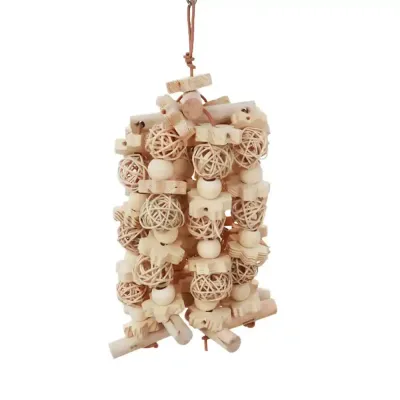
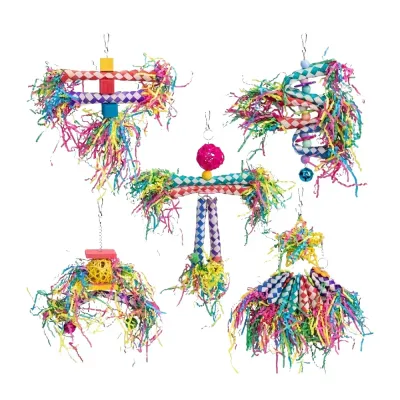
| Enrichment | Pecking toys, hanging vegetable holders, forage accessories | Differentiates a pet retailer from a farm-supply aisle | Does it encourage natural behavior without loose hazardous parts? |
| Coop hygiene | Dedicated brushes, scrapers, waste scoops, washable mats | Supports repeat routines and education | Are materials nonporous and easy to sanitize? |
| Feed storage | Sealed bins and portioning tools | Helps reduce moisture, pests and waste | Is the closure secure and capacity clearly stated? |
| Nesting and comfort | Nesting pads and replaceable liners | Simple replenishment opportunity | Is the product dry, replaceable and correctly sized? |
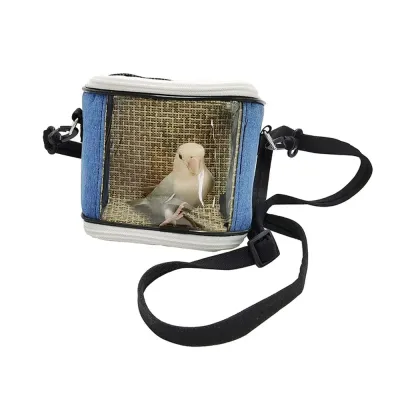
| Transport and isolation | Ventilated carriers and temporary enclosures | Useful for relocation or veterinary visits | Is airflow adequate and can it be cleaned between birds? |
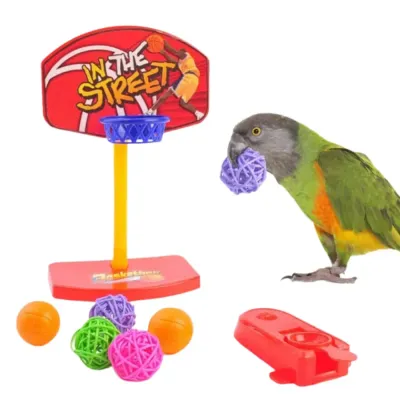
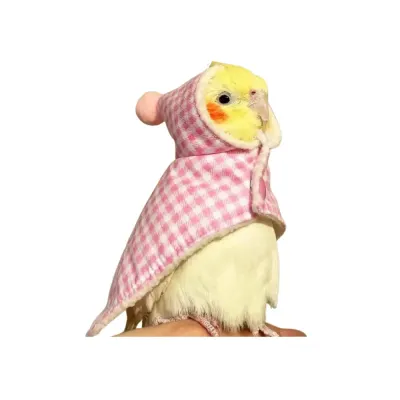
| Seasonal protection | Weather covers and freeze-aware watering accessories | Creates timely merchandising windows | Does the claim match the product’s tested use conditions? Not every bird product is suitable for chickens. Cage toys developed for parrots may contain dimensions, fasteners or materials that are inappropriate for a stronger ground-foraging bird. Likewise, a generic pet carrier is not automatically suitable for poultry. Sellers should confirm species, dimensions, materials, cleaning instructions and intended use with the supplier before making claims. |
Safety information is part of the product
Backyard poultry can carry germs even when birds look healthy. CDC lists Salmonella, Campylobacter, E. coli, histoplasmosis and bird flu among the diseases associated with backyard poultry. Its central advice includes washing hands after contact, supervising children, keeping poultry and their supplies outside the home, and avoiding kissing or snuggling birds.
This is not a reason for retailers to avoid the category. It is a reason to serve it professionally. CDC says outbreaks of Salmonella linked to backyard poultry are common, and research has found knowledge gaps among current and prospective owners. One survey found that many respondents held misconceptions about zoonotic transmission. In another survey of backyard-poultry owners, 58.9% of respondents reported having heard of salmonellosis; this sample finding should not be treated as a percentage of all U.S. flock owners.
A responsible product page should therefore include who the item is for, where it should be used, how it is cleaned, whether adult supervision is needed, and what the product does not do. For example, “easy-clean design supports routine coop hygiene” is reasonable. “Prevents bird flu” is not.
Retailers can strengthen trust with a simple information hierarchy:
- State the intended species and life stage.
- Give exact dimensions, capacity and material information.
- Explain cleaning and drying.
- Identify small parts, cords or entanglement risks.
- Link health claims only to CDC, USDA, veterinary or university-extension guidance.
- Remind customers to check local ordinances and homeowners’ association rules before starting a flock.
This approach supports E-E-A-T because it demonstrates experience with real owner decisions, uses authoritative sources for health questions and avoids turning uncertain claims into marketing promises.
Where the retail opportunity is strongest
Backyard-chicken demand will not be evenly distributed. Rural and suburban stores may see more established flock owners, while urban sellers may serve people researching whether local rules permit hens. Online marketplaces can reach dispersed customers but need precise product data because buyers cannot inspect size and construction in person.
| Customer type | Best content angle | Useful starting assortment |
| Independent pet boutique | “Feathered pets deserve enrichment too” | Curated toys, treat holders and giftable accessories |
| New pet-store owner | “Test a growing niche without overstocking” | Five to ten essential, easy-to-explain SKUs |
| Online pet seller | Search-led care guides and comparison pages | Lightweight, clearly sized, shippable items |
| Marketplace reseller | Problem–solution listings with accurate specifications | Feeders, waterers and cleaning tools |
| Breeder | Durability, sanitation and repeat use | Brooder-compatible accessories and cleaning supplies |
| Veterinary clinic retail area | Hygiene and transport education | Carriers, cleaning tools and care handouts |
| Subscription-box seller | Seasonal enrichment and education | Safe novelty items paired with care cards |
| Local distributor | Reliable replenishment across several care jobs | Coordinated feeding, watering and hygiene range |
| Shelter or rescue | Practical care and temporary housing support | Durable, washable, easy-to-store essentials Groomers and dog trainers are not the primary audience for chicken products, and they do not need to be forced into the story. The better opportunity lies with retailers and animal-care businesses that already serve mixed-pet households. A customer buying dog food may also keep hens; category expansion can increase relevance without changing the store’s identity. |
A low-risk way for retailers to test the category
Retailers should resist launching with a huge wall of unfamiliar products. A focused “Backyard Flock Essentials” collection is easier to explain, measure and improve. Begin with products that solve universal care tasks, then add seasonal or giftable items after seeing what customers ask for.
A practical first assortment
| Launch tier | Number of SKUs | Product role | Why it belongs |
| Essential | 4–6 | Feeding, watering, cleaning, storage | Addresses daily nonoptional jobs |
| Enrichment | 2–3 | Pecking and foraging | Builds differentiation and educational content |
| Seasonal | 1–2 | Weather-related accessories | Tests local climate demand |
| Transport | 1 | Ventilated, washable movement solution | Solves an occasional but urgent need Track sell-through, customer questions, returns, review language and attach rate rather than judging the category only by first-month revenue. Questions are especially valuable. If buyers repeatedly ask whether a feeder works for six hens, the missing asset may be a capacity guide rather than a new product. Content should lead merchandising. Publish a beginner checklist, a feeder comparison, a hygiene guide and a seasonal care page. Link each guide to a small number of directly relevant products. This creates topical depth for search engines and makes the store useful before the customer is ready to buy. |
How Petfairs fits without turning the article into an advertisement
Petfairs is an online wholesale platform serving small businesses and serious individual buyers across many global markets. Its catalog spans familiar dog and cat categories as well as birds and other less traditional companion animals. That breadth can help a retailer test a feathered-pet collection alongside existing inventory rather than opening a separate supplier relationship for every niche.
The value proposition should appear once the reader understands the market problem. For a pet boutique, online seller, breeder, subscription-box business or local distributor, the practical questions are straightforward: Can I start with manageable quantities? Are product specifications clear? Can I combine bird products with the rest of my pet assortment? Can the supplier support my destination?
Petfairs can answer those questions by helping qualified buyers explore bird-related products together with a wider pet-care catalog. Availability, minimum quantities, shipping methods and suitability should be verified on each listing because not every bird accessory is designed for chickens and delivery conditions vary by product and destination.
Questions people ask AI about backyard chickens
The wording below reflects common search and conversational-AI intent. Answering these questions clearly can help the article surface in both traditional search results and AI-generated summaries.
Are chickens really the third most popular pet in America?
The claim is not proven under every measurement. It may reflect the large number of individual chickens or a particular survey estimate, while household-based rankings differ. A safer conclusion is that chickens are among America’s most popular nontraditional companion animals, with a widely cited estimate of 11 million households keeping backyard flocks.
How many Americans keep backyard chickens?
Recent research cites an estimate of approximately 11 million U.S. households as of 2024. Around 8 million were reported to consider the birds pets. Because surveys define “backyard,” “poultry” and “pet” differently, the source and year should always accompany the number.
Did COVID-19 cause more Americans to raise chickens?
COVID-19 appears to have accelerated interest, but it was not the only cause. Grocery disruption, more cooking at home, time spent at home, interest in self-reliance, family activities and companionship all contributed. Academic research describes the ownership surge as particularly notable during the pandemic.
Did bird flu make backyard chickens more popular?
HPAI reduced commercial laying flocks and contributed to higher egg prices, which increased consumer interest in alternative egg sources. However, backyard flocks can also contract avian influenza. Interest and safety risk rose together, so biosecurity education is essential.
Is raising chickens cheaper than buying eggs?
Usually not for a small household flock when all costs are included. Housing, feed, bedding, equipment, healthcare, predator protection and labor can exceed the savings on eggs. Many owners value the experience, animal relationship, education and perceived resilience as much as the eggs.
Can chickens be pets and still provide eggs?
Yes. Many owners form emotional bonds with individual hens while also collecting their eggs. Researchers describe chicken care as a spectrum rather than a simple pet-versus-livestock divide.
Do chickens need toys or enrichment?
Chickens benefit from opportunities to perform natural behaviors such as pecking, scratching and foraging. Suitable enrichment may include safe hanging vegetables, pecking items and forage-based activities. Products must be appropriately sized, securely constructed and regularly inspected.
Can bird toys be used for chickens?
Not automatically. A product designed for a small caged bird may use dimensions, cords or fasteners that are unsuitable for chickens. Retailers and owners should verify the intended species, construction, material safety and cleaning requirements.
What products should a pet store stock for chicken owners?
Start with feeders, waterers, feed-storage solutions, dedicated cleaning tools, nesting accessories, safe enrichment and an appropriate transport option. A focused assortment with accurate care content is more useful than a large collection of loosely related bird products.
Are backyard chickens safe around children?
Children can participate in chicken care with close adult supervision, but poultry can carry germs even when healthy. CDC advises handwashing after contact, keeping birds and their equipment outside the home, and not kissing or snuggling poultry.
Are backyard chickens legal everywhere in the United States?
No. City and county rules may regulate flock size, setbacks, coops, permits and roosters, while homeowners’ associations may impose additional restrictions. Prospective owners should check local government and property rules before purchasing birds or equipment.
Final perspective: the ranking is less important than the relationship
“America’s third most popular pet” is the kind of phrase that travels quickly because it surprises people. The evidence supports the surprise—millions of households keep chickens, and many treat them as pets—but not a universal third-place ranking. Good content should keep the insight and remove the overstatement.
The durable trend is the changing relationship between Americans and backyard birds. Pandemic disruption made household food systems visible. HPAI and egg-price volatility kept eggs in the news, even as prices began falling in 2026. Home cooking gave simple dishes, including Chinese steamed egg, renewed cultural relevance. At the same time, many owners began talking about hens as individuals that need comfort, stimulation and care.
For pet retailers, this is not an invitation to chase a viral statistic. It is an invitation to listen to a group of customers whose needs fall between the conventional pet aisle and the farm-supply store. The strongest opportunity lies in practical products, accurate specifications, low-risk assortment testing and credible education.
Chickens do not have to be number three to deserve a place in the modern pet market. They only have to be present in enough homes—and important enough to their owners—for better care to matter.
Sources and editorial evidence notes
- American Veterinary Medical Association, “Pet ownership stable, veterinary care variable” — pet-poultry population and household estimates for 2011–2016: https://www.avma.org/javma-news/2019-01-15/pet-ownership-stable-veterinary-care-variable
- Axios, “People flock to backyard chickens as egg prices spike” — 11 million household estimate, 8 million viewing chickens as pets, and correction of the third-place claim: https://www.axios.com/2025/02/15/egg-shortage-price-backyard-chickens
- Faulkner et al., “Practices, Management and Resource Preferences of Backyard Chicken Owners in the United States” — recent scientific discussion of the pandemic-era surge and 2024 household estimate: https://pmc.ncbi.nlm.nih.gov/articles/PMC12896362/
- Mace et al., “From the Backyard to Our Beds: The Spectrum of Care, Attitudes, Relationship Types, and Welfare in Non-Commercial Chicken Care” — peer-reviewed analysis of chickens as pets and human–chicken relationships: https://pmc.ncbi.nlm.nih.gov/articles/PMC10812673/
- USDA Economic Research Service, “Food and Consumers” — peak COVID-era food-at-home retail sales: https://www.ers.usda.gov/covid-19/food-and-consumers
- USDA ERS, “Avian influenza outbreaks reduced egg production, driving prices to record highs in 2022” — 43 million laying hens lost and 29% inventory decline: https://www.ers.usda.gov/data-products/charts-of-note/105576
- USDA ERS, “Food Price Outlook: Summary Findings” — annual retail egg-price changes for 2022–2025 and the July 2026 update and forecast: https://www.ers.usda.gov/data-products/food-price-outlook/summary-findings
- USDA APHIS, “Confirmations of Highly Pathogenic Avian Influenza in Commercial and Backyard Flocks” — outbreak timeline and backyard-flock detections: https://www.aphis.usda.gov/livestock-poultry-disease/avian/avian-influenza/hpai-detections/commercial-backyard-flocks
- USDA, “USDA Invests Up To $1 Billion to Combat Avian Flu and Reduce Egg Prices” — 2025 government response: https://www.usda.gov/about-usda/news/press-releases/2025/02/26/usda-invests-1-billion-combat-avian-flu-and-reduce-egg-prices
- USDA ERS, “Retail egg prices fall, following declining wholesale prices” — April 2025 average retail price: https://www.ers.usda.gov/data-products/charts-of-note/112677
- CDC, “Backyard Poultry” — zoonotic risks and household safety guidance: https://www.cdc.gov/healthy-pets/about/backyard-poultry.html
- Paphitis et al., “Backyard chickens—A cross-sectional survey of current and prospective backyard chicken owners in the United States” — owner misconceptions about zoonotic disease: https://pmc.ncbi.nlm.nih.gov/articles/PMC9754136/
- Nicholson et al., “Zoonotic disease awareness survey of backyard poultry owners” — 58.9% salmonellosis-awareness finding: https://stacks.cdc.gov/view/cdc/88154
- Made With Lau, “The Steamed Eggs My Dad’s Made 100,000 Times” — cultural and culinary background only, not evidence of chicken ownership causation: https://www.madewithlau.com/recipes/steamed-egg
- USDA ERS, “Tightening egg supply and surge in retail demand pushed wholesale egg prices to record levels in March” — COVID-era egg demand and wholesale-price context: https://www.ers.usda.gov/data-products/charts-of-note/98520
 Popular Blogs