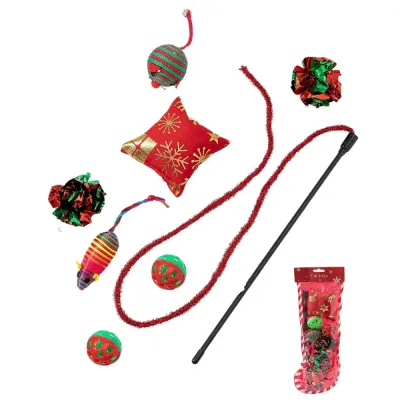

How to Stock Your Pet Store for Christmas 2026

The safest way to stock a pet store for Christmas 2026 is to put most of your budget into giftable products that can still sell after December, limit deeply seasonal designs, and keep part of your cash available for reorders. For a small retailer, a practical starting mix is 40% year-round giftable bestsellers, 20% Christmas-specific products, 15% low-priced add-ons, 10% winter essentials, 5% experimental products, and 10% reserved for replenishment.
That approach matters in 2026 because pet demand remains strong while buyers are more selective. The American Pet Products Association reports that U.S. pet industry spending reached $158 billion in 2025 and projects $165 billion for 2026. At the same time, Google consumer research found that U.S. holiday purchases were becoming more researched and less spontaneous. For store owners, that combination points to opportunity—but not a license to overbuy.
My view is simple: Christmas inventory should create excitement without putting January cash flow at risk. A festive dog toy can attract attention, but a store full of dated merchandise on December 26 is not a successful holiday strategy. Small pet businesses need an assortment that looks seasonal to shoppers and remains financially sensible to the owner.
This guide explains what to buy, when to order it, how much to stock, how to serve dog, cat and exotic-pet customers, and how to reduce the risk of unsold inventory.
Christmas 2026 at a Glance
For U.S.-focused sellers, Thanksgiving falls on November 26, Black Friday on November 27, Cyber Monday on November 30, and Christmas Day on December 25. Online sellers serving multiple countries should also work backward from local delivery deadlines rather than treating Black Friday as the universal beginning of the season.
| Decision | Recommended starting point |
| Begin demand and sales analysis | June–July 2026 |
| Order custom or long-lead-time merchandise | July–August |
| Confirm the main holiday assortment | By late September |
| Launch online holiday content | Late September–October |
| Build the full seasonal display | After Halloween |
| Review early sell-through | Weekly from early November |
| Hold cash for reorders | About 10% of the buying budget |
| Begin slow-seller intervention | Early to mid-December |
| Clear strongly dated products | From December 26 |
Why Christmas Still Matters to Pet Retailers
Christmas pet retail is supported by two durable behaviors: people treat pets as family members, and gift-giving is part of that relationship. In a 2023 Circana survey of U.S. pet owners, 55% said they bought holiday gifts for their pets. Among gift buyers, food or treats were purchased by 68%, squeaky toys by 46%, chew toys by 46%, plush toys by 42%, and catnip toys by 32%. These figures are not a 2026 forecast, but they provide a credible baseline for understanding established gift categories.
What pet owners have historically bought as holiday gifts
| Product type | Share of pet gift buyers in Circana’s 2023 survey |
| Food or treats | 68% |
| Squeaky toys | 46% |
| Chew toys | 46% |
| Plush toys | 42% |
| Catnip toys | 32% Chart 1: Relative popularity of established pet gift categories Source: Circana, “’Tis the Season for Pet Gifts”, based on an October 2023 survey. The year and survey context should remain attached whenever these numbers are quoted. The latest available APPA holiday guide reinforces a broader assortment. Its 2025 selections covered holiday-themed gifts, enrichment, pet technology, winter gear, food and treats, health and wellness, cat products, and gifts for pet parents. This does not prove that every product in those categories will sell in every store. It does show that holiday pet demand extends beyond novelty sweaters and Santa-shaped plush toys. Retailers should also avoid publishing a made-up “2026 Christmas growth rate.” As of this article’s August 2026 update, the National Retail Federation had not released its annual 2026 winter holiday forecast. The responsible approach is to use the latest verified industry evidence, label its date, and update the article when NRF publishes new figures. |
Start With the Customer, Not the Christmas Pattern
The most useful holiday assortment is organized around shopping missions. A customer rarely walks into a store thinking, “I need a seasonal SKU.” They are more likely to think, “I need a small gift for my sister’s cat,” “My dog destroys every plush toy,” or “I need something under $20 that already looks like a present.”
That difference should shape both buying and merchandising.
| Customer mission | Products that answer it | Useful display language |
| Small, affordable gift | Mini toys, catnip toys, bandanas, small treat packs | Stocking Stuffers Under $10 |
| Gift for a heavy chewer | Rubber toys, rope toys, durable treat-dispensing toys | Gifts for Tough Chewers |
| First holiday with a pet | Keepsake accessories, starter toy sets, photo-ready bandanas | Puppy’s First Christmas |
| Gift for an indoor cat | Catnip toys, tunnels, scratchers, interactive toys | Gifts for Indoor Cats |
| Practical winter gift | Beds, blankets, coats, reflective walking accessories | Cozy Winter Essentials |
| Ready-to-give purchase | Curated toy-and-treat sets, stockings, gift boxes | Ready-to-Gift Bundles |
| Gift for the pet owner | Pet-parent accessories, matching items, keepsakes | Gifts for Pet Parents |
| Last-minute purchase | In-stock products, local pickup, fast-delivery items | Last-Minute Pet Gifts This mission-based structure also covers many consumer search questions naturally: the best dog stocking stuffers, how to choose a pet advent calendar, popular Christmas costumes, festive pet photographs, and pet-safe holiday gifts. It answers the intent without repeating awkward keyword variations such as “Christmas cat dog” or “dog cat Christmas.” |
What to Stock for Christmas 2026
Treats and food gifts
Treats were the leading pet gift category in Circana’s survey, which makes them a logical holiday anchor. Small packages work as stocking stuffers, while mixed flavors and presentation boxes support higher price points. However, food purchasing requires more discipline than toy purchasing because shelf life, ingredients, labeling, storage, destination-country rules, and possible recalls all matter.
Retailers should verify expiration dates, ingredient declarations, lot traceability and required market labels before committing to seasonal food. For an online wholesale platform serving many countries, a product that can be shipped to one destination may not be eligible for another. Non-food gifts are often operationally simpler for global buyers.
Squeaky, chew and plush dog toys
Squeaky, chew and plush toys are established gift types, but they serve different dogs. Plush works well for visual holiday displays and gentle play. Rope and rubber products better answer the “my dog destroys everything” customer. Treat-dispensing and enrichment toys combine gift appeal with a lasting functional reason to buy.
Stock by play style rather than using one durability claim for every dog. No toy should be presented as indestructible. Product pages and staff recommendations should identify intended use, approximate size suitability, material, play features and the need for supervision.
Cat gifts that deserve their own plan
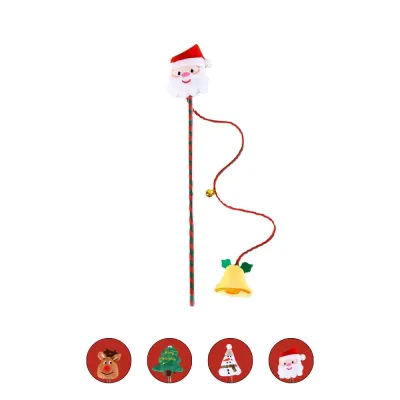
Cat inventory should not be an afterthought added to a dog display. Catnip toys, crinkle toys, teaser toys, tunnels, scratchers and small enrichment products fit the gifting occasion and are easy to bundle. Their compact size also makes them attractive to online sellers, subscription-box businesses and stores with limited shelf space.
APPA reports 53 million U.S. households owned a cat in 2025, with younger consumers helping drive cat ownership and spending. That scale supports a distinct cat collection rather than a token shelf labeled “for cats.”
Advent calendars and countdown products
Pet advent calendars create repeat engagement and strong photo potential, but the calendar must suit the animal. Buyers should check whether the contents are toys, treats or a mixture; whether treat ingredients suit the species; how portions are controlled; when the product expires; and whether the packaging protects freshness.
For retailers, advent calendars are highly date-sensitive. They need to be visible before December 1, and their full-price selling window closes quickly. Order more cautiously than you would a year-round treat or toy. If a store lacks reliable historical demand, a small first test is safer than a deep commitment.
Apparel, costumes and photo accessories
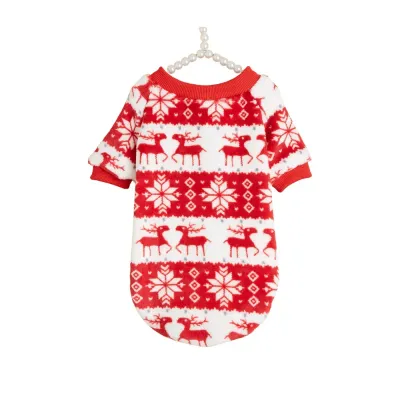
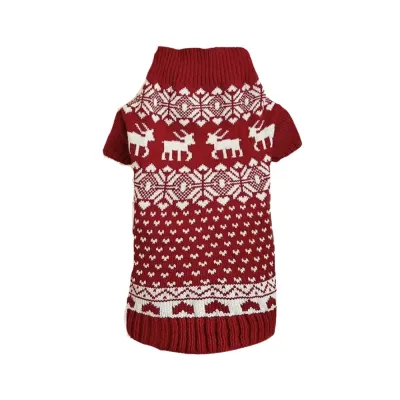
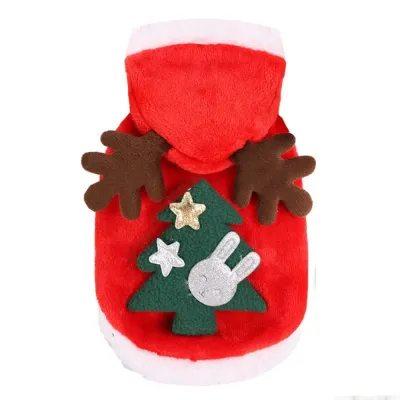
Christmas sweaters, snowman capes, reindeer outfits, bow ties and bandanas serve an emotional and social purpose: they help owners include pets in family photos and celebrations. Bandanas, collars and simple accessories usually carry lower fit risk than full-body costumes. Apparel requires size depth, creates more returns, and can leave a store with an unbalanced size run.
The better buying question is not “Which costume is cutest?” It is “How many sizes can this store support without fragmenting inventory?” For a new design, consider fewer styles with a sensible size range instead of many designs across every possible size.
AAHA advises owners to supervise pets wearing anything new and to make sure the animal is comfortable. Retailers should provide clear measurements and avoid accessories that restrict movement, breathing, sight or normal behavior.
Beds, blankets and winter comfort
Comfort products can be marketed as gifts without becoming obsolete after Christmas. Neutral faux fur, plaid, red, cream and winter-blue designs create a seasonal mood while remaining saleable in January and February. Removable, washable covers and easy-care materials improve the practical case for purchase.
Large beds require more cash and space per SKU. A small physical store may display one sample and keep shallow back stock. An online seller should pay close attention to dimensional shipping cost, packaging size and return economics before treating a bulky bed as a promotional item.
Gifts for birds and small animals
A broad pet retailer should not define Christmas only through dogs and cats. Bird foraging toys, species-appropriate perches, rabbit and rodent chew products, tunnels, enrichment items and small-animal hideouts can serve owners who are often overlooked by generic holiday campaigns.
Exotic-pet products require species-specific accuracy. A product appropriate for a rabbit may not be suitable for a hamster, bird or reptile. Retailers should verify material and intended species instead of using “for all small pets” as a convenient but unsupported claim.
Practical gifts and pet-parent products
Grooming towels, travel bottles, feeding accessories, car seat covers, slow feeders, collars, harnesses and portable bowls may not look overtly festive, yet they solve everyday problems. A ribbon, gift sleeve or curated bundle can make a functional product feel seasonal without trapping it in a one-month sales window.
This category is especially relevant to groomers, trainers, boarding businesses, veterinary retail areas and breeders. Their purchases may serve both professional use and resale, so durability, pack quantity and repeat availability can matter more than a Christmas print.
Compare Seasonal and Cross-Season Products Before Buying
Every holiday SKU carries two kinds of value: the ability to attract attention now and the ability to retain value later. A useful buying score therefore considers seasonal appeal, post-holiday saleability, sizing risk, shelf-space demand and reorder flexibility.
| Product | Holiday appeal | Post-Christmas potential | Inventory risk | Recommended approach |
| Santa-shaped plush toy | High | Low | Medium–high | Buy shallow; use as display leader |
| Red durable chew toy | Medium | High | Low | Stock deeper if proven |
| Pet advent calendar | High | Very low after Dec. 1 | High | Commit early but cautiously |
| Holiday sweater | High | Low | High due to sizes | Limit styles and size depth |
| Festive bandana | High | Medium | Low–medium | Strong low-cost add-on |
| Neutral winter bed | Medium | High | Medium due to space | Favor washable, cross-season designs |
| Enrichment toy | Medium | High | Low | Strong year-round gift anchor |
| Catnip stocking toy | High | Medium | Low | Useful checkout and bundle item |
| Portable water bottle | Low | High | Low | Make giftable through bundling |
| Bird foraging toy | Medium | High | Low–medium | Test where local demand exists The seasonal appeal and risk ratings above are an editorial decision framework, not published industry statistics. Stores should adjust them using their own sales data, climate, customer base and fulfillment model. |
A Christmas Buying Budget for a Small Pet Business
Economic uncertainty changes the cost of a buying mistake. Inventory is paid for before it proves itself, and an unsold product absorbs cash that could have funded payroll, marketing, rent or a fast-moving reorder. This is especially important for a new pet store, mobile groomer, social-commerce seller or subscription-box operator without years of holiday sales history.
I would not recommend spending the full budget on the initial order. Holding back 10% may result in a slightly smaller launch display, but it preserves the ability to reorder products customers have actually chosen.
Recommended starting allocation
| Inventory role | Share of holiday purchasing budget | Why it belongs |
| Year-round giftable bestsellers | 40% | Lower markdown risk and continued January demand |
| Christmas-specific designs | 20% | Creates urgency and a visible seasonal story |
| Low-priced add-ons | 15% | Supports impulse purchases and gift bundles |
| Practical winter products | 10% | Provides useful, cross-season value |
| New-product tests | 5% | Creates discovery without excessive exposure |
| Reorder reserve | 10% | Funds winners after early sales evidence Chart 2: Example allocation for a $1,000 holiday purchasing budget This is a recommended starting model rather than an APPA, Circana or NRF benchmark. A subscription-box seller may dedicate more to compact items with consistent unit counts. A groomer may favor towels, accessories and take-home retail. A physical boutique can invest more in visually distinctive products, while a marketplace reseller may prioritize search demand, shipping size and replenishment speed. |
How Much of Each Product Should You Order?
The right quantity is determined by expected demand, lead time, minimum order quantity, shelf capacity and the cost of being wrong. Historical sales provide the best starting point, but new businesses can use recent sales of comparable products, waitlists, customer questions, social engagement and preorders as weaker demand signals.
A simple unit forecast is:
Expected holiday unit sales = comparable-period unit sales × expected traffic change × expected conversion change
The formula is useful only when assumptions are written down. If comparable products sold 40 units, expected traffic is 10% higher, and conversion is expected to remain unchanged, the working forecast becomes 44 units—not 80 units because the buyer feels optimistic.
For replenishable products, calculate a reorder point:
Reorder point = expected demand during supplier lead time + safety stock
If a toy sells two units per day, takes ten days to replenish, and the store wants a five-day buffer, the reorder point is approximately 30 units: 20 units of lead-time demand plus 10 units of safety stock. Seasonal items need an additional judgment: a reorder arriving after the main gift-buying window may have little value even if the formula calls for more stock.
Use ABC thinking, but add an S for seasonal risk
| Class | Meaning | Holiday action |
| A | High-value or high-velocity proven products | Review frequently; maintain appropriate buffer stock |
| B | Moderate contributors | Reorder selectively based on sell-through |
| C | Slow or experimental products | Keep quantities shallow; avoid automatic replenishment |
| S | Strongly seasonal products | Set a final reorder date and early markdown plan The “S” class is a practical addition for holiday retail. A Christmas stocking may sell quickly in November but become a poor reorder candidate in mid-December if shipping takes three weeks. |
The 2026 Ordering and Merchandising Calendar
June and July: analyze before browsing
Review 2025 holiday sales by SKU, category, selling week, discount level and channel. Record what sold at full price, what sold only after markdowns, what ran out, and what remained after Christmas. New businesses should identify a modest test budget and define the customers they expect to serve.
July and August: place long-lead-time orders
Custom packaging, branded products and international ocean freight require more planning than stocked domestic merchandise. Confirm production time, carton quantity, transit assumptions, customs responsibilities and the latest acceptable arrival date. Build time for inspection and unexpected delay into the plan.
September: finalize the assortment
Photograph samples, prepare product pages, confirm retail prices and decide which products will be sold individually or in bundles. For apparel, publish usable measurement guidance. For bulky items, verify dimensional shipping cost. For edible products, recheck expiration and labeling.
October: begin discovery
Google research shows holiday shopping is a longer season, with some shoppers researching well before peak events. Start publishing gift guides, category pages and social content before the entire store becomes Christmas-themed. Early content can target buying situations such as gifts for chewers, cat stocking stuffers and pet-safe photo accessories.
Early November: read the first demand signals
Review product views, add-to-cart rate, sell-through and customer questions. Do not confuse social likes with purchase demand, but use them alongside sales. Move obvious winners into better positions and consider reordering while the calendar still allows useful delivery.
November 27–30: serve value-focused shoppers
Black Friday and Cyber Monday are important, but discounting every seasonal item at once can train shoppers to wait. Consider a small traffic-driving offer, gift-with-purchase, multi-item bundle or threshold promotion. Protect margin on distinctive products that are already selling.
December 1–15: make gift selection easier
This is the time for price-based displays, ready-made bundles, clear delivery expectations and staff recommendations. Online product pages should state whether an item is in stock and when it is expected to arrive. Physical stores can highlight products that are easy to carry, wrap and give immediately.
December 16–24: switch the promise
The last-minute customer values certainty. Promote local pickup, domestic-stock items, electronic gift cards and ready-to-give bundles. Internationally shipped goods should not be marketed with Christmas delivery claims unless the carrier and destination support them.
From December 26: protect cash and brand value
Separate clearly dated merchandise from products that remain relevant through winter. Markdown the former according to a predetermined plan. Remove Christmas packaging from year-round goods and return them to the normal assortment rather than unnecessarily discounting the underlying product.
Merchandising That Answers Questions
Good holiday merchandising reduces the work a customer must do. Product-type displays such as “dog toys” are useful for routine shopping, but gift buyers benefit from decision shortcuts.
Use signs and online collections such as:
- Stocking Stuffers Under $10
- Pet Gifts Under $25
- Gifts for Tough Chewers
- Puppy’s First Christmas
- Cozy Gifts for Senior Pets
- Gifts for Indoor Cats
- Small-Pet and Bird Gifts
- Photo-Ready Holiday Accessories
- Ready-to-Gift Pet Bundles
- Last-Minute Gifts Available Now
Place low-cost add-ons near checkout or beside complementary products. A bandana next to a holiday plush, a portable bowl next to a travel bottle, or a catnip toy beside a cat stocking turns separate products into a coherent gift idea. Bundles should solve a recognizable need, not merely hide unwanted stock.
For online sellers, product photography should show both scale and use. Festive lifestyle photographs help shoppers imagine the celebration, while a clear product image, dimensions, materials and care information reduce uncertainty. Pet costumes need accurate measurements more than they need another decorative background.
Turn Consumer Content Searches Into Retail Opportunities
Many Christmas pet searches are informational rather than immediately commercial. A wholesaler or retailer can answer them with genuinely useful content and then connect the reader to relevant products.
| Consumer question | Helpful content answer | Ethical commercial connection |
| How can I photograph my pet at Christmas? | Lighting, calm setup, short sessions, pet comfort | Photo-friendly bandanas, blankets and safe props |
| What are popular pet costumes? | Fit, movement, supervision and simple alternatives | Size-guided apparel and low-risk accessories |
| How do I choose an advent calendar? | Species, ingredients, portions, freshness and start date | Clearly labeled dog or cat calendars |
| What are good dog stocking stuffers? | Mix play, treats and practical items by dog size | Small toys, chews, bandanas and accessories |
| What holiday care tips matter? | Food hazards, decorations, visitors and safe spaces | Enrichment, calming routines and practical supplies |
| Where can I find pet decorations? | Prefer reusable, stable, non-ingestible décor | Pet-parent decorations kept separate from pet toys This content strategy supports SEO and generative search because it provides complete answers, clear comparisons and safety context. It also avoids pretending that every informational query should immediately result in a sale. |
Product Safety Is Part of Buying, Not a Disclaimer Added Later
The AVMA warns that breakable ornaments can injure pets, swallowed ornaments can cause intestinal blockage, and string-like decorations such as ribbon or tinsel can become dangerous if ingested. AAHA recommends choosing appropriately sized, pet-safe gifts and supervising pets with new clothing or accessories.
Before adding a holiday product, check:
- Is the intended species clearly identified?
- Is the product appropriately sized for the target pet?
- Are small decorative parts likely to detach?
- Are materials and care instructions available?
- Does apparel allow normal breathing, vision and movement?
- Are edible contents, portions and expiration details clear?
- Does the packaging create an ingestion risk?
- Are supervision instructions appropriate to the product?
- Can the supplier provide required documents for the destination market?
Retailers should never convert a general material statement into a medical or safety guarantee. “Durable” does not mean indestructible, and “natural” does not automatically mean suitable for every animal.
How to Avoid Leftover Christmas Inventory
Reddit discussions reveal a recurring consumer and retailer tension: shoppers may wait for deep post-holiday discounts, while businesses fear that clearance will damage their brand. These anecdotes are not statistical evidence, but they expose a real planning question—what happens if seasonal demand is weaker than expected?
The first answer is prevention. Buy fewer deeply dated products, favor cross-season colors, use low minimums for unproven designs and preserve reorder cash. The second answer is early intervention rather than a panicked December 26 sale.
| Review date | Signal | Action |
| December 5 | Product is well below planned sell-through | Improve placement, images or explanation |
| December 12 | Slow product remains unchanged | Bundle, offer a modest incentive or reduce reorder plans |
| December 18 | Strongly seasonal stock remains high | Use gift-with-purchase, threshold offer or targeted markdown |
| December 26 | Product has little post-holiday relevance | Clear decisively according to margin and storage cost |
| January | Product is cross-season and useful | Remove festive packaging and return it to regular selling Mystery boxes can move mixed inventory, but customers should understand the species, approximate value, product type and any important restrictions. A mystery offer should not be used to unload unsafe, expired or unsuitable products. |
Choosing a Wholesale Supplier for Holiday Stock
The lowest unit price is not necessarily the lowest-risk offer. Compare total landed cost and operational fit.
| Supplier question | What it protects |
| What is the minimum order and carton quantity? | Cash flow and overstock exposure |
| Is mixing products or variations allowed? | Assortment flexibility |
| What is the production and transit lead time? | Arrival before the selling window |
| Are duties, taxes and customs included? | Landed-cost accuracy |
| Which countries can receive this product? | Global selling feasibility |
| Is fast replenishment available? | Ability to reorder winners |
| What documentation is available? | Compliance and product-page accuracy |
| What is the damage or quality policy? | Cost of fulfillment problems |
| Are retail-ready images and specifications supplied? | Faster product launch |
| Is neutral or custom packaging available? | Branding and resale presentation Petfairs is an online wholesale platform serving small business and high-volume consumer buyers across many markets. Its range covers common dog and cat supplies as well as products for birds and other pets. For cautious holiday buyers, the relevant advantage is not simply catalog size; it is the ability to compare products, test selected items by carton, combine sourcing across categories and use suitable shipping options for the destination. That purchasing model can fit independent pet stores, boutiques, groomers, trainers, subscription-box sellers, veterinary retail areas, boarding businesses, breeders, shelters, social-commerce sellers and online marketplace resellers. Not every audience needs the same assortment. A groomer may sell towels and take-home accessories, while a subscription box needs compact products with dependable unit quantities. The platform should support those different buying jobs rather than force every buyer into one “pet store” template. |
Christmas 2026 Inventory Checklist
Before placing the main order, confirm that you have:
- Reviewed comparable sales and markdown history
- Set a total purchasing budget
- Reserved cash for reorders
- Separated year-round gifts from Christmas-only products
- Built distinct dog, cat and relevant exotic-pet choices
- Included low-priced, mid-priced and premium gift options
- Checked sizing risk for apparel
- Checked shelf life and labeling for treats
- Confirmed materials, dimensions and intended species
- Calculated landed cost, not only unit price
- Confirmed production and shipping timelines
- Defined the last safe reorder date
- Planned online collections and physical displays
- Prepared delivery cutoffs and pickup messaging
- Set slow-seller review dates
- Decided how post-holiday inventory will be handled
Frequently Asked Questions
When should a pet store order Christmas inventory for 2026?
Order custom, branded or long-lead-time products in July or August, and finalize the main assortment by late September. Products already held in a domestic warehouse can be ordered later, but sellers should still allow time to create listings, photography, bundles and promotions.
What pet products usually sell well as Christmas gifts?
Circana’s 2023 U.S. survey identified treats, squeaky toys, chew toys, plush toys and catnip toys as leading pet gift types. Enrichment products, winter comfort, photo accessories, gifts for pet parents and practical pet supplies can broaden the assortment.
How much Christmas inventory should a new pet store buy?
There is no reliable universal unit count. Start with comparable product sales, supplier lead time, minimum order, available space and cash tolerance. Keep unproven seasonal designs shallow and reserve roughly 10% of the budget for evidence-based reorders.
Are Christmas-themed pet toys worth stocking?
Yes, in controlled quantities. They create visual excitement and gift urgency, but strongly dated designs carry more markdown risk. Pair them with red, plaid, winter-themed or function-led products that can continue selling after Christmas.
How should a retailer choose a pet advent calendar?
Check the intended species, contents, ingredients, portion size, shelf life, package integrity and start date. Retailers should order advent calendars early enough to sell before December 1 and avoid overstock because their useful selling window is unusually short.
What are good dog Christmas stocking stuffers?
Small squeaky toys, appropriately sized chew toys, treat packs, bandanas, collar accessories, portable supplies and grooming items work well. The best mix depends on dog size, play style and dietary needs.
How can a store reduce leftover holiday stock?
Limit Christmas-only designs, favor cross-season products, order unproven items in smaller quantities, review sell-through weekly, bundle slow movers before the final week, and set a planned clearance date for products with no January relevance.
Should a holiday pet collection include exotic pets?
Yes, when the retailer serves those owners and can verify species suitability. Bird foraging products, small-animal chew items, tunnels and hideouts can create a more inclusive assortment, but products should not be labeled broadly without evidence that they are appropriate for each species.
Final Recommendation
A strong Christmas assortment is not the largest one. It is the assortment that makes gift buying easy, represents more than one type of pet, protects animal wellbeing, and leaves the retailer with enough cash to respond when real sales data arrives.
For Christmas 2026, use seasonal products to create attention and year-round products to protect the investment. Buy cautiously, measure weekly, reorder winners while the delivery window remains open, and intervene before slow stock becomes a January problem. In an uncertain economy, disciplined inventory is not a lack of ambition. It is how a small pet business stays able to serve customers long after the decorations come down.
Sources and Methodology
- American Pet Products Association, 2026 State of the Industry
- APPA, 2025 Pets Add Life Holiday Gift Guide
- Circana, “’Tis the Season for Pet Gifts”
- National Retail Federation, Winter Holiday Data and Trends
- Google, Connect Early With Holiday Shoppers
- Google, Holiday Marketing and Modern Consumers
- American Veterinary Medical Association, Winter Holiday Pet Safety
- American Animal Hospital Association, Pet-Safe Holiday Gifts
- Shopify, Seasonal Inventory Management
- Shopify, Inventory Forecasting
Reddit discussions were reviewed only to identify recurring questions about seasonal demand, early merchandising, storage pressure and leftover inventory. They were not used as evidence for market size, purchasing percentages, safety or financial outcomes. Quora pages could not be accessed reliably during research and were therefore not cited.
 Popular Blogs