

National Fetch Day 2026: Safer Play & Smarter Dog Toy Selection
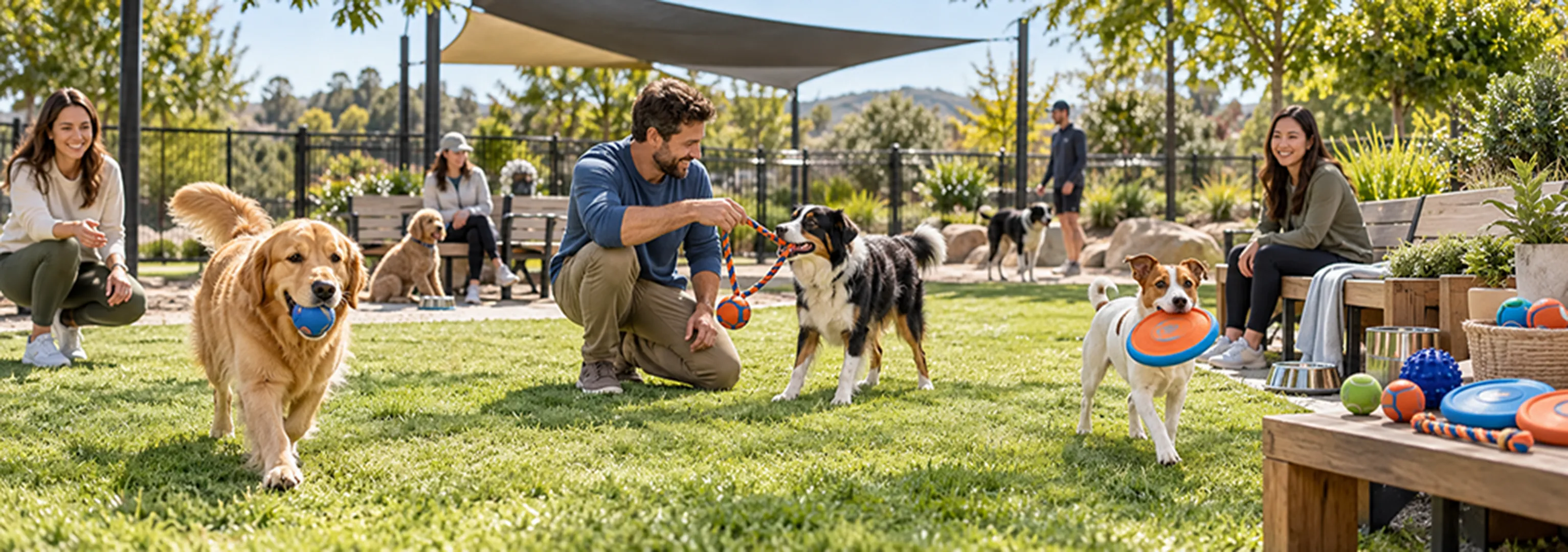
National Fetch Day 2026 took place on May 16, 2026. For pet retailers, the occasion offered more than a reason to promote dog balls for one day. It provided a useful theme for helping customers understand how dog size, play style, training experience, environment, and physical condition can all influence the type of fetch toy they choose.
That distinction matters because fetch is not one single activity. One customer may need an everyday rubber ball for a medium-size dog. Another may be looking for a quieter toy for apartment play, a floating toy for summer trips, or an easier-to-hold training toy for a dog still learning to retrieve. Retailers that organize a dog toy assortment around those real situations can make the category easier to shop while relying less on short-lived event merchandise. Explore Petfairs Dog Toys
For dogs, I see fetch as one of the simplest ways to create interaction between an animal and a person: the toy moves away, the dog engages with it, and the game can bring attention back toward the handler. But good fetch is not about throwing farther or repeating the game until a dog is exhausted. Not every dog naturally retrieves, not every ball is suitable for every mouth, and high-intensity running is not appropriate for every dog. For retailers, understanding those differences is what turns National Fetch Day from a novelty holiday into a useful merchandising and customer-education opportunity.
When Was National Fetch Day 2026?
National Fetch Day was created by Petmate in 2018 to mark the 20th anniversary of the Chuckit! Launcher. The original announcement established the occasion on the third Saturday in October, with the first National Fetch Day held on October 20, 2018.
That schedule changed for 2026.
On April 16, 2026, Petmate announced that National Fetch Day 2026 would take place on May 16, describing the event as the beginning of the outdoor “fetch season.”
National Fetch Day: What Changed in 2026?
| Item | Original Position | 2026 Position |
| Founder | Petmate | Petmate |
| First event | October 20, 2018 | — |
| Original timing | Third Saturday in October | — |
| 2026 date | — | May 16, 2026 |
| Main theme | Exercise, play and the human-animal bond | Outdoor play and the start of fetch season The important editorial distinction is that Petmate changed the 2026 celebration date. Retailers should not assume from that announcement alone that every future National Fetch Day will permanently take place in May. Because May 16 has already passed, businesses publishing content later in 2026 should also avoid language such as “National Fetch Day is coming.” The more useful approach now is to use the event as an evergreen case study in fetch merchandising, safer toy selection and customer education. |
Why Fetch Still Matters to Pet Retailers After Fetch Day
A one-day pet holiday has limited value if its merchandise becomes irrelevant when the event ends.
Fetch products are different.
Dogs play with balls, discs, rope toys and retrieving toys throughout the year, which means National Fetch Day can serve as a merchandising theme without requiring retailers to build large inventories of date-specific products.
This is particularly relevant in a large U.S. dog market.
The American Pet Products Association reported that 71 million U.S. households owned dogs in 2025, representing 53% of U.S. households. APPA said that dog ownership increased 4% year over year and that approximately four million additional households owned dogs compared with 2024.
U.S. Dog Ownership Snapshot
| Metric | 2024 | 2025 | Change |
| Share of U.S. households owning dogs | 51% | 53% | +2 percentage points |
| Dog-owning households | — | 71 million | APPA reports about +4 million households |
| Reported YoY growth in dog-owning households | — | — | 0.04 Source: American Pet Products Association, 2026 Dog Report / 2025 National Pet Owners Survey. |
Figure 1. Share of U.S. Households Owning Dogs
2024 — 51%
█████████████████████████
2025 — 53%
██████████████████████████
The difference is modest in percentage points but meaningful at national scale.
However, this data should not be interpreted as evidence that National Fetch Day itself increases dog-toy sales. APPA measures dog ownership and spending behavior, not Fetch Day-specific sales performance.
For a retailer, the stronger conclusion is simply this:
There is a large existing dog-owning customer base, and Fetch Day provides a timely way to organize products around an activity many customers already understand.
What Retailers Should Explain to First-Time Fetch Customers
One reason fetch creates useful retail content is that it looks simpler than it really is.
A person throws a toy. The dog runs after it. The dog brings it back.
Except many dogs do not complete that sequence.
The American Kennel Club notes that fetch does not come naturally to every dog. Some dogs chase a ball but do not return it. Others are more interested in plush toys or different objects, while some dogs need to learn the retrieving sequence gradually.
For retailers and trainers, that means the question should not be:
“Why won't this dog fetch?”
A better question is:
“Which part of the retrieve does this dog already understand?”
Fetch Is a Sequence, Not One Behavior
| Stage | What the Dog Does | Common Customer Problem |
| Notice | Shows interest in the toy | Dog ignores the toy |
| Chase | Moves toward it | Dog watches but does not chase |
| Pick up | Takes toy in mouth | Dog reaches toy and leaves it |
| Hold | Keeps possession briefly | Dog immediately drops it |
| Return | Moves back toward handler | Dog runs away with toy |
| Release | Gives toy back | Dog refuses to let go |
| Repeat | Begins another round calmly | Dog becomes overexcited AKC's training guidance similarly recommends building the retrieve gradually—starting with interest in the toy and “hold,” then increasing the distance the dog travels to pick it up and return it. This matters commercially because a customer whose dog is learning fetch may not simply need “a better ball.” They may benefit from a combination such as: easy-to-grip toy + training treats + clicker or marker training + treat pouch That is a much more useful shopping scenario than a wall of nearly identical balls. |
Safer Fetch Starts With the Dog, Not the Toy
Fetch can provide exercise, play and interaction, but activity should match the individual dog.
VCA Animal Hospitals recommends considering age, health, body condition, breed and fitness when choosing exercise. Puppies with growing bones may need shorter, self-paced activity; brachycephalic dogs can have different exercise requirements; and overweight dogs are more vulnerable to joint problems. VCA specifically notes that the sudden starts and stops involved in chasing a ball may be a poor activity choice for some overweight or obese dogs.
That gives retailers an important communication rule:
Do not market high-speed fetch as universally appropriate exercise
Instead, help customers choose a level and style of play that fits their dog.
Customer Considerations Before Recommending a Fetch Toy
| Customer Situation | Retailer Should Consider | Possible Direction |
| Healthy adult dog | Play style, environment, toy size | Everyday fetch |
| Puppy | Developing body, shorter sessions | Lightweight controlled play |
| Senior dog | Mobility and joint comfort | Gentle or rolling play |
| Overweight dog | Repeated sprinting and abrupt stops | Lower-intensity activity |
| Flat-faced breed | Heat and breathing tolerance | Shorter controlled sessions |
| Heavy chewer | Destruction and loose-piece risk | Durable appropriately sized toy |
| Fetch-obsessed dog | Fatigue and over-arousal | Breaks and alternative enrichment The product is only one part of the decision. |
How Long Should Dogs Play Fetch?
There is no evidence-based universal number of minutes that fits every dog.
A young conditioned dog and an older dog with limited mobility should not be given identical activity targets.
PDSA warns that repeated chasing, sprinting and abrupt stopping can place stress on muscles and joints. It also notes that highly motivated dogs may continue retrieving even when they are tired or becoming too hot.
A practical customer message is therefore:
play → pause → walk or sniff → assess the dog → continue if appropriate
instead of:
throw continuously until the dog stops.
That advice becomes even more important when a retailer, trainer or daycare organizes a public Fetch Day activity where excitement can encourage longer or faster play than usual.
Ball Size Is a Product Specification—and a Safety Issue
One of the strongest reasons retailers need accurate product information is ball sizing.
PDSA recommends choosing a ball that is large enough that the dog cannot fit the entire ball into its mouth, while still allowing the dog to carry it comfortably. The organization also advises checking toys for cracks, loose pieces and damage.
That makes “S / M / L” alone a weak product description.
A stronger dog-ball product page should tell customers the actual dimensions.
What Retailers Should Show for Fetch Balls
| Product Information | Why It Helps the Customer |
| Ball diameter | Helps judge mouth fit |
| Product weight | Helps compare throwing/carrying |
| Material | Helps explain intended use |
| Recommended dog size | Provides quick orientation |
| Intended play type | Fetch, tug, water, indoor, etc. |
| Floatability | Important for water use |
| Launcher compatibility | Prevents incompatible purchases |
| Cleaning instructions | Relevant for outdoor use |
| Replacement / inspection guidance | Helps customers identify damaged toys This is also important for wholesale buyers. A retailer ordering three sizes should know whether the size difference is meaningful enough to serve different dogs rather than simply creating more SKUs on the shelf. |
What About Tennis Balls?
Tennis balls are one of the products most strongly associated with fetch, but retailers should avoid treating them as automatically suitable for every dog.
AKC identifies two important concerns.
Dogs with powerful jaws may compress, split or shred tennis balls, creating choking or ingestion risks. The abrasive felt surface can also contribute to dental wear, particularly as dirt and grit accumulate on it.
The correct conclusion is not:
“Tennis balls are unsafe.”
A better explanation is:
Tennis balls can be used for supervised retrieving, but customers whose dogs repeatedly crush or chew them should consider purpose-designed alternatives and replace damaged toys promptly.
Retailers can also use this question to explain why material, diameter and play behavior matter more than simply choosing whichever ball looks familiar.
Build a Fetch Assortment Around Play Styles
The most useful assortment is not necessarily the assortment with the largest number of toy shapes.
It is the one that solves a wider range of play situations.
For small retailers especially, I would organize fetch products around five customer needs.
Everyday Fetch
This is the foundation of the category.
Typical products include:
- rubber fetch balls;
- textured balls;
- bounce balls;
- ball-and-rope toys;
- simple retrieving toys.
Petfairs' current Dog Toys category, for example, includes fetch balls, high-bounce products, EVA toys and rope-ball formats rather than only one standard ball type.
For retailers, the key buying question is not:
“How many ball designs do we need?”
It is:
“Do we cover the useful size and play differences our customers actually encounter?”
Everyday Fetch Buying Questions
| Check | Why It Matters |
| Number of meaningful sizes | Helps cover different dog sizes |
| Actual diameter | More useful than S/M/L alone |
| Grip / texture | May help different dogs carry the toy |
| Bounce characteristics | Changes play style |
| Material durability | Important for repeated outdoor use |
| Pack / carton quantity | Affects retailer cash commitment |
| Replacement potential | Supports repeat purchasing A retailer serving mostly small companion dogs may need different size depth from one serving retrievers and large active breeds. Historical store data should decide that mix—not a universal “high stock” recommendation. |
Indoor & Quiet Fetch
Not every customer has a yard.
Urban apartments, bad weather and noise-sensitive households create a different use case.
Indoor play may favor:
- lightweight toys;
- softer balls;
- flexible materials;
- non-squeaking options;
- shorter throwing distances.
This does not mean indoor toys can be less durable.
The correct buying question is:
What combination of weight, material, noise and durability makes the product appropriate for controlled indoor use?
Indoor vs. Outdoor Selection Criteria
| Product Attribute | Indoor Priority | Outdoor Priority |
| Low impact on surroundings | High | Lower |
| Noise level | High | Moderate |
| Visibility | Moderate | High |
| Water resistance | Situational | Often useful |
| Weight | Usually lighter | Wider range |
| Durability | Depends on dog | Depends on dog |
| Throwing distance | Short | Often longer Notice that durability is not classified as “low” or “high” by environment. A powerful chewer still needs an appropriate toy indoors. |
Outdoor & Water Fetch
Because National Fetch Day 2026 moved to May, outdoor and warm-weather use made particular sense around the event.
Retailers serving customers who visit parks, beaches, lakes or pools can consider:
- floating balls;
- EVA fetch toys;
- floating rope toys;
- dog flying discs;
- high-visibility toys;
- travel water accessories.
Petfairs currently lists products such as floating EVA toys, floating balls with rope handles and outdoor flying toys within its dog toy assortment.
But a product should only be described as floating when its specifications actually support that claim.
Retailers should also avoid presenting water fetch as suitable for every dog. Swimming ability, environment, water conditions and supervision remain separate safety considerations.
Outdoor Fetch Selection Matrix
| Use Case | Product Direction | Check Before Buying |
| Park play | Visible fetch ball | Size, durability, cleanability |
| Long grass | High-visibility toy | Color visibility, size |
| Water play | Floating toy | Verified floatability, material |
| Fetch + tug | Ball-and-rope design | Attachment strength, dimensions |
| Open-space retrieving | Flying disc | Material, weight, edge construction |
| Evening play | High-visibility / glow product | Actual visibility feature, durability This is also where ball-and-rope toys become commercially interesting. One product format may support both retrieving and tug-style interaction, allowing a retailer to serve more than one play preference with the same SKU—provided the product is genuinely designed for both uses. Petfairs currently carries a dedicated rope-and-tug category that includes floating training balls with rope handles and several products described for tug and fetch play. |
Beginner Retrieve Training
A store that talks about “teaching fetch” should stock products that support the learning process.
AKC recommends using a variety of toys to discover what motivates the dog and notes that treats and a clicker can be useful during fetch training.
That creates a logical beginner assortment:
- easy-to-grip retrieving toys;
- lightweight balls;
- rope-handled toys;
- training treats;
- clickers;
- treat pouches.
The merchandising message becomes:
Learn to Retrieve
Pick up → Hold → Return → Release
instead of simply:
Dog Balls
That is a stronger way to connect training content with products without turning the article into an advertisement.
Gentle & Lower-Intensity Play
Not every dog should perform repeated high-speed sprints.
For senior dogs, dogs returning from injury, dogs with mobility limitations, or simply dogs that do not enjoy traditional retrieving, retailers can offer other forms of interaction.
Options may include:
- gently rolling a soft toy;
- treat-dispensing toys;
- scent-based activities;
- puzzle toys;
- snuffle products;
- simple training games.
AAHA describes enrichment as broader than physical play and recommends variety across cognitive, sensory, food, physical and social activities.
AAHA's indoor enrichment guidance also includes scent games, training and problem-solving activities as ways to engage dogs mentally and physically.
For retailers, the message should be:
Alternative play
not:
medical or arthritis toys
unless a product has legitimate evidence supporting such a claim.
The Fetch Assortment at a Glance
This is a more useful way to compare products than ranking everything as “High,” “Medium” or “Low” priority.
| Play Need | Product Examples | Best Fit for Retailers Serving | Main Buying Checks |
| Everyday fetch | Rubber balls, textured balls | Broad dog-owner base | Size, material, durability |
| Fetch + tug | Ball-and-rope toys | Interactive-play customers | Rope attachment, dimensions |
| Indoor & quiet | Soft/lightweight toys | Urban/apartment customers | Noise, weight, construction |
| Outdoor | High-visibility balls, discs | Park-active customers | Visibility, cleanability |
| Water play | Floating EVA/ball toys | Beach/lake/pool customers | Verified floatability |
| Beginner training | Easy-grip toys, clickers | Trainers/new owners | Grip, reward compatibility |
| Long-distance fetch | Launcher-compatible balls | Large-space customers | Exact compatibility |
| Gentle play | Soft rolling/enrichment toys | Senior/low-intensity needs | Weight, play intensity |
| Cognitive alternative | Puzzle/snuffle toys | Indoor enrichment customers | Difficulty, cleaning, parts The important part is the final column. Retail buyers should be purchasing against product specifications and customer use cases, not simply against a holiday theme. |
Use Store Data to Decide Inventory Depth
A National Fetch Day article should not tell every retailer to buy “high inventory” of rubber balls or “medium inventory” of floating toys.
That decision depends on the business.
A better framework uses the retailer's own data.
Four Numbers Worth Checking
| Retail Metric | Question It Answers |
| Units sold by toy type | What customers actually buy |
| Units sold by size | Which size mix deserves depth |
| Return/refund rate | Which products create dissatisfaction |
| Weeks to reorder | How much safety stock is necessary A fifth useful signal is customer feedback. If staff repeatedly hear:“This ball is too small for my Labrador. |
that may be more useful than adding another color of the existing size.
Likewise, if floating toys sell primarily from May through August, that seasonal pattern can inform next year's initial buy much better than a generic online recommendation.
Evergreen Products Reduce Event Inventory Risk
National Fetch Day lasts one day.
Dog play continues afterward.
That is why retailers should distinguish between event merchandising and event inventory.
They are not the same thing.
A retailer can build a National Fetch Day display using products that remain useful in June, July and beyond.
Event Merchandise vs. Evergreen Merchandise
| Product | Useful After Fetch Day? | Main Inventory Question |
| Standard fetch ball | Yes | Do sizes match customer demand? |
| Rope-and-ball toy | Yes | Does the format fit local play preferences? |
| Floating toy | Yes, especially in warm months | Is water play relevant locally? |
| Flying disc | Yes | Is there sufficient outdoor-play demand? |
| Launcher-compatible ball | Yes | Is there an installed launcher customer base? |
| Training treats | Yes | Can they support training bundles? |
| “National Fetch Day 2026” printed item | Limited | What happens to leftovers after the event? For a small pet store with limited working capital, my preference would be to use the holiday to re-merchandise existing evergreen products rather than create a large amount of date-specific inventory. That lowers the cost of being wrong. |
A Wholesale Buying Checklist for Fetch Toys
Retailers buying at wholesale need more information than end consumers.
A shopper may ask whether a toy floats.
A buyer also needs to know how many units arrive in a carton, what space they occupy, how sizes are packed, and how quickly they can be reordered.
Wholesale Fetch-Toy Checklist
| Procurement Question | Why It Matters |
| What are the exact product dimensions? | Supports safer customer matching |
| What is the product weight? | Affects use and shipping |
| Which material is actually used? | Supports accurate merchandising |
| What play type is the product designed for? | Prevents unsupported claims |
| Does the toy float? | Must be verified before water-play marketing |
| Is it launcher-compatible? | Compatibility needs to be exact |
| Is there more than one meaningful size? | Helps build a usable size assortment |
| How many units are packed per carton? | Determines cash commitment |
| Are sizes/colors mixed or separate? | Affects inventory control |
| What are carton dimensions and weight? | Affects storage and freight |
| What are care instructions? | Helps build PDP information |
| What is the replenishment lead time? | Determines reorder point |
| Is the design evergreen or dated? | Influences leftover risk This is where wholesale content can become genuinely useful. A buyer does not simply need to know that a product is “fun.” They need enough information to decide whether that SKU belongs in their assortment. |
Petfairs Product Examples: Use the Catalog as Evidence, Not Advertising
Petfairs currently has 645 results in its Dog Toys category at the time of this review, including fetch balls, rope products, floating toys, frisbees, interactive toys and training-related items.
The Rope and Tug Toys category contains 44 results, while the Interactive Dog Toys category currently lists 96 results. These are live catalog counts and can change as the assortment changes.
Current Petfairs Dog-Toy Category Snapshot
| Petfairs Category | Results Visible at Review | Relevant Fetch Use Cases |
| Dog Toys | 645 | Balls, discs, rope, chew, interactive |
| Rope & Tug Toys | 44 | Fetch + tug, rope-handle balls |
| Interactive Dog Toys | 96 | Fetch, training, puzzles, enrichment Important: These numbers describe Petfairs' current catalog, not sales volume or market share. They should never be presented as evidence that one type of toy is more popular than another. For this article, the useful commercial takeaway is that a buyer can move from a broad dog toy assortment into more specific play formats depending on the use case. Browse Wholesale Dog Toys Explore Dog Rope & Tug Toys Explore Interactive Dog Toys |
Retail Ideas That Do More Than Discount Dog Balls
National Fetch Day does not require a large public event.
For smaller businesses, the best campaign is often one that combines education + product discovery + customer participation.
Build a “Find Your Fetch Style” Display
Instead of organizing everything by material, group products by play style:
Everyday RetrieverIndoor PlayerFetch + Tug FanWater ExplorerBeginner Retriever
This allows customers to start with the problem they recognize.
A pet store could partner with a local dog trainer for a short session demonstrating:
take → hold → bring → release
This gives the business useful educational content without positioning store employees as veterinary or training authorities.
The same session can later become:
- short videos;
- social posts;
- email content;
- FAQ content;
- in-store signage.
Create a “Choose the Right Ball” Station
Use actual size samples to show customers why diameter matters.
For each toy, display:
- diameter;
- intended size range;
- material;
- indoor/outdoor suitability;
- floatability where verified.
This turns a safety concept into a retail experience.
Create a Fetch + Hydration Bundle
Because the 2026 event occurred in May, warmer-weather outdoor play created a natural merchandising relationship between:
fetch toy + portable water bowl + travel bottle + waste bags
The commercial value is not that those products are all “Fetch Day products.”
They solve one complete outdoor-use scenario.
How Different Pet Businesses Can Use the Theme
National Fetch Day does not need to look identical for every Petfairs customer.
| Business Type | Relevant Use |
| Independent pet store | Toy comparison and merchandising |
| Pet boutique | Curated design-led play collection |
| Online seller | Use-case landing page |
| Social-commerce seller | Customer fetch-video content |
| Dog trainer | Retrieve-training clinic |
| Boarding/daycare | Structured supervised play |
| Subscription box | Active-play product theme |
| Shelter/rescue | Enrichment or community activity A groomer or veterinary retail counter does not need to build an entire Fetch Day campaign simply because the holiday exists. The theme should only be used when it fits the customer's business. That restraint is important. |
Frequently Asked Questions
When was National Fetch Day 2026?
National Fetch Day 2026 took place on May 16, 2026. The event was originally founded by Petmate in 2018 and historically observed on the third Saturday in October. Petmate announced the May 16 date specifically for the 2026 celebration.
Do all dogs naturally know how to fetch?
No. AKC notes that retrieving comes naturally to some dogs, while others need to learn individual steps such as holding, picking up and returning a toy.
What size fetch ball should a dog use?
PDSA recommends a ball large enough that the dog cannot fit the entire ball into its mouth while still being comfortable to carry. Exact product dimensions are therefore more useful than a generic S/M/L label alone.
Are tennis balls suitable for dogs?
They can be used for supervised retrieving, but AKC warns that powerful chewing can break the ball and that the abrasive felt may contribute to dental wear. Customers whose dogs frequently crush or chew tennis balls may need another type of fetch toy.
What should a pet store stock for fetch play?
Instead of choosing products solely by appearance, retailers can build an assortment around play situations: everyday balls, fetch-and-tug toys, indoor/quiet toys, floating outdoor toys, beginner training products and gentler enrichment alternatives. The final SKU depth should be based on the store's own customer profile and sales data.
What should wholesale buyers check before ordering dog fetch toys?
Buyers should verify actual dimensions, material, intended use, size options, pack/carton quantities, launcher compatibility where relevant, floatability claims, carton dimensions, storage needs and replenishment time.
Final Takeaway: Stock for the Way Dogs Play
The strongest National Fetch Day strategy is not to sell as many balls as possible on one date.
It is to help customers understand that dogs play differently.
Some dogs want to chase a rubber ball across a park.
Some enjoy carrying a rope toy back and turning the retrieve into tug.
Some need a lightweight toy for a small indoor space.
Some are learning the very first step of holding and returning an object.
Others may be better served by gentle rolling games, scent work or puzzle-based enrichment rather than repetitive high-speed fetch.
That diversity should shape the retail assortment.
For small pet businesses, the safest commercial approach is also the most practical one: use National Fetch Day as a reason to reorganize and explain evergreen dog-play products, rather than overbuying merchandise that only makes sense for a single event.
For me, that is what makes fetch such a useful retail theme. The product is not the entire experience. The value comes from matching the right dog, the right person, the right activity and the right toy.
National Fetch Day lasts one day. Better product selection can keep working all year.
Editorial & Evidence Note
National Fetch Day history and the 2026 date in this article are based on first-party Petmate announcements. U.S. dog-ownership statistics come from the American Pet Products Association's 2026 Dog Report and 2025 National Pet Owners Survey. Dog exercise, training, enrichment and toy-selection guidance is supported by AKC, VCA Animal Hospitals, PDSA and AAHA. Retail assortment, merchandising and wholesale purchasing recommendations are editorial B2B guidance and should not be interpreted as measured sales forecasts.

 Popular Blogs