
New Dog Essentials Every First-Time Dog Family Needs
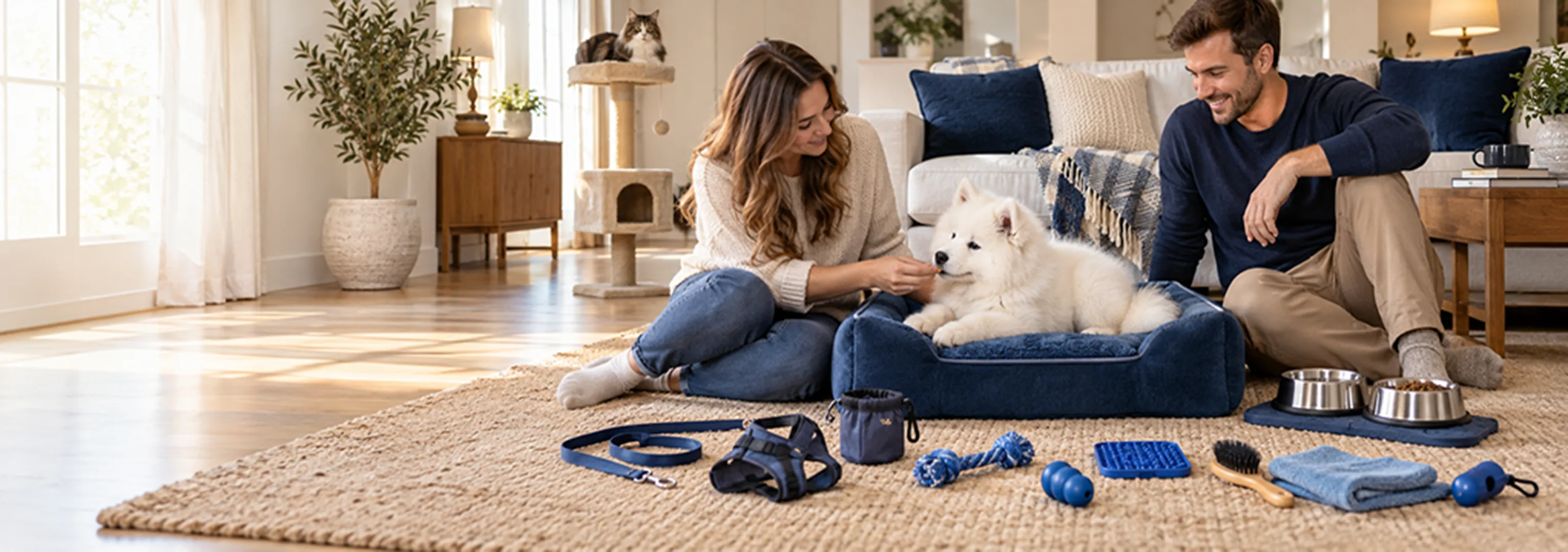
Bringing home a new dog is easier when families focus on three things first: safety, consistency, and reward-based training. The essential starter list is relatively short—a secure resting area, correctly fitted walking equipment, food and water bowls, identification, waste supplies, appropriate chew items, and small rewards—but each item should support a specific behavior or daily routine. A crate cannot teach a dog to enjoy being alone by itself, and a puzzle toy cannot replace exercise or human interaction. Products work best when they help people create predictable, positive experiences.
That lesson applies even to the most famous new dog families. Taylor Swift and Travis Kelce recently welcomed a female Samoyed named Wendy. She is the couple's first publicly known dog and joins Swift's three cats: Meredith Grey, Olivia Benson, and Benjamin Button. Wendy later appeared with Kelce in a Tommy Hilfiger campaign. In a direct interview with Vogue, Kelce said that Wendy “lights up my day.” The comment captures the emotional appeal of adding a dog to a household, but the photographs do not show the quieter work behind a successful transition: building routines, preventing unsafe behavior, introducing resident animals slowly, and teaching the dog what to expect.
The couple has not publicly explained why they chose a Samoyed or how Wendy joined their family. For that reason, this article does not describe her as a shelter adoption or speculate about their private motivations. Instead, Wendy's arrival offers a timely starting point for a broader question: what does any new dog actually need to feel safe and learn how a household works?
For pet retailers, groomers, trainers, veterinary retail counters, breeders, rescues, subscription-box sellers, and online pet businesses, the answer is commercially useful. A first-time owner does not simply need more products. They need a small, understandable system that connects each product to a real problem. Retailers that explain that connection can provide more value than stores that present a wall of unrelated bowls, beds, leashes, and toys.
The nine questions behind a search for new dog essentials
People who search for “new dog essentials” may appear to be looking for a checklist, but their underlying needs are usually behavioral and practical.
- What should I do if my new dog cries, hides, paces, or will not sleep?
- How can I help a puppy accept a bed, playpen, or crate?
- How do I begin house-training without frightening the dog?
- How can I redirect chewing away from furniture and electrical cords?
- How do I introduce a collar, harness, leash, brush, towel, and bath?
- How can I teach a new dog to tolerate short periods alone?
- How should I introduce a new dog to cats or other resident pets?
- Which products are essential on day one, and which can wait?
- When is a problem beyond normal adjustment and time to call a veterinarian or qualified behavior professional?
This guide answers those questions in the order most families experience them. It also shows how pet businesses can build practical new-dog assortments without making unsupported health or behavior claims.
New dog essentials at a glance
The following chart separates immediate needs from useful later additions. The priority ratings are an editorial framework based on safety and routine—not clinical scores or survey results.
| Need | Day-one product | What it supports | Can wait? |
| Safe rest | Washable bed or crate mat | A predictable place to sleep and decompress | No |
| Environmental management | Gate, playpen, or appropriately sized crate | Preventing unsafe access while skills develop | No |
| Identification | Collar and identification tag | Faster identification if the dog gets lost | No |
| Walking and toilet trips | Fixed-length leash and well-fitted harness or collar | Safe movement and consistent toilet routines | No |
| Food and water | Stable, washable bowls | Predictable feeding and hydration | No |
| Waste management | Poop bags, dispenser, cleaning supplies | Hygiene and calm cleanup after accidents | No |
| Reward-based learning | Small treats and treat pouch | Timely reinforcement of wanted behavior | No |
| Appropriate chewing | Size-matched chew toy | Redirecting normal mouthing and chewing | No |
| Quiet activity | Lick mat, snuffle mat, or food toy | Short supervised settling activities | Yes, briefly |
| Grooming preparation | Gentle brush, comb, towel, nail tool | Gradual handling and grooming practice | A few days |
| Travel convenience | Collapsible bowl and portable water bottle | Outings after the dog is ready | Yes |
| Decorative products | Clothing and fashion accessories | Seasonal or lifestyle use | Yes The distinction matters. A new owner can purchase fashionable accessories later, but delaying identification, secure walking equipment, or a safe resting area creates unnecessary risk. |
First, understand adjustment rather than forcing a timetable
A new home changes almost everything a dog can see, smell, hear, and predict. A puppy may have just left its mother and littermates. An adult rescue may have experienced a shelter, foster home, transport, or several previous environments. Even a confident dog can sleep poorly, eat less, follow people constantly, or retreat to a quiet corner during the first days.
There is no scientifically fixed number of days in which every dog should “settle.” The popular 3-3-3 rule—three days to decompress, three weeks to learn a routine, and three months to feel at home—can be used as a loose reminder that adjustment takes time. It should not be presented as a behavioral law. Some dogs relax quickly; others need weeks or months. Progress is better measured by the individual dog: eating and drinking normally, resting more deeply, exploring voluntarily, recovering after mild surprises, and engaging calmly with household members.
In my view, this is where many new-dog checklists fail. They make preparation look like a shopping event when it is really an exercise in reducing uncertainty. The best products are the ones that make the environment easier to understand. A bed marks a reliable rest location. A gate prevents rehearsing unwanted behavior. A leash makes toilet trips predictable. A treat pouch allows a person to reward the right choice at the right moment.
A simple adjustment timeline
This timeline is a flexible planning tool, not a promise about how fast a dog will progress.
| Period | Main goal | Recommended activities | Avoid |
| First 24 hours | Safety and decompression | Quiet exploration, water, familiar food, toilet trips, rest | Crowds, forced greetings, full-house access |
| Days 2–7 | Predictability | Consistent meals, short walks, name response, gentle handling | Punishment, long absences, overwhelming outings |
| Weeks 2–4 | Skill building | House-training, brief alone-time practice, leash skills, positive grooming | Increasing difficulty after signs of fear |
| Months 2–3 | Generalization | Calm exposure to varied people, places, surfaces, sounds, and routines | Assuming one successful experience means full mastery |
| Ongoing | Maintenance | Reinforcement, exercise, enrichment, veterinary care, skill refreshers | Removing structure too quickly |
Create a safe place before teaching anything difficult
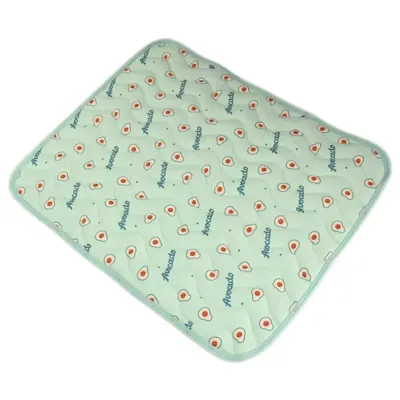
A new dog needs somewhere to sleep without being approached repeatedly. This can be a quiet room, a gated corner, a playpen, or a crate that has been introduced positively. The location should be away from heavy foot traffic but not so isolated that the dog feels abandoned. A washable bed or crate mat, water when appropriate, and one safe item can make the space comfortable without cluttering it.
Environmental management is not a failure of training. It prevents a dog from repeatedly practicing unsafe or unwanted behavior before the family has taught an alternative. Gates can block stairs, kitchens, litter boxes, or rooms containing electrical cords. Playpens can create a supervised puppy zone. A crate can support transport, rest, and short management periods when properly introduced, but it should never become a punishment chamber or a substitute for exercise, toilet breaks, and social contact.
Reward-based crate introduction begins with the door open. Place a treat near the entrance, then just inside, and allow the dog to investigate voluntarily. Feed or offer a safe activity near the crate. Reward entering, turning around, or settling. Only after the dog remains relaxed should the family briefly close and reopen the door. RSPCA Victoria's crate-training guidance similarly recommends making the crate inviting, rewarding voluntary interaction, and leaving the door open during the first experiences.
For Petfairs buyers, this creates a clear “safe space” assortment: washable dog beds, crate mats, blankets, indoor playpens, pet gates, and carefully selected quiet-play toys. Retailers should merchandise these items by function rather than merely by color. A sign reading “Build a Calm First-Week Rest Area” answers a customer question more effectively than a generic “Beds and Crates” label.
Use reward-based training from the first day
Training starts whenever a dog experiences a consequence. If sitting quietly makes a leash appear, calm behavior is being reinforced. If jumping always produces attention, jumping may be reinforced too. Families therefore need rewards available when good choices happen—not several minutes later.
The American Veterinary Society of Animal Behavior recommends reward-based methods for dog training and behavior modification. Its current position rejects aversive methods such as electronic collars, prong collars, choke chains, leash corrections, and physical or psychological punishment. Reward-based training does not mean allowing every behavior. It combines clear boundaries and environmental management with reinforcement for an appropriate alternative.
A compact treat pouch is one of the most practical new-dog products because timing matters. Rewards should be small enough to use repeatedly and valuable enough for the environment. Food is convenient, but it is not the only reward. A brief tug game, a tossed toy, praise, permission to sniff, or access to the yard can reinforce behavior if the dog values it.
| Situation | Behavior to reinforce | Possible reward | Helpful product |
| Dog looks at the owner when its name is called | Attention | Small treat or praise | Treat pouch |
| Dog enters the resting area voluntarily | Settling | Food toy or chew | Crate mat and food toy |
| Dog keeps four paws on the floor | Calm greeting | Attention or treat | Training treats |
| Dog follows without tightening the leash | Loose-leash walking | Treat or permission to sniff | Fixed leash and pouch |
| Dog releases a household object | Trading and disengagement | Better toy or treat | Chew or tug toy |
| Dog stays calm while touched | Grooming cooperation | Treat after one short touch | Brush and treats Petfairs can support this section with treat pouches, clickers, lightweight training leashes, tug toys, fetch toys, and treat-dispensing products. The merchandising claim should be modest: these products help owners deliver rewards and organize practice. They do not train the dog automatically. |
Build a consistent toilet routine
House-training is a scheduling and supervision task before it is an obedience task. Puppies have limited bladder and bowel control, and newly adopted adult dogs may not understand the new home's doors, surfaces, or schedule. Taking the dog to an appropriate location after waking, eating, drinking, active play, and before bedtime increases the chance of success.
Watch for sniffing, circling, restlessness, or suddenly leaving an activity. Take the dog calmly to the same toilet area. When elimination is complete, reward immediately with a small treat, praise, or a brief favorite activity. If an accident happens indoors, clean it without scolding. Punishment after the event cannot clearly explain where the dog should go and may teach the dog to hide elimination from people. AKC guidance also emphasizes supervision, scheduling, prompt rewards, and calm cleanup.
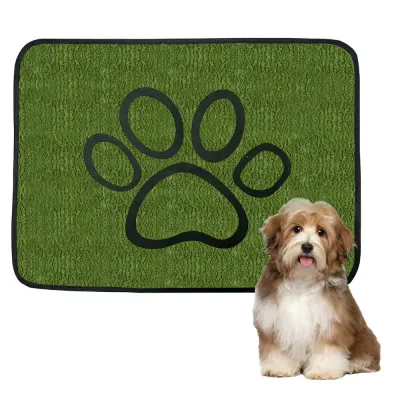
Training pads can be useful for high-rise apartments, extreme weather, mobility limitations, or a temporary indoor plan. However, families whose final goal is outdoor toileting should keep the pad location consistent and create a deliberate transition. Constantly changing between multiple indoor and outdoor surfaces can make the rule less clear.
A practical Petfairs toilet-training set can include puppy pads and holders, a fixed-length leash, poop bags, a bag dispenser, washable floor mats, and a treat pouch. If Petfairs stocks cleaning products, avoid implying that every cleaner is enzymatic unless the formulation confirms it. Product accuracy is part of E-E-A-T.
Redirect chewing instead of punishing exploration
Puppies explore with their mouths, and teething can intensify chewing. Adult dogs may chew because the material is rewarding, because they have unused energy, or because access was not managed. The first defense is puppy-proofing: remove shoes, medications, children's toys, trash, strings, and electrical cords. A product cannot compensate for leaving a dangerous object within reach.
When the dog mouths furniture or another inappropriate object, interrupt calmly and offer an appropriate alternative. Reinforce the dog for engaging with that item. Rotate a small number of toys instead of leaving a large, unchanging pile on the floor. Select products for the dog's size, bite style, age, and preferences, and supervise until the family understands how the dog uses them.
Chew toys, textured rubber toys, food-dispensing toys, ropes, soft toys, and puppy teething products serve different functions. No toy should be labeled indestructible. Inspect seams, squeakers, rope fibers, and surface damage, and discard an item if parts become loose or small enough to swallow.
Scientific evidence also supports restrained wording. A 2023 study of 47 companion dogs compared short-term access to toys of different complexity and found no statistically significant overall improvement in the measured welfare outcomes. The authors noted that home dogs already had enriched environments and that individual preference and the way dogs engage with toys may matter more than simply adding another object. The peer-reviewed open-access study is useful precisely because it prevents exaggerated marketing. Toys can facilitate chewing, exploration, food seeking, training, and interaction; one toy is not a universal welfare treatment.
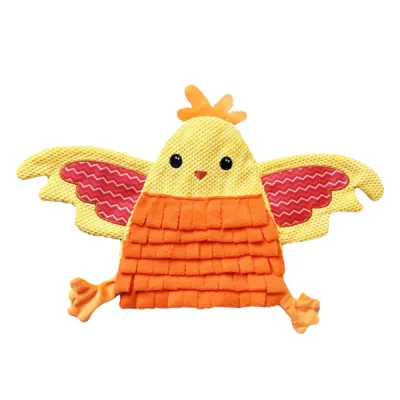
For retail buyers, the better assortment is not “the smartest puzzle.” It is a range of supervised options: simple chew items, interactive tug and fetch toys, lick mats, snuffle mats, and adjustable-difficulty food puzzles. Staff can ask three questions—dog size, chewing style, and preferred type of play—to recommend more responsibly.
Practice short, calm periods of independence
Families often spend every minute with a new dog during the first weekend and then leave for a full workday on Monday. That abrupt contrast can be difficult. Independence is better introduced through short, uneventful practice while the dog is comfortable.
Begin after toilet needs, movement, and social contact have been addressed. Place the dog in a familiar safe area with an appropriate activity. Step away for only a few seconds, then return before distress escalates. Repeat at an easy level. Gradually vary the distance, duration, and signals associated with leaving. Progress should follow the dog's behavior, not a calendar.
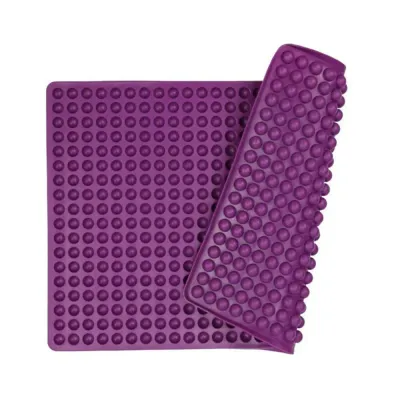
A lick mat, stuffed food toy, snuffle mat, or safe chew may support a quiet routine. It should be introduced while the person is present first, so the dog knows how to use it safely. If a dog will not touch a normally valued item when alone, that can indicate the exercise is too difficult. Products must never be described as curing separation anxiety.
Persistent howling, heavy panting, drooling, escape attempts, destruction around doors, self-injury, or inability to eat during absences deserves professional attention. A veterinarian can rule out medical contributors and refer the family to a qualified behavior professional. Retail staff and product copy should not diagnose separation anxiety.
Petfairs can group lick mats, slow feeders, treat-dispensing toys, snuffle mats, playpens, crate mats, and safe chews as “independent activity tools.” The wording matters: they support a gradual settling routine; they do not guarantee calm behavior.
Introduce collars, harnesses, and leashes in small steps
A puppy may scratch at a collar, freeze in a harness, bite a leash, or refuse to walk. Those reactions do not necessarily mean the equipment is unsuitable. They often mean the sensation is new or the training step was too large.
Let the dog sniff the item. Reward approaching it. Touch it briefly to the shoulder or chest, reward again, and remove it. Build toward fastening it for a few seconds indoors. When the dog moves comfortably, attach a lightweight fixed-length leash and practice in a low-distraction area before attempting a busy street.
Fit is a safety issue. Owners should be able to check that equipment is secure without restricting normal movement or breathing. Because body shapes vary, retailers should supply clear measurements rather than relying only on labels such as small, medium, and large. Puppies also grow quickly, so fit must be rechecked.
For foundational training, a standard fixed-length leash generally gives the handler more predictable control than a retractable leash. A starter walking assortment can include adjustable collars, identification-tag holders, comfortable harnesses, fixed leashes, reflective options, waste-bag dispensers, treat pouches, portable water bottles, and collapsible bowls.
Make socialization positive, gradual, and safe
Socialization is the process of helping a puppy form safe, positive associations with people, animals, surfaces, sounds, handling, transportation, and ordinary environments. It is not a challenge to expose the puppy to the largest possible number of experiences. Flooding a frightened puppy can sensitize rather than reassure it.
AVSAB identifies the first three months of life as the primary socialization window. Its puppy socialization statement supports carefully managed socialization before full vaccination is complete, while balancing infectious-disease risk with veterinary guidance. Families should ask their own veterinarian which environments and puppy classes are appropriate locally.
Good socialization sessions are brief and optional. The puppy should be able to observe at a comfortable distance, take food if food-motivated, and move away. Pairing the appearance of a person, umbrella, vacuum sound, car, grooming table, or new surface with something the dog likes can create a positive association. If the puppy freezes, hides, refuses a normally valued reward, or tries to escape, increase distance or end the session.
Petfairs products support logistics here: a secure harness, fixed leash, treat pouch, travel bowl, portable water bottle, crate or carrier, and familiar mat. They make exposure safer and more predictable; they are not substitutes for good judgment.
Start cooperative grooming before the coat needs urgent care
Many owners delay grooming practice until nails are long, coat is tangled, or a bath is unavoidable. The resulting session becomes lengthy and uncomfortable, which can teach the dog to fear the tools. Cooperative care begins with seconds, not a complete groom.
Touch one paw and reward. Lift an ear flap and reward. Show the brush, reward interest, make one gentle stroke, and stop. Place a towel on the floor and reward the dog for stepping on it. Let the dog hear a nail grinder at a distance before moving it closer. Small repetitions allow the animal to predict what will happen.
Wendy's Samoyed coat makes this lesson especially visible. According to the American Kennel Club's Samoyed profile, the breed has substantial shedding and frequent grooming needs. A cloud-like coat may photograph beautifully, but appearance comes with real maintenance. Breed-aware retailing should explain the care requirement instead of encouraging appearance-driven acquisition.
A puppy grooming starter set might include a gentle brush, coat-appropriate comb, grooming glove, microfiber towel, puppy shampoo, nail clippers or grinder, and a bath lick mat. Retailers should not recommend one brush for every coat type. Short coats, curly coats, silky coats, and dense double coats require different routines and tools. When matting is tight to the skin or the dog shows pain or escalating fear, refer the customer to a professional groomer or veterinarian.
Introduce a new dog to resident cats slowly
Multi-pet households are becoming more visible, and celebrity families are no exception. Wendy reportedly joined a home with three cats, which makes interspecies adjustment one of the most relevant angles in her story. More broadly, the growth of dog and cat ownership increases the need for retailers to understand products that support separation, scent exchange, and controlled introductions. The American Pet Products Association reported in 2025 that 68 million U.S. households, or 51%, owned a dog, while 49 million households, or 37%, owned a cat. These categories overlap; household counts should not be added together as if every home owned only one species. APPA's 2025 industry release also projected U.S. pet-industry spending of $157 billion for 2025.
The safest introduction begins with separation. Give the cat access to high resting places, food, water, litter, and a dog-free area. Allow the animals to investigate each other's scent through bedding or controlled room rotation before a face-to-face meeting. During early visual introductions, keep the dog on a fixed leash and ensure the cat has an escape route. Reward the dog for looking away from the cat, responding to its handler, and remaining calm.
American Humane's dog-and-cat introduction guide recommends gradual scent exchange, controlled leashed meetings, and continued separation when no one is home until both animals are consistently relaxed. It also warns that persistent fixation, lunging, snapping, rough pursuit, or failure to redirect may require professional help. A cat that stops eating, using the litter box, or engaging normally may also be experiencing significant stress.
| Introduction stage | Goal | Useful equipment | Move forward when |
| Separate spaces | Restore normal eating, sleeping, and elimination | Gate, playpen, separate beds and bowls | Both animals function normally in their own areas |
| Scent exchange | Make the other animal's scent familiar | Blankets, mats, room rotation | Neither pet shows sustained distress |
| Controlled visual access | Observe without chasing or trapping | Gate, fixed leash, high cat furniture | Dog can disengage and cat can move calmly |
| Supervised shared space | Practice calm coexistence | Leash initially, treats, escape routes | Both show relaxed body language repeatedly |
| Limited unsupervised access | Test established stability | Safe layout and separate resources | The family is confident after repeated success This section creates one of the strongest cross-category opportunities for Petfairs. A mixed-pet transition assortment can include pet gates, indoor playpens, fixed leashes, separate bowls, separate beds, cat trees, elevated cat furniture, cat hideaways, treat pouches, and dog enrichment items. The sale follows the welfare plan rather than interrupting it. |
What to buy now and what to add later
First-time owners often overbuy toys and underbuy management equipment. A phased checklist makes the decision easier.
Buy before arrival
- A secure collar with identification and a correctly fitted harness if needed
- A fixed-length leash
- Stable food and water bowls
- The food the dog is currently eating, unless a veterinarian recommends a change
- A washable bed or mat
- A gate, playpen, or positively introduced crate when the home layout requires one
- Poop bags and cleaning supplies
- Small training rewards
- One or two size-appropriate chew or play items
- Veterinary records and an initial appointment plan
Add during the first week
- A treat pouch or clicker for structured practice
- A lick mat, snuffle mat, or adjustable food toy
- Coat-appropriate brush and grooming supplies
- Portable water equipment
- Additional barriers for resident-pet introductions
Add after preferences become clear
- More specialized puzzle toys
- Seasonal clothing
- Travel accessories
- Breed- and coat-specific grooming tools
- Subscription boxes matched to size and play style
- Extra beds for established favorite resting locations
Waiting on nonessential products is not a lost sale. It creates a better second purchase because the recommendation can reflect the dog's actual size, behavior, coat, and play preference.
Three practical starter assortments for pet businesses
Petfairs is an online wholesale platform serving independent pet businesses and serious pet buyers across much of the world. Its broad dog, cat, and exotic-pet assortment makes it possible to build solutions around a customer journey rather than a single SKU. For boutiques, groomers, trainers, veterinary retail areas, rescues, and e-commerce sellers, the following bundles translate this guide into understandable merchandising.
New Dog Welcome Assortment
Include adjustable collars, fixed leashes, bowls, washable beds, waste-bag dispensers, chew toys, and simple printed routine cards. This assortment answers the immediate question: “What must be ready before the dog walks through the door?”
Training and Enrichment Assortment
Include treat pouches, clickers, tug toys, lick mats, snuffle mats, food-dispensing toys, and beginner puzzles. Organize products by skill—settling, attention, chewing, or food seeking—rather than by manufacturer. Trainers, online sellers, and subscription-box businesses can rotate difficulty and texture without claiming that complexity is always better.
Cooperative Grooming Assortment
Include coat-appropriate brushes, combs, grooming gloves, microfiber towels, puppy shampoos, nail tools, and bath lick mats. Groomers and salons can pair retail items with a short handling demonstration, while mobile groomers can recommend maintenance tools based on the coat they have actually examined.
| Business customer | Strongest content-to-product opportunity | Why it fits |
| Pet boutique or physical store | Curated welcome wall | Simplifies a confusing first purchase |
| Online pet seller | Search-led starter collections | Matches long-tail queries to product groups |
| Groomer or mobile groomer | Coat-specific home-care kits | Extends professional advice between appointments |
| Dog trainer | Reward and management kits | Connects equipment to lesson plans |
| Veterinary clinic retail area | Safety and routine essentials | Supports nonmedical home preparation without overclaiming |
| Rescue or shelter | Take-home transition packs | Helps adopters maintain routines after placement |
| Breeder | Puppy departure kits | Creates continuity between the first and new home |
| Boarding and daycare | Settling and identification supplies | Supports predictable transitions and safe handling |
| Subscription-box seller | Age- and play-style boxes | Encourages personalization rather than random novelty |
| Social-commerce seller | Demonstration-led bundles | Shows how a product is used in a real routine |
When supplies are not enough
Normal adjustment can include temporary caution, disrupted sleep, reduced appetite for a short period, or mild vocalization. However, products and general internet advice should never delay veterinary care.
Contact a veterinarian promptly if a new dog shows repeated vomiting or diarrhea, difficulty breathing, collapse, significant pain, inability to urinate, possible toxin or foreign-object ingestion, or prolonged refusal of food or water. The urgency depends on age, size, medical history, and severity; puppies can deteriorate quickly. A veterinary professional should also guide vaccines, parasite control, diet, microchipping, and safe exposure based on local disease risk.
Behavioral signs that deserve qualified help include persistent panic when alone, self-injury, repeated escape attempts, escalating aggression, guarding that threatens safety, extreme fear that prevents normal activity, or intense fixation and pursuit of resident cats. Seek professionals who use humane, evidence-based methods. AVSAB's guidance on choosing a trainer is a useful screening resource.
A better definition of an essential product
An essential new-dog product is not simply something commonly included in a bundle. It is an item that helps a family meet a welfare need, prevent a predictable risk, communicate a routine, or reward a behavior. That definition is valuable for both consumers and the pet trade.
The pet market is large: APPA projected $157 billion in U.S. spending for 2025, and Shelter Animals Count reported 5.8 million dog and cat community intakes in 2025. Yet scale does not make every purchase equally useful. Retailers earn trust when they explain what an item can do, what it cannot do, how to use it gradually, and when a customer needs professional help rather than another product.
For new owners, the final checklist is simple. Prepare a secure place to rest. Establish predictable meals, toilet trips, and sleep. Reinforce behavior you want to see again. Prevent access to hazards. Introduce equipment and experiences in small steps. Respect the resident pets' need for space. Choose products for the individual dog's size, coat, age, and preferences. Ask a veterinarian when health or behavior moves beyond routine adjustment.
For pet businesses, the opportunity is equally clear. Do not sell a random basket labeled “new puppy.” Build a practical pathway from arrival to adjustment: rest, manage, reward, toilet, chew, walk, groom, enrich, and integrate. That is how a wholesale assortment becomes useful guidance—and how Petfairs can help retailers support a family's first weeks with a new dog.
Frequently asked questions
What are the most important new dog essentials?
The highest-priority products are identification, a fixed-length leash, a secure collar or fitted harness, food and water bowls, familiar food, a washable resting surface, waste supplies, small training rewards, and one or two safe, size-appropriate toys. Depending on the home, a gate, playpen, or positively introduced crate may also be essential.
How long does a new dog take to adjust?
There is no universal timetable. Some dogs relax within days, while others need weeks or months. Use eating, sleeping, exploration, recovery from mild surprises, and voluntary social interaction as individual indicators. Treat the 3-3-3 rule only as a broad reminder to allow time, not as a scientific deadline.
Should I leave my new dog alone during the first week?
Families can begin very short independence exercises when the dog is calm and its basic needs have been met. Increase duration gradually and return before distress escalates. Do not jump directly from constant company to a full workday. Persistent panic requires veterinary or qualified behavioral guidance.
Are puppy pads necessary?
Not for every home. They can help in high-rise buildings, severe weather, temporary indoor setups, or households with mobility constraints. If the long-term goal is outdoor toileting, keep the indoor location consistent and plan a gradual transition.
How many toys does a new dog need?
Start with a few different functions rather than a large number: one appropriate chew item, one interactive toy, and possibly one food-based activity. Supervise use, learn the dog's preferences, inspect for damage, and expand the collection deliberately. More toys do not automatically produce better welfare.
How should a new dog meet a resident cat?
Begin with separate areas and scent exchange. Progress to controlled visual access and leashed meetings only when both animals are functioning calmly. Maintain escape routes and elevated spaces for the cat. Do not leave them together unsupervised until repeated interactions demonstrate safety.
Can a toy cure separation anxiety?
No. A lick mat, food toy, or chew may support a calm routine, but it cannot diagnose or cure separation anxiety. Dogs showing panic, self-injury, escape behavior, or inability to eat when alone need a veterinary and behavior plan.
What training method should first-time owners use?
Use reward-based training supported by clear routines and environmental management. Reward the behavior you want, prevent unsafe rehearsal, and adjust difficulty when the dog shows fear or frustration. Avoid tools and techniques designed to cause pain, fear, or intimidation.
Editorial sources
- Vogue: Travis Kelce Football Star Fashion Ambassador and Dog Dad
- American Veterinary Society of Animal Behavior Position Statements
- American Kennel Club Puppy Socialization Guidance
- American Kennel Club Samoyed Breed Profile
- ASPCA Adoption Preparation Tips
- RSPCA Puppy Care Guide
- RSPCA Victoria Crate Training Guide
- American Humane Dog and Cat Introduction Guide
- American Pet Products Association 2025 Industry Data
- Shelter Animals Count 2025 Annual Data
- Chan et al. 2023 Companion Dog Toy Enrichment Study
 Popular Blogs