
A Big Week for Dog Lovers: Getting Ready for Spring Adventures in Australia
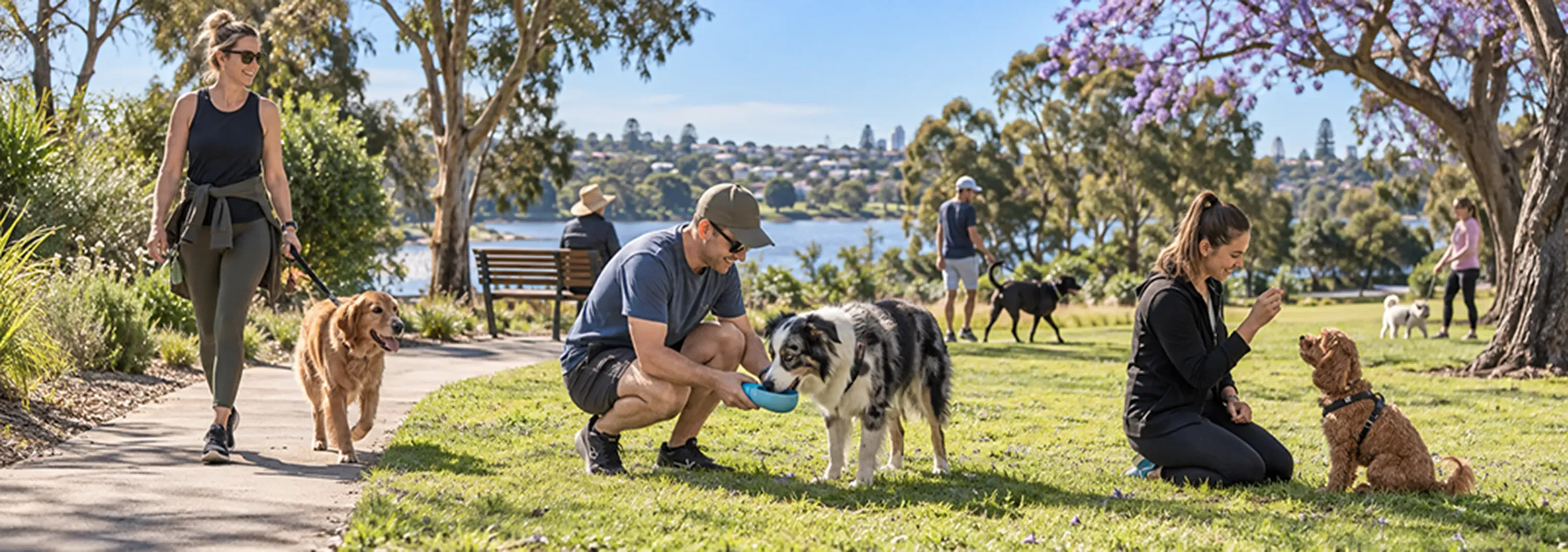
Late September is shaping up to be a particularly visible moment for dog lovers in Australia. On September 27, 2026, community events ranging from the Blacktown City Pet Festival in New South Wales to Doggies Day Out at Whiteman Park in Western Australia and Great Global Greyhound Walk gatherings will bring dogs, owners, trainers, rescue groups and pet businesses into shared outdoor spaces.
But the bigger story is not the events themselves.
What makes this period interesting is what those events reveal about everyday dog ownership as Australia moves into spring: more walking, more time outside, more training, more social situations and more attention to practical needs such as hydration, control, enrichment and cleanup.
For pet retailers, groomers, trainers and online sellers, the useful question is therefore not, “What should we stock for September 27?”
A better question is:
What behaviours become more visible in spring, and what products help owners support those behaviours safely and comfortably?
That distinction matters. Events last for a day. Walking, playing, training, travelling and caring for a dog continue all year.
Australia Is Already a Nation of Pet Owners
Australia's pet market is large enough that even an ordinary change in daily behaviour affects millions of households.
Animal Medicines Australia's Pets in Australia 2025 survey estimates that Australia had 31.6 million pets across 7.7 million households as of March 2025, meaning 73% of Australian households owned at least one pet. Dogs remained the most widely owned companion animal, with approximately 7.37 million dogs living in 49.3% of households.
That gives dog-related outdoor behaviour a much broader significance than a single festival or seasonal campaign.
| Australia pet indicator | 2025 figure |
| Total pets | 31.6 million |
| Households with pets | 7.7 million |
| Household pet ownership | 73% |
| Dogs | 7.37 million |
| Households owning dogs | 49.30% |
| Dog owners walking/exercising dogs at least daily | 70% |
| Estimated annual pet spending | A$21.3 billion |
| Products and accessories spending | A$1.4 billion Source: Animal Medicines Australia, Pets in Australia 2025. The most relevant number for this article may be the simplest one: 70% of Australian dog owners say they walk or exercise their dogs at least once a day. That tells us something important about product demand. Walking is not a niche hobby that appears when a pet event takes place. It is already embedded in daily dog ownership. Spring simply gives that existing behaviour a more visible outdoor context. |
Why Late September Feels Different
In Australia, September marks the beginning of spring, and the 2026 seasonal outlook gives pet businesses another reason to think about outdoor use cases.
The Bureau of Meteorology's September 3, 2026 outlook said daytime temperatures for September through November were likely to be above average across much of Australia south of the tropics. Rainfall conditions were expected to vary considerably by region, with drier-than-average conditions more likely across parts of the south and east while wetter conditions were more likely across much of western Australia.
In other words, there is no single “Australian spring”.
A dog owner in Sydney may experience the season differently from someone in Perth, Melbourne or regional Queensland.
For retailers, that is an argument against building an assortment around one simplistic idea of spring weather.
It makes more sense to build around activities that appear across different conditions: walking, short trips, training, outdoor play, hydration, grooming and cleanup.
September 27 Offers a Useful Snapshot
The concentration of dog-focused events on September 27 is useful because each event highlights slightly different dimensions of pet ownership.
Blacktown City Council's 2026 Pet Festival, for example, combines market stalls and pet products with obedience demonstrations, agility demonstrations, free microchipping, veterinary checks and a pet chill-out zone.
Whiteman Park in Western Australia lists its Doggies Day Out for the same date, continuing an event format that has historically brought together families, dog owners and pet-focused exhibitors.
The Great Global Greyhound Walk is also scheduled for September 27, 2026. Its official rules require participating dogs to remain on leads, owners to clean up after them and participants to behave responsibly around the wider public.
Put those elements together and a pattern emerges.
| What appears at dog events | Broader owner need |
| Group walks | Safe control and comfortable walking |
| Obedience demonstrations | Training and communication |
| Agility activities | Exercise and mental engagement |
| Microchipping | Identification and responsible ownership |
| Vet checks | Preventive care |
| Outdoor markets | Portable everyday products |
| Community interaction | Positive social experiences |
| Cleanup rules | Public-space responsibility The point is not that these events prove a nationwide increase in product sales. They do not. The more useful interpretation is that they make existing owner behaviours unusually visible at the same time. |
Don't Stock an Event. Stock the Behaviour Behind It.
This is the principle pet businesses can take away from late September.
A festival might create a short spike in attention, but buying inventory specifically because one event is happening creates unnecessary risk.
The stronger retail strategy is to identify which repeatable behaviours the event represents.
A dog may attend a festival once.
That same dog may walk twice a day.
It may train several times a week.
It may travel in the car every weekend.
It may use enrichment products indoors when the weather is poor.
It may need grooming after muddy outdoor play.
Those behaviours create a much longer product lifecycle.
| Event signal | Repeatable behaviour | Longer-term category |
| Group dog walk | Daily walking | Leads, harnesses, collars |
| Agility demonstration | Active play | Outdoor and interactive toys |
| Obedience session | Training | Treat pouches and reward products |
| Community outing | Travel | Portable bowls and travel accessories |
| Outdoor activity | Hydration | Water bottles and portable bowls |
| Public event rules | Cleanup | Waste bags and dispensers |
| Social activity | Mental stimulation | Enrichment and interactive toys |
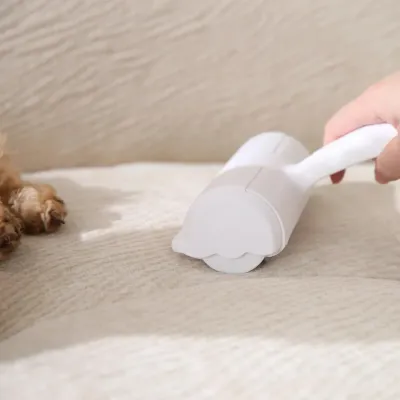
| Outdoor play | Coat and paw cleanup | Brushes, towels and grooming supplies For smaller pet businesses, this distinction is especially important because every product on the shelf represents cash tied up in inventory. A product category should make sense beyond one campaign. |
Walking Is About More Than a Leash
Because walking is already part of daily life for most Australian dog owners, it is the logical starting point for a spring assortment.
But retailers should avoid thinking about walking products as a single category.
Owners are usually trying to solve several problems at once.
The first is control.
RSPCA Australia identifies lead walking and reliable recall as foundational dog skills because they help owners manage dogs safely around people, other dogs and the wider environment.
The second is comfort.
A small dog, a large dog, a puppy learning lead manners and a highly active adult dog may all require different approaches to equipment, fit and handling.
The third is confidence.
Some owners want a simple neighbourhood walk. Others are preparing for crowded parks, training classes, cafés, day trips or community events.
Those differences matter more than whether a lead happens to be a fashionable seasonal colour.
For a pet retailer, the better assortment question becomes:
| Customer situation | Primary need | Useful product direction |
| Everyday neighbourhood walk | Convenience | Standard leads and collars |
| Puppy learning to walk | Training and fit | Harnesses, leads, rewards |
| Large or strong dog | Control | Durable walking equipment |
| Active outdoor dog | Comfort and durability | Harnesses and longer-wear accessories |
| Evening walking | Visibility | Reflective accessories |
| Busy public spaces | Control and identification | Leads, collars and ID accessories This is a more useful way to merchandise walking products because it mirrors the decisions owners are actually trying to make. |
Outdoor Time Creates a Hydration Problem Too
One product that deserves more attention in spring is the portable water solution.
When owners extend walks, spend more time at parks or take dogs on day trips, access to water becomes a practical issue rather than an abstract health topic.
The product need is simple: owners want a clean, convenient way to offer water without carrying a household bowl everywhere they go.
That is where portable bowls and dog water bottles become relevant.
What stands out to us is how much the relationship between people and pets has changed in this area.
A generation ago, many pet products were treated as optional extras. Today, more owners think about the same questions they would ask for another family member: Have we brought enough water? Is the dog comfortable? Is it too hot? Can we rest somewhere? Do we have what we need for the journey?
Animal Medicines Australia's 2025 survey supports the broader emotional shift behind this behaviour. Eighty-six percent of Australian pet owners said their pets had a positive impact on their lives.
A portable dog bottle may look like a small accessory.
The behaviour behind it is much bigger.
It reflects a willingness to plan around the pet's experience rather than expecting the animal simply to adapt to the owner's day.
For retailers, that makes hydration products particularly useful as cross-category items.
A customer buying a harness may also need a portable bowl.
A trainer may recommend water during longer outdoor sessions.
A mobile groomer or boarding operator may want portable options for dogs moving between locations.
The item itself is simple; the number of use cases is broad.
Spring Adventures Extend Beyond Walking
Outdoor dog time rarely consists of walking alone.
A trip to a park may involve travelling in the car, training recall, playing fetch, taking breaks, offering water and cleaning paws before going home.
That means the retail opportunity is better understood as a system of connected needs.
From Activity to Need
| Owner activity | Immediate problem | Product solution |
| Long walk | Dog needs water | Portable bowl or water bottle |
| Park visit | Dog needs control | Lead or harness |
| Training session | Dog needs motivation | Treats, treat pouch, reward toy |
| Outdoor play | Dog needs engagement | Fetch and interactive toys |
| Day trip | Equipment must travel | Portable and travel accessories |
| Public event | Waste must be managed | Waste bags and dispensers |
| Muddy walk | Dog needs cleanup | Wipes, towels, brushes |
| Car journey | Dog needs organised travel | Travel accessories This type of assortment thinking is particularly useful for small businesses because it encourages cross-selling without random category expansion. Every additional item has a reason to be there. |
Training Is Becoming Part of Everyday Care
Training should not be viewed only as something owners do when a dog has a behaviour problem.
RSPCA Australia describes training as important for mental stimulation, cognitive wellbeing, appropriate behaviour, safety and communication between dog and caregiver. Its current guidance recommends positive-reinforcement methods that reward desired behaviour with things the dog values, such as treats, praise or play.
This changes how pet businesses can think about training products.
A treat pouch is not merely equipment for a professional dog trainer.
It can be part of an ordinary owner's daily walk.
A reward toy is not necessarily a specialist behavioural tool.
It can help turn training into interaction between the owner and the dog.
A long lead is not only for advanced obedience.
It can support structured outdoor practice when used appropriately.
This matters for Petfairs' customer base because the relevant buyers extend beyond pet stores.
Dog trainers may purchase training accessories directly.
Groomers may recommend handling and reward products to clients.
Boarding and daycare operators may use enrichment and training items in daily care.
Online sellers can build themed collections around walking, training or outdoor routines.
The same underlying need can therefore appear across several B2B customer types without requiring every business to stock the same assortment.
Mental Health Is Becoming Part of the Conversation
One of the most important changes in modern pet ownership is that owners increasingly think about how an animal feels, not only what it eats or whether it is physically healthy.
RSPCA Australia defines enrichment as activities that stimulate a dog's body, mind and senses while allowing natural behaviours such as sniffing, exploring, running, playing and social interaction. It notes that enrichment can support relaxation, reduce stress and anxiety, strengthen owner-dog bonds and help address undesirable behaviours.
This is a major shift in the way pet products should be understood.
A puzzle toy is not simply something to keep a dog busy.
A scent game gives the dog an opportunity to use natural behaviour.
Training is not only discipline.
It is also mental challenge and communication.
A walk is not only exercise.
For many dogs, sniffing and exploring are part of the enrichment value of the walk.
This is where our own view becomes especially strong: the next stage of pet care is increasingly about quality of experience.
Owners are not only asking, “What does my dog need to survive?”
They are asking:
Is my dog bored?
Is my dog enjoying the walk?
Am I giving my dog enough attention?
Does my dog have opportunities to think, explore and play?
That concern creates space for products that support mental stimulation, but it also creates a responsibility for retailers not to oversell products as substitutes for human interaction.
An enrichment toy can support wellbeing.
It cannot replace companionship.
Better Products Should Support Better Time Together
The strongest spring story is therefore not “buy more dog products”.
It is spend better time with your dog.
A dog walking beside its owner, learning a new behaviour, exploring a park or playing with an interactive toy is participating in something shared.
That shared experience is increasingly important to how people think about pet ownership.
RSPCA guidance on reward-based training reinforces this idea because positive training can strengthen the relationship between the dog and the person handling it.
For pet businesses, that creates a more meaningful way to organise products.
Instead of merchandising only by object:
Leads / Toys / Bowls / Grooming
businesses can also merchandise by experience:
Go for a Walk
Train Together
Explore Outdoors
Travel Together
Play and Enrich
That approach mirrors how customers actually imagine using what they buy.
Socialising Does Not Mean Forcing Dogs to Socialise
Spring events and dog parks also raise an important welfare point.
More dogs in public spaces does not automatically mean every dog should interact with every other dog.
RSPCA Australia's guidance on socialisation emphasises that dogs should have positive experiences and be given choice rather than being forced into interaction.
Its off-leash park guidance also notes that such parks are not suitable for every dog. Owners should be confident that their dog has reliable recall and can interact with other dogs without becoming excessively fearful or aggressive.
This nuance matters commercially too.
A pet business serving a nervous dog owner may solve a different problem from one serving a highly social, confident dog.
The nervous dog's owner may value:
- predictable walking equipment,
- secure harnesses,
- long leads for controlled exploration,
- enrichment at home,
- reward products for gradual training.
The highly social dog's owner may be looking for:
- park accessories,
- travel bowls,
- toys,
- portable cleanup products.
Both customers care about their dogs.
They simply need different solutions.
That is why useful assortment planning starts with behaviour and context, not a generic idea of the “average dog owner”.
Responsible Ownership Is Part of the Outdoor Kit
The official rules around September events reinforce another theme: going outside with a dog involves responsibility toward other people as well.
The Great Global Greyhound Walk requires dogs to remain on lead, owners to clear up after them and participants to respect the public.
Blacktown's Pet Festival includes microchipping and veterinary checks alongside entertainment and product stalls.
These may look like unrelated event features.
They are actually different parts of the same idea.
Responsible outdoor ownership includes:
Control.
Identification.
Cleanup.
Health.
Awareness of other people and dogs.
For pet businesses, this is why low-cost everyday products such as waste bags, collars, identification accessories and portable bowls should not be overlooked in favour of visually exciting seasonal products.
The glamorous product is not always the product solving the most frequent problem.
Spring Assortments Should Balance Excitement and Repeat Demand
Small pet businesses usually cannot afford to treat inventory planning like large national retailers.
Every extra SKU creates purchasing cost, shelf space requirements and the risk of slow sell-through.
For that reason, spring assortments should combine core year-round products with smaller tests of seasonally relevant items.
| Category | Spring relevance | Year-round usefulness | Suggested role |
| Leads | High | High | Core |
| Harnesses | High | High | Core |
| Collars | High | High | Core |
| Waste bags | High | High | Repeat purchase |
| Training rewards/accessories | High | High | Core/add-on |
| Enrichment toys | High | High | Core/test new designs |
| Outdoor toys | High | Medium–High | Seasonal expansion |
| Portable bowls | High | Medium–High | Cross-sell |
| Water bottles | High | Medium–High | Seasonal expansion |
| Travel accessories | High | Medium | Test selectively |
| Outdoor cleanup | Medium–High | High | Cross-sell This is not a forecast of Australian sales. It is a merchandising framework based on use cases. That distinction protects smaller businesses from treating seasonal content as certainty. |
Different Pet Businesses Should Read the Same Trend Differently
A physical pet boutique, trainer and online seller may all notice spring outdoor behaviour, but their ideal response will not be identical.
| Business type | Strongest spring opportunity | Why |
| Pet boutique | Curated walking + outdoor collection | Easy in-store storytelling |
| Physical pet store | Core walking and everyday essentials | Broad recurring demand |
| Online pet seller | Scenario-based bundles | Easy category testing |
| Social commerce seller | Visual outdoor products | Lifestyle-led content |
| Dog trainer | Rewards and training accessories | Direct connection to training |
| Mobile groomer | Outdoor cleanup and grooming | Solves post-adventure problems |
| Boarding/daycare | Enrichment and durable play | Repeated daily use |
| New pet store owner | Core essentials first | Lower inventory complexity This is why a wholesale platform serving different small businesses should avoid presenting one “perfect” spring product list. The opportunity is the behaviour. The final assortment depends on the customer. |
Start With the Products Customers Understand Immediately
For a small business testing a spring collection, simplicity matters.
Customers should understand why a product belongs in the collection within seconds.
A portable bowl makes sense beside a leash because both support a walk.
A treat pouch makes sense beside a training lead because both support training.
A brush makes sense beside outdoor products because muddy play often creates a grooming need.
This creates what we would call natural adjacency.
Products reinforce each other without requiring a complicated explanation.
The opposite approach is adding unrelated novelty products simply because they look seasonal.
That can produce an attractive page but a weak purchasing logic.
Watch Cash, Not Just Trends
There is another reason to focus on repeatable behaviours: cash flow.
A trend can attract attention and still be a bad inventory decision.
For a small retailer, the important questions include:
| Question | Why it matters |
| Will customers need this after spring? | Reduces seasonality risk |
| Can it sell across several customer types? | Increases demand flexibility |
| Is it easy to cross-sell? | Improves basket-building potential |
| Does it solve a clear problem? | Makes merchandising easier |
| How quickly can I reorder? | Reduces need for heavy initial stock |
| How much cash is tied up per SKU? | Protects working capital |
| Do I need many sizes or variants? | Affects inventory complexity This is especially relevant to independent businesses. They do not need to predict the entire market correctly. They need to learn cheaply. |
Where Petfairs Fits
Petfairs is an online wholesale platform serving businesses and professional or high-consumption buyers across much of the global market.
Its assortment covers everyday cat and dog products as well as supplies for other companion animals and exotic pets.
For a spring dog assortment, that means buyers can think across connected categories rather than treating each purchase as an isolated decision.
A retailer may begin with walking essentials.
A trainer may focus on rewards and enrichment.
A groomer may look more closely at post-outdoor grooming and cleanup.
An online seller may test outdoor and travel products as a themed collection.
The goal is not for every Petfairs buyer to purchase the same products.
The goal is to help each business build an assortment around the problems its own customers are trying to solve.
A Practical Spring Buying Framework
Before placing an order, small businesses can use a simple five-question framework.
| Step | Question | Example |
| 1. Identify behaviour | What are customers doing? | Walking more often |
| 2. Identify friction | What makes it difficult? | Pulling, water, cleanup |
| 3. Match solution | What product solves it? | Harness, bottle, waste bags |
| 4. Check longevity | Will the need remain after spring? | Yes, walking continues year-round |
| 5. Test inventory | How little can we buy while learning? | Small first assortment, then replenish This is much safer than beginning with: “What products are trending?” A trend tells you that something is receiving attention. A behaviour tells you why a customer may actually buy. |
The Bigger Change Is How People Think About Their Pets
Perhaps the most interesting part of Australia's spring dog season is not the number of events taking place.
It is what those events represent.
People bring dogs into public spaces because dogs increasingly participate in everyday family and community life.
Owners carry water.
They think about harness fit.
They attend training.
They look for enrichment.
They worry about anxiety, stimulation and social experiences.
They want safer travel.
They clean muddy paws after an adventure.
They make purchasing decisions around the dog's comfort as well as their own convenience.
The A$21.3 billion Australians spend caring for pets is one measure of the scale of that relationship.
But spending alone does not explain it.
The more meaningful shift is emotional.
Pet ownership increasingly involves care, companionship and responsibility, not just possession.
That is why mental stimulation now belongs in the same conversation as food, walking and grooming.
And it is why something as simple as bringing a water bottle on a dog walk can say a lot about how owners think.
What Pet Businesses Should Take Into Spring
September 27 will come and go.
The behaviours behind it will not.
Australian dogs will still need walks after the festivals are finished.
Owners will still need ways to keep them hydrated.
Training will still require patience and rewards.
Dogs will still need opportunities to sniff, explore, play and think.
Public spaces will still require control and cleanup.
And owners will continue looking for ways to give their pets better experiences.
For small pet businesses, that creates a clear merchandising principle:
Don't stock the event. Stock the behaviour behind it.
Build around walking.
Build around outdoor convenience.
Build around training.
Build around enrichment.
Build around responsible everyday care.
When those categories solve real owner problems, they remain useful long after spring event calendars have changed.
And that is the better way to prepare for a big week for dog lovers.
Quick Answers for Pet Businesses
Why is late September relevant to dog businesses in Australia?
Late September combines the start of spring with several visible dog-focused community events. On September 27, 2026 alone, Blacktown City Pet Festival, Doggies Day Out at Whiteman Park and Great Global Greyhound Walk activities are scheduled.
How many Australians own dogs?
Animal Medicines Australia estimates that around 7.37 million dogs lived in Australia in 2025 and that dogs were present in 49.3% of households.
How often do Australian owners walk their dogs?
Around 70% of Australian dog owners report walking or exercising their dogs at least once per day.
What dog products make sense for spring?
Useful categories include walking equipment, portable hydration, training products, enrichment toys, travel accessories, waste cleanup and grooming items. The best assortment depends on the retailer's customer base rather than the season alone.
Are dog enrichment products only toys?
No. RSPCA Australia describes enrichment broadly, including play, scent work, exploration, running, social interaction, training and mentally stimulating activities.
What training approach should retailers support?
RSPCA Australia recommends reward-based positive reinforcement and advises against aversive training methods and equipment.
Should every dog go to an off-leash park?
No. RSPCA guidance says off-leash parks are not appropriate for every dog and owners should consider recall, behaviour around other dogs, health and individual temperament.
What is the safest way for a small retailer to approach seasonal buying?
Start with year-round products that gain extra relevance in spring, then test smaller quantities of more seasonal or experimental items. This allows the business to learn without committing too much cash to short-lived demand.
Sources and Methodology
This article uses current data and guidance primarily from Animal Medicines Australia, the Australian Bureau of Meteorology, RSPCA Australia, Blacktown City Council, Whiteman Park and the official Great Global Greyhound Walk organisation.
Pet ownership and expenditure figures refer to Animal Medicines Australia's 2025 national survey and should not be interpreted as forecasts of individual product sales.
The presence of multiple pet events in late September is used as a contextual indicator of outdoor pet activity, not evidence that Australian retail sales necessarily rise because of those events.
Likewise, the product and assortment recommendations in this article are editorial interpretations of the needs associated with walking, training, enrichment, travel and responsible dog ownership. They are not presented as measured category-growth forecasts.
This distinction matters because good seasonal planning should be informed by evidence without pretending that evidence says more than it does.
 Popular Blogs