

When Should You Replace Your Dog's Collar? 7 Warning Signs
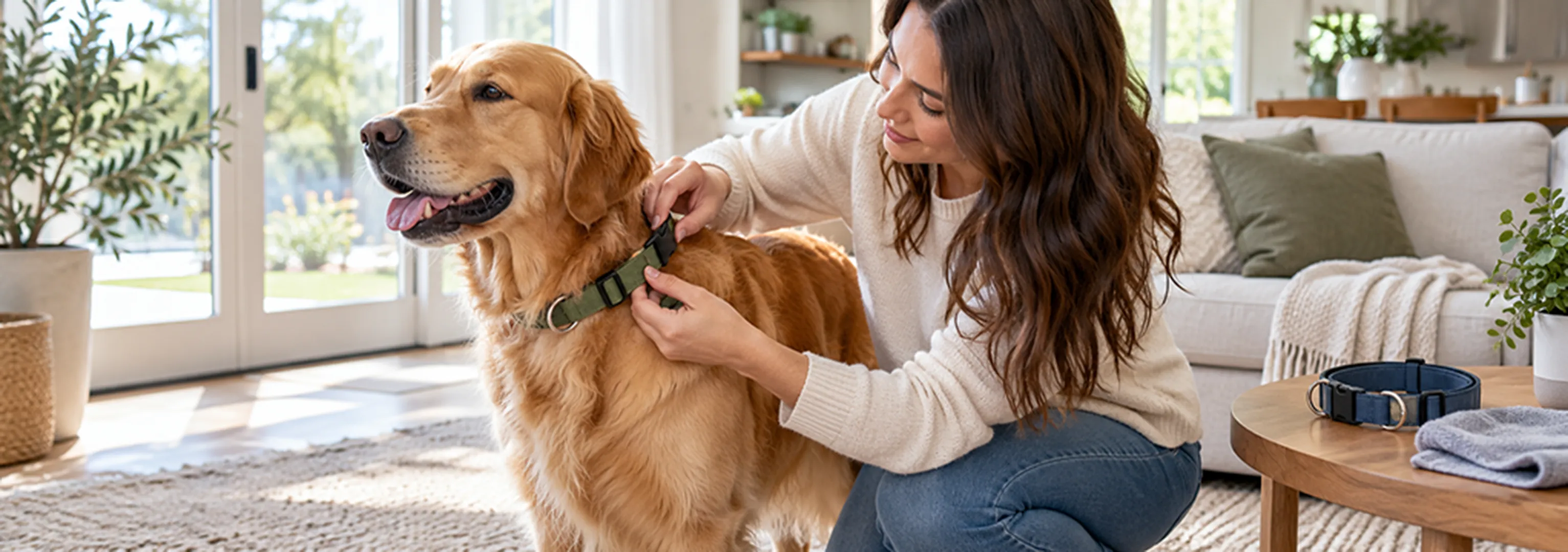
A dog collar should be replaced when it no longer fits securely, its structural components are damaged, or it cannot be kept clean and comfortable enough for continued use. There is no universal replacement schedule for every dog collar. A collar's useful life depends on its material, construction, frequency of use, exposure to water and dirt, and the dog's behavior.
For dog owners, regular inspections can help identify problems before a collar fails during a walk. For pet retailers, groomers, trainers, and other pet professionals, understanding these warning signs makes it easier to recommend appropriate products and explain when an existing collar should be replaced.
A collar may look like a simple accessory, but there is more to choosing and maintaining one than appearance alone. The buckle must close reliably, the adjustment system must hold its position, and the material must remain strong enough for its intended use. A collar that fits today may also become too tight as a puppy grows or as a dog's weight and coat change.
In this guide, we explain when to replace a dog collar, how to recognize wear, how to care for different materials, and what pet businesses should check when selecting collars for their customers.
How Often Should You Replace a Dog Collar?
Replace a dog collar according to its condition and fit, not simply its age. Some collars may remain suitable for years with appropriate care, while others may need replacement much sooner because of heavy use, chewing, moisture exposure, or damaged hardware.
There is no broadly established scientific standard requiring all ordinary dog collars to be replaced every six or twelve months. Veterinary and animal-care guidance instead emphasizes regular inspection, proper fit, and replacing equipment when damage or wear compromises its reliability.
For example, American Humane Society recommends checking a puppy's collar at least weekly until the puppy is fully grown. Vetstreet also recommends inspecting collars and leashes regularly, including checking for fraying, weakened hardware, and fit problems.
Recommended Inspection Schedule
| Dog or Usage Situation | Suggested Inspection | What to Check |
| Growing puppy | At least weekly | Neck size, adjustment range, buckle, and fit |
| Adult dog with everyday use | Regularly and before important outings | Strap condition, closure, hardware, and fit |
| Dog that frequently pulls | Before walks and during routine maintenance | Stitching, D-ring, buckle, and attachment points |
| Dog that swims or gets muddy frequently | After cleaning and drying, plus routine inspections | Material deterioration, corrosion, odor, and seams |
| Working or highly active dog | Before each use and during scheduled maintenance | Load-bearing parts and overall equipment condition |
| Spare or rarely used collar | Before putting it back into service | Aging, cracks, hardware function, and size These are practical inspection recommendations, not scientifically validated replacement intervals. The actual frequency should reflect the collar's condition and the dog's activities. A useful rule is to inspect regularly, clean when needed, adjust when necessary, and replace whenever reliability is compromised. |
7 Signs Your Dog's Collar Needs Replacing
Some collar problems are obvious, such as a broken buckle. Others develop gradually and may be overlooked until the collar fails.
The following warning signs can help owners and pet professionals decide when a collar should be taken out of use.
The Strap Is Frayed, Torn, or Cracked
Nylon and other woven collars can develop frayed fibers, cuts, stretched sections, or weakened stitching. Leather collars may develop deep cracks, tears, or damaged adjustment holes.
Minor surface wear does not automatically mean a collar is unsafe. However, damage near the buckle, stitching, adjustment holes, or leash attachment area deserves particular attention because these sections may bear substantial force.
What to do: Stop using the collar for leash attachment if structural damage could reduce its strength. Replace it with a properly fitted collar before the next walk.
The Buckle No Longer Closes Reliably
A buckle that cracks, bends, slips open, or fails to lock securely can allow a dog to escape unexpectedly.
Plastic buckles should be checked for cracks and deformation. Metal buckles should be checked for bent parts, corrosion, and unreliable fastening.
What to do: Stop using the collar if the closure cannot be trusted. Contact the manufacturer about a repair or replacement if appropriate, but do not improvise a repair for a load-bearing component and assume it is safe.
The D-Ring or Leash Attachment Is Damaged
The D-ring is the metal ring commonly used to attach a leash. If it becomes bent, cracked, badly corroded, or loose at its attachment point, the collar may no longer be dependable for walking.
A ring can also appear intact while the stitching or material holding it has deteriorated.
What to do: Inspect both the ring and the surrounding attachment area. Replace the collar if the connection is compromised.
The Collar No Longer Fits Properly
A collar that was comfortable several months ago may become too tight as a puppy grows, a dog's weight changes, or its coat becomes thicker.
A loose collar can also become a problem if the dog can back out of it. This is especially relevant for dogs whose heads are relatively narrow compared with their necks.
American Humane Society recommends checking puppies' collar fit at least weekly while they grow. Adult dogs should also have their fit checked regularly because body weight and coat condition can change.
What to do: Measure the dog's neck again and compare it with the collar's actual adjustable range. Adjust the collar if possible; replace it if a comfortable and secure fit can no longer be achieved.
The Collar Causes Persistent Skin Irritation
A collar that remains damp, traps dirt, rubs repeatedly against the skin, or fits poorly may contribute to irritation.
Watch for persistent redness, hair loss, sores, unusual scratching, or discomfort around the neck. These signs do not automatically prove that the collar is responsible, because skin problems can have other causes.
What to do: Remove or stop using the suspected collar when appropriate, clean and dry the area gently, and seek veterinary advice if the irritation persists, worsens, or includes broken skin.
The Material Has Deteriorated Beyond Effective Cleaning
Dirt and odors alone do not necessarily mean a collar must be replaced. Many collars can be cleaned according to their manufacturer's instructions.
However, a collar that remains heavily contaminated, develops persistent odor despite appropriate cleaning, or has deteriorated material that cannot be maintained adequately may need replacement.
This is especially relevant for dogs that frequently swim, play in muddy areas, attend daycare, or spend time outdoors in wet conditions.
What to do: Clean the collar according to its care instructions and allow it to dry thoroughly. Replace it if the material, seams, or hardware remain compromised.
The Identification Tag or Attachment Is No Longer Reliable
A collar's job may include carrying an identification tag with the owner's current contact information. A worn tag with an unreadable phone number is less useful if a dog becomes lost.
The collar itself may still be in good condition, so replacing the entire collar is not always necessary. Sometimes the appropriate action is to replace the tag or its damaged attachment ring.
The American Veterinary Medical Association explains that microchips do not replace the practical value of current identification information. A microchip provides a permanent identification method, while a visible tag can help someone contact the owner directly.
What to do: Check the tag, attachment ring, and contact details whenever you inspect the collar. Replace any component that is damaged or no longer readable.
Dog Collar Replacement Checklist
| Warning Sign | Clean or Adjust First? | When to Replace |
| Surface dirt | Yes | If appropriate cleaning cannot restore acceptable hygiene |
| Faded color | Usually not necessary | If fading accompanies structural deterioration or unreadable identification |
| Frayed load-bearing stitching | No | Replace before relying on it for restraint |
| Broken buckle | No | Stop use until a safe replacement or verified repair is available |
| Bent or cracked D-ring | No | Replace if the leash attachment is unreliable |
| Collar too tight | Adjust if possible | Replace if the adjustment range is insufficient |
| Collar too loose | Adjust if possible | Replace if a secure fit cannot be achieved |
| Persistent skin irritation | Remove and assess | Replace if the collar is contributing to the problem |
| Unreadable ID tag | Usually replace the tag | Replace the collar too if its attachment or structure is damaged The most important distinction is between cosmetic wear and functional damage. A faded collar may still work properly, while a nearly new collar with a defective buckle may be unsuitable for use. |
Does Collar Material Affect How Long It Lasts?
Yes, material affects cleaning, wear patterns, and maintenance needs. However, material alone cannot predict the lifespan of an individual collar.
Construction quality, stitching, hardware, environmental exposure, and the dog's behavior also influence durability.
Nylon vs. Leather vs. Coated Webbing
| Material | Common Characteristics | What to Inspect | Care Considerations |
| Nylon | Lightweight and generally easy to clean | Fraying, cuts, stitching, buckle, and adjustment hardware | Follow the manufacturer's washing and drying instructions |
| Leather | Traditional appearance and a need for appropriate conditioning | Deep cracks, stretching, damaged holes, and stiffness | Use suitable leather-care products and avoid unsuitable cleaning methods |
| Neoprene-lined designs | Often used for padded or softer contact surfaces | Separation, tears, trapped moisture, and damaged seams | Clean according to the product instructions and dry thoroughly |
| Coated webbing | Some designs have surfaces that are easy to wipe clean | Cracking, peeling, cuts, and damage around connections | Do not assume the coating makes the underlying structure indestructible Purdue University Cooperative Extension discusses differences between leather and nylon collars, including the possibility of leather stretching or cracking and the need to use appropriate cleaning methods. The practical conclusion is that no material is automatically the most durable choice for every dog. A well-constructed collar used appropriately may perform better than a poorly made product of a supposedly premium material. |
What About Waterproof or Reflective Collars?
A waterproof or water-resistant design may be useful for dogs that swim or frequently get wet, but the exact claim should match the manufacturer's specifications.
Reflective collars can improve visibility when illuminated, but reflective material does not guarantee that a dog will be visible in every lighting or weather condition.
For either type, inspect the entire product. A water-resistant strap can still have a damaged buckle, and reflective material can remain visible even when the stitching or attachment points are weakened.
Can You Repair a Damaged Dog Collar Instead of Replacing It?
Sometimes, but the decision depends on the type and location of the damage.
Cleaning a dirty collar is different from repairing a damaged buckle. Replacing a worn identification tag is different from repairing a torn load-bearing strap.
Repair vs. Replacement
| Problem | Potential Action | Important Limitation |
| Dirty strap | Clean according to manufacturer instructions | Cleaning does not restore lost structural strength |
| Faded identification tag | Replace the tag | Check the tag ring and collar attachment too |
| Loose decorative accessory | Repair or remove the accessory if safe | Decorative repair must not weaken the collar |
| Broken buckle | Manufacturer-approved repair or replacement | Do not rely on improvised hardware for restraint |
| Torn load-bearing stitching | Manufacturer or qualified repair assessment | Replace if strength cannot be reliably restored |
| Cracked leather near an adjustment hole | Usually replace if structural integrity is affected | Conditioning cannot repair a deep tear |
| Damaged D-ring attachment | Replace or obtain a verified professional repair | A secure-looking ring may still have a weakened attachment A Reddit discussion about a broken dog collar buckle illustrates a common consumer concern: people may hesitate to replace a relatively new item when only one component appears damaged. Other discussions describe collars failing during walks, when an unexpected escape can create a much bigger problem. These community experiences help identify practical questions, but they do not establish a technical repair standard. When a load-bearing part is damaged, the safest choice is to stop relying on it until the manufacturer or a qualified professional confirms an appropriate solution. |
How to Clean and Maintain a Dog Collar
Regular maintenance can help keep a collar hygienic and make wear easier to spot. It cannot prevent every failure, and it should never be used to justify continued use of a structurally damaged collar.
A Simple Maintenance Routine
- Remove visible dirt. Follow the manufacturer's cleaning instructions for the specific material.
- Check the strap and seams. Look for fraying, cuts, cracks, and loose stitching.
- Inspect the hardware. Check that the buckle closes properly and the D-ring remains securely attached.
- Dry the collar thoroughly. Avoid putting a damp collar back on the dog for extended wear.
- Check the fit. Confirm that the collar is neither too tight nor loose enough to slip off.
- Check the identification tag. Make sure the owner's phone number remains legible and current.
When Should You Inspect a Collar?
| Situation | Recommended Check |
| Before a walk | Quick check of closure, attachment, and fit |
| After swimming or muddy activity | Clean, dry, and inspect the material |
| During routine grooming | Check skin condition, coat, fit, and trapped dirt |
| During a puppy's growth | At least weekly size checks |
| After a collar becomes caught or is pulled forcefully | Inspect all load-bearing parts before reuse |
| When changing collars | Check identification tags and fit on the new collar A collar should also be inspected after any unusual incident, such as becoming trapped, sustaining a strong pull, or being chewed by the dog. |
Why Puppies Often Need a New Collar Sooner
Puppies grow quickly, and their neck circumference can change even when the collar's material remains in excellent condition.
American Humane Society recommends checking a growing puppy's collar at least weekly until the puppy is fully grown. Large breeds may continue growing for more than a year.
The key issue is not that a puppy's collar necessarily wears out faster. It is that the puppy may outgrow it before the product becomes damaged.
Signs a Puppy Has Outgrown Its Collar
- The collar no longer has enough adjustment range.
- It becomes difficult to fit fingers comfortably beneath the collar.
- The buckle must be forced into an unsuitable adjustment position.
- The collar leaves persistent rubbing marks or causes discomfort.
- The collar is either too tight to fit comfortably or too loose to remain secure.
Choose an adjustable collar that fits the puppy now. Buying an oversized collar for the expected adult size can create a slipping risk during the growth period.
For pet retailers and breeders, clear sizing information is particularly important because new owners may buy equipment before the puppy arrives. Actual neck measurement and the product's adjustable range are more useful than breed name or estimated adult weight alone.
Should Dogs Wear Collars All Day?
There is no single answer that applies to every dog and every environment.
A properly fitted flat collar can carry identification, but collars can also become caught on crate bars, furniture, play equipment, or another dog's teeth. VCA Animal Hospitals advises supervising dogs while they wear collars and harnesses to help avoid accidental injury.
For this reason, owners should follow the collar manufacturer's instructions and consider the environment. A collar that is suitable for a supervised walk may not be the best choice for unsupervised rough play or a crate where hardware could become caught.
Training collars designed for specific supervised uses should not be left on an unattended dog unless the manufacturer and a qualified professional specifically indicate otherwise.
If a dog has a history of escaping from collars, pulling hard, or experiencing neck discomfort, ask a veterinarian or qualified trainer about suitable equipment.
What Should Pet Retailers Check When Buying Dog Collars?
For independent pet stores, pet boutiques, groomers, online sellers, boarding businesses, and other pet professionals, collar quality is more than a question of appearance.
The product needs to fit the intended customer, match the described use, and include accurate information that helps buyers make a suitable choice.
Dog Collar Wholesale Buying Checklist
| Procurement Check | Why It Matters |
| Adjustable neck range | Helps customers select a suitable size |
| Total strap length | Prevents confusion between overall length and usable neck range |
| Strap material and width | Helps customers compare product characteristics |
| Buckle construction | Important for reliable fastening |
| D-ring and attachment method | Helps assess the leash-connection structure |
| Stitching and reinforcement | Important around load-bearing areas |
| Cleaning instructions | Supports correct product care |
| Intended use | Clarifies whether the product is for everyday wear, walking, or a particular activity |
| Unit and carton quantities | Helps plan inventory and purchasing commitments |
| Product documentation | Supports accurate descriptions and customer service |
| Warranty and repair policy | Helps determine how defects should be handled |
| Size chart consistency | Reduces sizing confusion and avoidable exchanges A retailer should not assume that every collar marketed as "durable" or "heavy-duty" has the same construction or testing behind the claim. Supplier specifications, product documentation, and physical inspection provide a better basis for evaluation. |
How Can Retailers Reduce Collar-Related Returns?
The first step is to provide the actual adjustable neck range rather than relying only on labels such as XS, S, M, or L.
Product pages should also distinguish total strap length from usable neck circumference, list collar width and material, explain the closure type, and provide clear fitting instructions.
For online sellers, photographs showing the buckle, adjustment holes, stitching, and leash attachment can help customers understand the product before purchasing.
For groomers and trainers, a short equipment check can help identify obvious fit or wear concerns. It should not replace veterinary assessment when a dog shows skin damage, neck pain, or other health symptoms.
For Petfairs buyers, a consistent product-information checklist can also make it easier to compare suppliers and plan a balanced assortment of sizes, materials, and styles.
Frequently Asked Questions About Replacing a Dog Collar
How often should you replace a dog's collar?
There is no universal replacement interval for all dog collars. Inspect the collar regularly and replace it when damage, poor fit, or unreliable hardware compromises safe use.
What are the signs that a dog collar needs replacing?
Common warning signs include frayed straps, deep cracks, damaged stitching, a broken buckle, a bent D-ring, unreliable adjustment hardware, or a collar that no longer fits securely.
Can you still use a dog collar with a broken buckle?
Do not rely on a collar with a buckle that cannot close securely. Contact the manufacturer about an appropriate replacement or verified repair before using the collar again.
Can you wash a dog collar instead of replacing it?
Yes, if the collar is structurally sound and the material can be cleaned according to the manufacturer's instructions. Cleaning cannot repair damaged stitching, cracked hardware, or a weakened strap.
How often should you check a puppy's collar?
American Humane Society recommends checking a puppy's collar at least weekly until the puppy is fully grown. Adjust it as needed and replace it when the current size can no longer provide a comfortable, secure fit.
Should you replace a collar if your dog has outgrown it?
Yes, if adjustment cannot provide a suitable fit. A collar should not be left too tight or made excessively loose simply to extend its use.
Does a faded dog collar need to be replaced?
Not necessarily. Fading alone does not prove structural failure. Inspect the strap, stitching, buckle, and attachment points, and replace the collar if its reliability has been compromised.
How can pet retailers evaluate dog collar quality?
Retailers should review material specifications, actual adjustable neck ranges, buckle and D-ring construction, stitching, care instructions, packaging quantities, and supplier documentation. Product claims should match the evidence and specifications available.
Final Takeaway: Inspect Regularly, Replace When Reliability Is Compromised
A dog collar may look like a simple everyday accessory, but choosing and maintaining one involves several important details. Material, stitching, hardware, adjustment range, cleaning, and the dog's activity level all influence whether a collar remains suitable for use.
For pet owners, the practical approach is to inspect the collar regularly, check its fit as the dog grows or changes, and stop using it when a critical component is damaged.
For pet retailers and other pet professionals, clear product measurements and accurate descriptions help customers choose suitable collars and understand when replacement is necessary.
The best replacement schedule is not a fixed number of months. It is a consistent inspection routine backed by clear signs of wear, reliable product information, and attention to the individual dog's needs.
Sources and Editorial Notes
This article draws on guidance from the American Kennel Club, VCA Animal Hospitals, American Humane Society, Purdue University Cooperative Extension, the American Veterinary Medical Association, and Vetstreet. Reddit discussions were used to identify practical consumer questions, not as evidence for technical safety standards or product lifespan.
No fixed replacement interval is presented as a universal scientific rule because the available sources do not establish one for all ordinary dog collars. Flea and tick treatment collars may have product-specific replacement schedules; always follow the label and manufacturer's instructions for those products.
 Popular Blogs