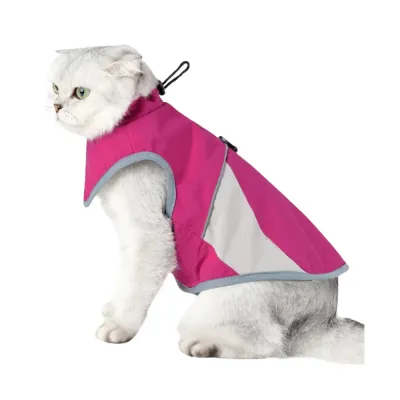

Wholesale Cat Apparel Buying Guide: How Pet Businesses Can Increase Seasonal Sales
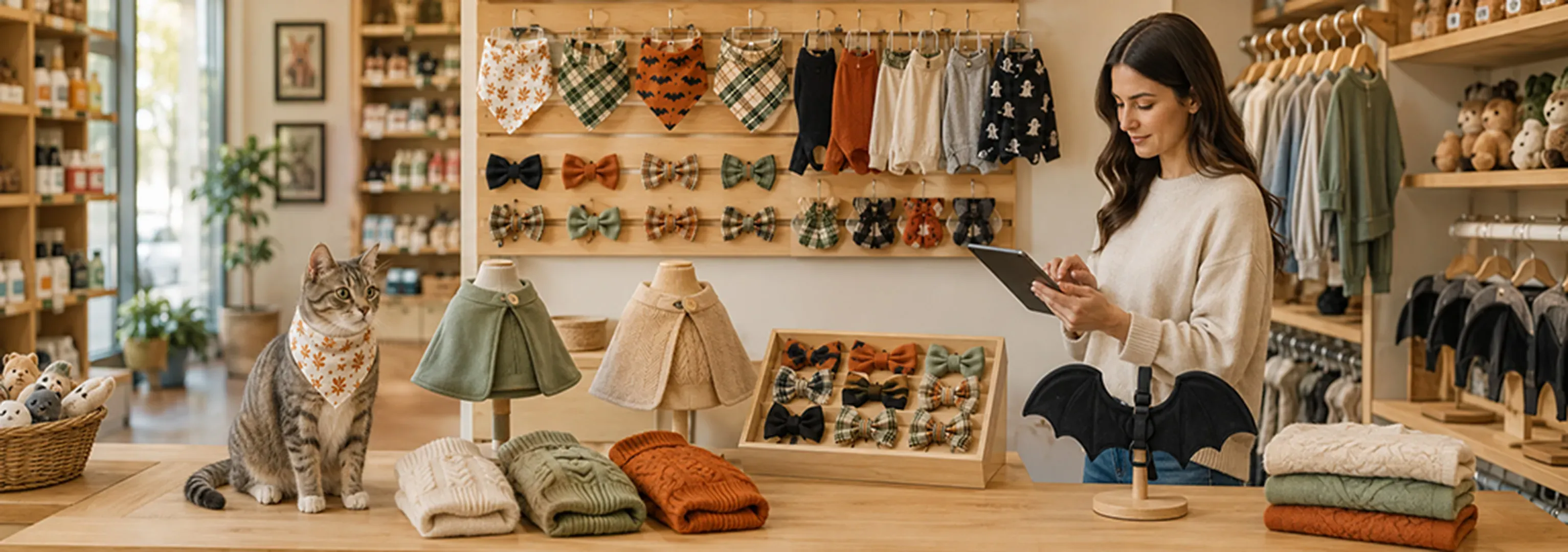
Executive Summary
Cat apparel should not be treated only as a decorative pet category. For independent pet stores, online sellers, pet boutiques, groomers, subscription-box businesses and local distributors, it can function as a high-visibility, low-ticket product category that supports seasonal launches, basket expansion, content marketing and impulse purchases.
The strongest wholesale opportunity is not necessarily in stocking large quantities of complicated cat costumes. Small pet businesses can often achieve better inventory efficiency by selecting a balanced assortment of:
- lightweight seasonal accessories;
- adjustable basic apparel;
- cold-weather knitwear;
- functional recovery or protective garments;
- high-visual-impact holiday products;
- a limited number of trend-led fashion items.
The U.S. market offers a strong foundation for cat-related retail. The American Pet Products Association reported that 49 million U.S. households owned a cat in 2024, up from 40 million in 2023. APPA also reported that households with three or more cats increased by 36% between 2018 and 2024, creating additional opportunities for multipacks, matching sets and repeat purchases.
Holiday demand is particularly important. The National Retail Federation estimated that U.S. consumers would spend $13.1 billion on Halloween in 2025, including $860 million on pet costumes. Approximately 23% of consumers planned to dress a pet. These figures include all pets rather than cats alone, but they confirm that pet costumes are an established seasonal retail category.
For wholesale buyers, the practical strategy is:
Build the assortment around low-risk basics and evergreen seasonal themes, test fashion-led products with small opening orders, and expand only after real sales data confirms demand.
Why Cat Apparel Can Be a High-Conversion Retail Category
Cat apparel is commercially valuable because it can support several revenue objectives at the same time.
A retailer may use cat clothing to:
- increase average order value;
- create seasonal product launches;
- add low-price impulse products;
- improve cross-selling;
- expand the number of cat-related SKUs;
- create giftable bundles;
- produce short-form social content;
- support grooming or photography services;
- attract customers through visual displays;
- encourage repeat visits around new seasons and holidays.
Unlike essential categories such as litter boxes or feeding bowls, cat apparel is usually purchased because of a specific occasion, functional need or visual concept.
This creates a more flexible merchandising opportunity.
A pet store does not need to build a large permanent apparel department. It can introduce smaller collections around:
- spring and summer;
- autumn and winter;
- Halloween;
- Christmas;
- birthdays;
- surgical recovery;
- hairless-cat warmth;
- social-media trends.
Commercial Roles of Cat Apparel
| Commercial role | How cat apparel supports it |
| Average order value | Apparel can be added to toys, beds, carriers or grooming orders |
| Seasonal traffic | Halloween and Christmas collections create reasons to revisit |
| Impulse purchasing | Bow ties, bandanas and collars have accessible price points |
| Gift sales | Apparel can be packaged as a gift for a cat owner |
| Content marketing | Strong visual products support photos, Reels and short videos |
| SKU expansion | Retailers can add new themes without changing core categories |
| Service upselling | Groomers and boarding businesses can add photo or styling packages |
| Repeat sales | Different seasons and events create multiple buying occasions The business value is therefore broader than the margin on a single garment. |
Why the U.S. Cat Market Is Worth Serving
Cat ownership is expanding
APPA reported that 49 million U.S. households owned a cat in 2024, compared with 40 million in 2023. The organization described this as a 23% increase in cat ownership.
The same report found that cat ownership is increasingly becoming a multi-cat behavior.
Single-cat households declined from 64% in 2018 to 58% in 2024, while households with two cats increased and households with three or more cats grew by 36%.
U.S. Cat Ownership Indicators
| Indicator | Reported figure | Wholesale implication |
| Cat-owning households in 2023 | 40 million | Establishes the recent baseline |
| Cat-owning households in 2024 | 49 million | Expands the addressable customer base |
| Reported annual increase | 23% | Supports broader cat-category development |
| Single-cat households | Fell from 64% to 58% between 2018 and 2024 | Multi-cat demand is becoming more relevant |
| Households with three or more cats | Increased 36% from 2018 | Supports matching sets and multipacks Source: American Pet Products Association, 2025 Dog & Cat Report. These figures do not measure cat-apparel sales directly. They show that the customer base for cat products is large and increasingly includes households that may purchase more than one unit. For retailers, multi-cat ownership can support: |
- coordinated color sets;
- two-piece and three-piece packs;
- quantity discounts;
- family-photo themes;
- matching birthday accessories;
- repeat purchases in different sizes.
Cat Apparel Should Be Sold as a Business Solution
Consumer-facing content often describes pet apparel as cute, fun or adorable.
That language may work on a product page, but wholesale customers need a different explanation.
A B2B buyer is more likely to ask:
- Will this product increase basket size?
- How many sizes must I stock?
- Can it be sold year-round?
- Is it suitable for a seasonal display?
- Can I pair it with other products?
- Is it easy to demonstrate in a video?
- Will customers return it because of poor fit?
- Can I test it without buying a large quantity?
- Can the product work for both cats and small dogs?
- Will the remaining stock still be sellable next year?
A strong wholesale article should therefore define every product category in commercial terms.
Consumer Language Versus B2B Language
| Consumer-focused wording | B2B-focused wording |
| Cute holiday outfit | High-visibility seasonal SKU |
| Fun for pet owners | Supports content-led and event-led selling |
| Adorable accessory | Low-ticket impulse and add-on product |
| Perfect for photos | Strong user-generated-content potential |
| Cozy sweater | Cold-weather and hairless-cat product opportunity |
| Fashionable design | Differentiated assortment for boutiques |
| Matching outfit | Multipack and bundle opportunity |
| Easy to wear | Lower return and customer-service risk |
Five Core Cat Apparel Categories for Wholesale Buyers
A well-planned assortment should not depend on one style or one season.
The five most practical categories are:
- basic apparel;
- seasonal warmth products;
- functional apparel;
- holiday apparel;
- fashion-led apparel.
Basic Cat Apparel
Basic apparel includes simple, low-complexity products that are easy for new retailers to test.
Examples include:
- adjustable bandanas;
- bow ties;
- soft vests;
- lightweight shirts;
- simple collars;
- sleeveless tops;
- plain hoodies.
The commercial advantage of basic apparel is that it can remain relevant beyond one holiday.
A solid-color bandana, for example, may be sold as:
- a daily accessory;
- a grooming add-on;
- a birthday accessory;
- a photo prop;
- a gift-box item.
Best applications
- new pet stores;
- online sellers testing apparel;
- groomers;
- subscription boxes;
- checkout displays;
- low-price bundles.
Main buying priorities
- adjustable size;
- low unit cost;
- limited number of sizes;
- neutral or popular colors;
- simple packaging;
- clear measurements.
Warm and Seasonal Cat Apparel
Warm cat apparel includes products intended for autumn, winter, colder indoor environments or breeds that may benefit from additional warmth.
Examples include:
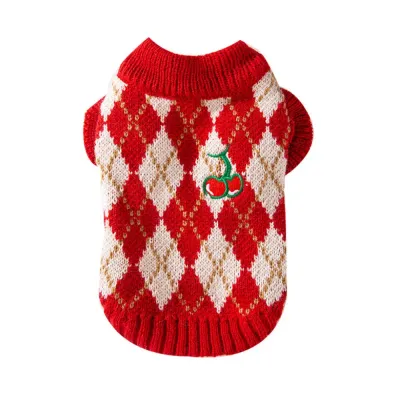
- knit sweaters;
- fleece vests;
- soft hoodies;
- thermal shirts;
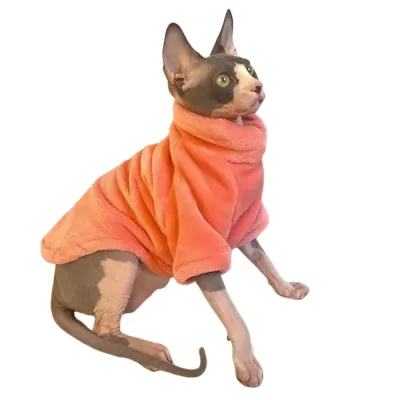
- hairless-cat clothing;
- lightweight jackets.
This category should be selected according to climate and customer profile.
A retailer in a cold region may stock deeper winter inventory, while a seller serving warmer U.S. states or Australia may need more lightweight indoor garments.
Wholesale value
Warm apparel can:
- support autumn and winter launches;
- serve hairless-cat owners;
- create higher average selling prices;
- pair with beds and blankets;
- remain relevant after Christmas;
- support repeat purchases in different colors.
Main risks
- high size complexity;
- poor fit around the chest and legs;
- too much body coverage;
- seasonal overstock;
- fabric that is too heavy or difficult to clean.
Functional Cat Apparel
Functional apparel solves a specific problem rather than serving only a decorative purpose.
Examples include:
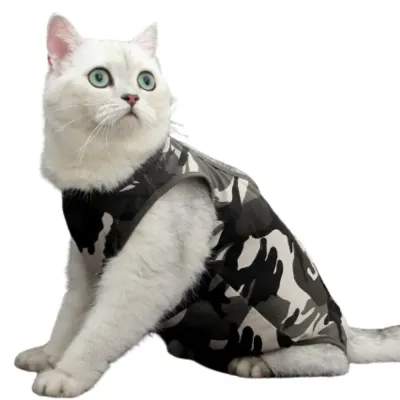
- recovery suits;
- anti-lick garments;
- post-surgery apparel;
- protective shirts;
- calming wraps;
- breathable indoor warmth garments;
- UV-protective shirts where appropriate.
Functional apparel can be particularly relevant for:
- veterinary retail areas;
- breeders;
- shelters and rescues;
- online specialty stores;
- grooming businesses;
- cat-focused boutiques.
The commercial advantage is that functional demand is less dependent on holidays.
A recovery suit can sell throughout the year, while a Halloween costume may have only a few weeks of peak demand.
Functional Apparel Versus Holiday Apparel
| Factor | Functional apparel | Holiday apparel |
| Main purchase reason | Solving a practical need | Supporting an occasion or visual theme |
| Sales season | Mostly year-round | Highly seasonal |
| Purchase urgency | Often high | Usually planned or impulse-led |
| Fit importance | Very high | High |
| Return risk | High if sizing is unclear | Moderate to high |
| Repeat purchase potential | Based on need or replacement | Based on new holidays and themes |
| Cross-selling opportunity | Recovery products, beds, care items | Toys, gifts, accessories, photo props A balanced assortment should include both categories rather than relying only on decorative products. |
Holiday Cat Apparel
Holiday apparel creates short-term demand around events such as:
- Halloween;
- Christmas;
- Valentine’s Day;
- Easter;
- Thanksgiving;
- birthdays;
- sports events;
- adoption anniversaries.
Halloween is the largest clearly documented U.S. pet-costume occasion.
NRF projected total Halloween spending of $13.1 billion in 2025, including $860 million for pet costumes. Approximately 23% of surveyed consumers planned to dress a pet.
In 2024, NRF projected $700 million in pet-costume spending. Popular pet themes included pumpkin, hot dog, bat, ghost and bumblebee.
Halloween Pet-Costume Market Indicators
| Indicator | 2024 | 2025 |
| Total U.S. Halloween spending | $11.6 billion | $13.1 billion |
| Pet-costume spending | $700 million | $860 million |
| Consumers shopping before October | 47% | Early shopping remained important |
| Leading pet themes | Pumpkin, hot dog, bat, ghost, bee | Pumpkin and other classic themes remained important Sources: National Retail Federation annual Halloween research. The $700 million and $860 million figures cover all pet costumes, not cat costumes alone. They should be used as evidence of broader pet-costume demand rather than as the size of the cat-apparel market. |
Fashion-Led Cat Apparel
Fashion-led apparel is designed around aesthetics, lifestyle branding and social visibility.
Examples include:
- dopamine-color apparel;
- character-inspired designs;
- streetwear;
- denim styles;
- minimalist knitwear;
- matching owner-and-cat products;
- seasonal prints;
- social-media trend products.
This category can generate attention, but it should be purchased carefully.
Trend-led designs may have:
- short selling windows;
- limited repeatability;
- higher image and content requirements;
- intellectual-property risks;
- faster markdown pressure.
For most small retailers, fashion-led apparel should be treated as a test category rather than the foundation of the assortment.
Cat Apparel Selection by Season
Seasonal buying should consider climate, material, selling window and the speed of delivery.
Seasonal Cat Apparel Selection Guide
| Season | Recommended products | Preferred materials or features | Main sales angle |
| Spring | Lightweight shirts, floral bandanas, bow ties | Breathable, light, washable | Refreshing the assortment |
| Summer | Thin shirts, cooling fabrics, UV-style tops where appropriate | Lightweight, breathable, low coverage | Indoor comfort and summer content |
| Autumn | Light knitwear, fleece vests, Halloween accessories | Soft, warm but not bulky | Seasonal launch and Halloween |
| Winter | Sweaters, thermal shirts, Christmas apparel | Knit, fleece, soft lining | Warmth, gifting and family photos |
| Year-round | Recovery suits, basic bandanas, bow ties | Adjustable, washable, functional | Practical need and repeat sales This table is a Petfairs buying framework rather than an official industry classification. |
What Types of Cat Apparel Are Easier to Sell?
The best-selling potential of a product is not determined only by its appearance.
Wholesale buyers should evaluate five commercial factors:
- sizing risk;
- dressing difficulty;
- visual impact;
- seasonal shelf life;
- cross-selling potential.
Product Selection Comparison
| Product type | Sizing risk | Visual impact | Ease of dressing | Inventory risk | Recommended for first order |
| Adjustable bandana | Low | Medium | Very easy | Low | Yes |
| Bow tie | Low | Medium | Very easy | Low | Yes |
| Decorative collar | Low | High | Easy | Low | Yes |
| Cape | Low to medium | High | Easy | Low to medium | Yes |
| Wings | Low to medium | High | Easy | Medium | Yes, in limited quantity |
| Sleeveless vest | Medium | Medium | Moderate | Medium | Yes, with clear sizing |
| Knit sweater | High | Medium to high | Moderate | Medium to high | Test first |
| Hoodie | High | High | Moderate | High | Limited test |
| Four-leg costume | Very high | Very high | Difficult | High | No deep opening order |
| Heavy headpiece | Medium | High | Difficult | High | Use cautiously For new stores, bandanas, bow ties, decorative collars and capes usually offer the best balance between visual impact and inventory control. |
Cat Apparel Cannot Simply Be Smaller Dog Apparel
Cat apparel and small-dog apparel may look similar, but the design requirements are not identical.
Cats may be more sensitive to:
- leg restriction;
- shoulder coverage;
- headwear;
- rigid materials;
- long straps;
- heavy decorations;
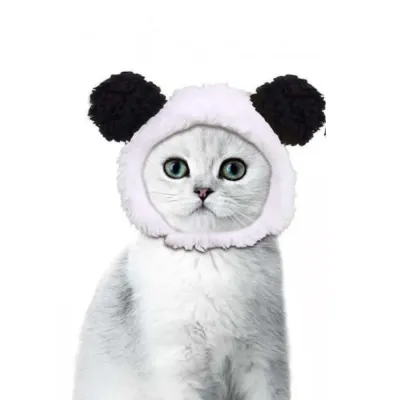
- tight neck openings;
- clothing that interferes with jumping or grooming.
The ASPCA advises that pet costumes should not restrict movement, sight, breathing or the ability to vocalize. It also recommends avoiding small, dangling or easily chewed-off pieces and suggests using a festive bandana when a full costume is not suitable.
Cat Apparel Versus Small-Dog Apparel
| Design issue | Cat-focused recommendation | Common small-dog product approach |
| Leg coverage | Keep limited for many seasonal products | Sleeves are more common |
| Headwear | Use sparingly | More frequently offered |
| Garment weight | Keep very light | Depends on dog breed |
| Fastening | Quick removal and adjustability | Adjustability also important |
| Hanging pieces | Minimize | Should also be controlled |
| Fit testing | Essential | Essential |
| Best entry products | Bandanas, capes, bow ties | Shirts, sweaters, bandanas |
| Dual-use potential | Possible with exact measurements | Often marketed by weight or size Retailers should not label a product “for cats and dogs” without publishing specific neck, chest and back measurements. |
Which Customers Can Sell Cat Apparel?
Not every Petfairs customer needs the same product strategy.
The category should be adapted to the business model.
Pet Boutiques and Physical Pet Stores
For boutiques and physical stores, cat apparel can:
- enrich seasonal merchandising;
- create window displays;
- support impulse purchases;
- differentiate the store from mass-market retailers;
- increase product discovery;
- encourage cross-category purchases.
The strongest opening assortment usually includes:
- adjustable accessories;
- one or two seasonal themes;
- a small functional range;
- limited cold-weather styles;
- a year-round birthday line.
A retailer can create a Halloween display using:
- pumpkin capes;
- bat wings;
- black-and-orange bandanas;
- cat toys;
- beds;
- collars;
- photo props.
The apparel attracts attention, while the surrounding items increase basket size.
New Pet Store Owners
New store owners should avoid opening with too many apparel sizes and colors.
A practical first assortment may include:
- two bandana styles;
- one bow-tie line;
- two cape designs;
- one basic vest;
- one recovery suit;
- one seasonal sweater;
- a birthday accessory set.
The goal of the first order is not to maximize SKU count.
It is to identify:
- which sizes sell;
- which price points convert;
- whether customers prefer functional or decorative products;
- which colors attract attention;
- which products are easiest to restock.
Online Pet Sellers and Marketplace Resellers
Online sellers can use cat apparel to capture seasonal search traffic and create visual content.
The products should have:
- clear measurement charts;
- front and back photography;
- short dressing videos;
- material information;
- safety guidance;
- seasonal keywords;
- realistic delivery dates.
NRF reported that 47% of Halloween shoppers in 2024 planned to begin shopping before October, compared with 32% ten years earlier.
Online sellers should therefore prepare Halloween listings in August or early September rather than waiting until October.
Social Commerce Sellers
Social commerce sellers benefit from products that communicate visually within seconds.
Recommended formats include:
- bat wings;
- pumpkin capes;
- ghost capes;
- large bow ties;
- themed collars;
- owner-and-cat matching products.
Useful content formats include:
- three-second transformations;
- outfit comparisons;
- customer voting;
- grooming before-and-after videos;
- multi-cat matching sets;
- seasonal countdowns.
The product must be easy to demonstrate.
A complicated garment that takes several minutes to put on may create more content friction and more customer complaints.
Pet Groomers and Mobile Groomers
Groomers can use cat apparel as a service add-on rather than only a retail item.
Examples include:
- a holiday bow tie after grooming;
- a paid seasonal photo;
- a birthday grooming package;
- a festive bandana upgrade;
- retailing the accessory used in the photo.
Bandanas and bow ties are particularly suitable because they are compact, quick to apply and require fewer sizes.
For mobile groomers, product size and storage efficiency are especially important.
Subscription Box Sellers
Subscription-box sellers need products that are:
- lightweight;
- compact;
- low-cost;
- adjustable;
- easy to understand;
- unlikely to generate sizing complaints.
Recommended items include:
- bandanas;
- bow ties;
- festive collars;
- lightweight capes;
- simple photo props.
Fitted sweaters and four-leg costumes should only be used when the subscription company has reliable customer sizing data.
Veterinary Clinics and Veterinary Retail Areas
Veterinary retail should focus on functionality rather than complicated decoration.
Suitable products include:
- recovery suits;
- anti-lick garments;
- soft post-surgery apparel;
- simple bandanas;
- lightweight warm shirts;
- holiday-print functional garments.
The opportunity is to combine a practical need with a more retail-friendly design.
Boarding and Daycare Businesses
Boarding and daycare operators can use apparel in:
- Halloween photo days;
- Christmas portrait events;
- birthday packages;
- social-media content;
- costume contests;
- customer gift bags.
Products should be easy to clean, quick to remove and used under supervision.
Breeders, Shelters and Rescues
Breeders may use simple apparel for:
- kitten profile photos;
- social content;
- seasonal updates;
- new-owner gift packs.
Shelters and rescues may use lightweight bandanas or bow ties for:
- adoption photographs;
- holiday fundraising;
- adoption events;
- social-media campaigns.
The objective is not extended wear.
It is creating a short, low-stress presentation that supports visibility and engagement.
Local Pet Distributors
Local distributors can use cat apparel to create preselected wholesale assortments.
Examples include:
- Halloween starter cartons;
- Christmas accessory bundles;
- grooming-salon packs;
- birthday assortments;
- cold-weather cat apparel kits;
- functional recovery collections.
This helps small retailers buy a balanced assortment instead of selecting every SKU individually.
Wholesale Assortment Strategy
A good assortment should balance stable demand, visual interest and inventory risk.
Recommended Opening Assortment Mix
| Category | Suggested share | Commercial purpose |
| Basic and adjustable apparel | 30% | Low-risk, year-round foundation |
| Functional apparel | 20% | Year-round problem-solving demand |
| Seasonal warmth products | 20% | Autumn and winter sales |
| Holiday apparel | 20% | Traffic, content and seasonal conversion |
| Fashion-led test products | 10% | Differentiation and trend discovery This 30/20/20/20/10 split is a Petfairs strategic recommendation, not an official market benchmark. A Halloween-specific order may use a different structure. |
Suggested Halloween Assortment Mix
| Product group | Suggested share |
| Evergreen themes | 60% |
| Adjustable accessories | 25% |
| Trend-led designs | 15% Classic themes include: |
- pumpkin;
- bat;
- ghost;
- witch;
- bee;
- devil.
These themes can usually be carried into another Halloween season more easily than products based on a temporary media trend.
First-Order Buying Strategy
Small businesses should use the first wholesale order to gather data.
The opening order should answer:
- Which category gets the most clicks?
- Which product generates the most add-to-cart activity?
- Which sizes move first?
- Which colors perform best?
- Which products receive sizing questions?
- Which items create repeat purchases?
- Which styles are easiest to demonstrate?
- Which products lead to bundle sales?
Low-Risk First-Order Products
| Product | Why it is suitable |
| Adjustable bandana | Low sizing risk and year-round use |
| Bow tie | Low cost and strong add-on potential |
| Pumpkin cape | Recognizable seasonal theme |
| Bat wings | High visual impact with limited body coverage |
| Red-and-green holiday collar | Easy Christmas add-on |
| Basic sleeveless vest | Tests demand for daily apparel |
| Recovery suit | Introduces functional demand |
| Lightweight knit sweater | Tests winter apparel |
| Birthday crown | Year-round occasion product |
| Birthday bandana | Low-cost evergreen SKU |
Products to Test in Smaller Quantities
- fitted hoodies;
- four-leg costumes;
- heavy hats;
- complex character outfits;
- products with many small decorations;
- highly specific trend designs;
- products requiring several size variants.
Size Combination Strategy
Sizing is one of the largest risks in pet apparel.
A retailer may correctly predict total demand but still lose sales because the wrong sizes were ordered.
The first order should therefore avoid an equal quantity of every size unless historical data supports that decision.
Example Opening Size Mix
| Size | Suggested opening share |
| XS | 15% |
| S | 35% |
| M | 30% |
| L | 15% |
| XL | 5% This is an example testing framework, not a universal industry standard. The correct mix depends on: |
- product construction;
- breed profile;
- regional customer base;
- whether the item also fits small dogs;
- the store’s historical sales.
For adjustable products, buyers should focus on measurement ranges rather than letter sizes.
Every product page should ideally include:
- neck circumference;
- chest circumference;
- back length;
- product weight;
- recommended pet weight;
- measurements in inches and centimeters.
Color Combination Strategy
A good color mix should balance commercial safety and visual differentiation.
Recommended Color Structure
| Color group | Suggested role |
| Neutral colors | Year-round basics and broad compatibility |
| Seasonal colors | Holiday merchandising |
| High-visibility colors | Social commerce and content creation |
| Pastel colors | Spring, Easter and boutique positioning |
| Dark classic colors | Autumn, winter and premium collections |
Example First-Order Color Mix
| Color type | Suggested share |
| Black, gray, beige or cream | 35% |
| Red, green, orange or seasonal colors | 30% |
| Blue, pink or popular commercial colors | 25% |
| Experimental colors or prints | 10% This is a Petfairs merchandising suggestion and should be adjusted according to audience and season. |
Test, Reorder and Expand
The best wholesale growth strategy for small pet businesses is not:
Buy a large assortment and hope that every SKU sells.
A stronger model is:
Test a focused assortment, reorder proven products and expand into adjacent categories.
Three-Stage Buying Model
| Stage | Objective | Recommended action |
| Test | Identify real demand | Order a small range of adjustable and seasonal products |
| Reorder | Protect proven sales | Restock the best styles, sizes and colors |
| Expand | Increase basket size | Add related categories and premium versions |
Stage 1: Test
Start with:
- a limited number of SKUs;
- fewer fitted sizes;
- adjustable designs;
- one functional product;
- one seasonal collection;
- one higher-visual-impact item.
Stage 2: Reorder
Use real data to identify:
- top-selling sizes;
- low-return products;
- most-viewed products;
- products that support bundles;
- themes that generate content.
Stage 3: Expand
Once demand is proven, add:
- more colors;
- matching products;
- premium fabrics;
- additional seasonal themes;
- larger size coverage;
- owner-and-cat sets;
- related toys and accessories.
Cross-Selling Cat Apparel With Other Pet Products
Cat apparel should rarely be sold as an isolated category.
It can support broader product bundles.
Cross-Selling Ideas
| Apparel product | Complementary products | Selling concept |
| Halloween cape | Seasonal toy, collar, photo prop | Halloween collection |
| Christmas bandana | Plush toy, bed, gift bag | Holiday gift bundle |
| Recovery suit | Cone alternative, bed, care product | Post-surgery care set |
| Knit sweater | Cat bed, blanket, carrier | Winter comfort bundle |
| Birthday crown | Bow tie, toy, party banner | Birthday photo set |
| Basic shirt | Harness, carrier, travel bowl | Travel lifestyle bundle |
| Grooming bow tie | Brush, shampoo, wipes | Grooming add-on pack |
| Matching multi-cat set | Multipack toys, shared bed | Multi-cat household bundle Cross-selling helps the retailer: |
- increase average order value;
- move seasonal products faster;
- reduce reliance on a single SKU;
- create giftable offers;
- simplify the buying decision.
Selling Strategies by Channel
Channel Comparison
| Channel | Best apparel strategy | Main commercial objective |
| Physical pet store | Seasonal displays and checkout accessories | Increase basket size |
| Pet boutique | Curated fashion and premium materials | Differentiate the assortment |
| Online store | SEO pages, size guides and bundles | Capture search demand |
| Marketplace | Standardized products and clear measurements | Improve conversion and reduce returns |
| Social commerce | Visually strong products and short videos | Generate rapid product discovery |
| Grooming salon | Add-on accessories and photo packages | Increase service revenue |
| Subscription box | Lightweight adjustable accessories | Add perceived monthly value |
| Veterinary retail | Recovery and functional apparel | Serve practical needs |
| Boarding and daycare | Event-based apparel and photos | Create paid seasonal experiences |
| Distributor | Mixed cartons and preselected collections | Simplify downstream buying |
Seasonal Procurement Calendar
Retail preparation should begin before consumer demand reaches its peak.
NRF reported that 47% of Halloween shoppers in 2024 planned to shop before October. Ten years earlier, the proportion was 32%.
Halloween Wholesale Timeline
| Period | Manufacturer or supplier | Retail buyer |
| March–April | Research trends and develop designs | Review previous sales |
| May–June | Sample and confirm production | Select products and budget |
| June–July | Begin production | Place opening wholesale order |
| July–August | Complete main inventory | Receive stock and create content |
| August–September | Support replenishment | Launch product pages and displays |
| September–October | Prioritize fast stock | Main sales period |
| Late October | Reduce production exposure | Mark down or bundle slow products |
| November | Shift to Christmas | Replace seasonal displays |
Year-Round Buying Calendar
| Period | Main apparel focus |
| January–February | Valentine’s Day and functional apparel |
| March–April | Spring basics and Easter accessories |
| May–June | Lightweight summer apparel |
| July–August | Halloween buying and content preparation |
| September–October | Halloween sales and winter launch |
| November–December | Christmas, knitwear and gift bundles |
Safety and Comfort Are Conversion Factors
Safety and comfort should be presented as product benefits, not only as warnings.
ASPCA guidance states that pet costumes should not limit movement, sight, breathing or vocalization. Costumes should be checked for loose or easily chewed parts, and a bandana may be a safer alternative when a full costume causes distress.
For B2B buyers, this translates into selection criteria.
Wholesale Safety Checklist
| Check | Buyer requirement |
| Movement | The cat should be able to walk and sit normally |
| Visibility | Eyes and whiskers should remain unobstructed |
| Neck opening | The product should not be tight or restrictive |
| Garment weight | Seasonal products should remain lightweight |
| Fastening | The item should be easy to remove |
| Small parts | Decorations should not detach easily |
| Hanging parts | Long straps and loose fabric should be minimized |
| Sizing | Exact measurements should be provided |
| Supervision | Packaging should state supervised use |
| Stress | Customers should remove the item if the cat appears distressed Products that are easier to wear and remove may reduce: |
- customer questions;
- negative reviews;
- return requests;
- safety complaints;
- poor social-media demonstrations.
How Cat Apparel Can Increase Average Order Value
Cat apparel usually works best as an add-on rather than the only item in the basket.
Example Basket Expansion
| Original purchase | Apparel add-on | Additional commercial value |
| Cat toy | Holiday bandana | Creates a gift set |
| Cat bed | Knit sweater | Builds a winter theme |
| Carrier | Basic shirt | Creates a travel bundle |
| Grooming brush | Bow tie | Supports a grooming kit |
| Recovery product | Recovery suit | Solves a complete care need |
| Halloween toy | Pumpkin cape | Builds a seasonal collection |
| Birthday toy | Crown and bow tie | Creates a party package A retailer does not need every customer to purchase clothing. Even a modest attachment rate can improve average order value when apparel is positioned next to relevant products. |
How Petfairs Supports Small-Business Apparel Buying
Petfairs is an online wholesale platform serving small and growing pet businesses.
The platform supports buyers such as:
- independent pet stores;
- pet boutiques;
- online pet sellers;
- marketplace resellers;
- social commerce sellers;
- pet groomers;
- mobile groomers;
- subscription-box businesses;
- boarding and daycare operators;
- veterinary retail areas;
- breeders;
- local distributors;
- shelters and rescues.
Petfairs provides wholesale access to products for cats, dogs and other companion animals and can deliver to most global markets.
For cat apparel buyers, the platform’s main value is not only product availability.
It is the ability to build a more flexible buying model.
Petfairs Wholesale Advantages
| Platform capability | Value for cat-apparel buyers |
| One-carton minimums | Enables lower-risk category testing |
| Broad pet-product assortment | Supports cross-category buying |
| Online wholesale access | Reduces dependence on trade shows |
| Global delivery coverage | Supports international small businesses |
| Cat, dog and exotic-pet categories | Enables one-stop assortment building |
| Seasonal product access | Helps retailers prepare holiday launches |
| Mixed business applications | Supports stores, groomers, online sellers and service businesses A buyer can source: |
- cat apparel;
- cat toys;
- beds;
- carriers;
- collars;
- grooming tools;
- seasonal products;
- dog and exotic-pet supplies;
within a broader wholesale purchasing strategy.
This reduces the need to work with a separate supplier for every small category.
Global Sourcing and Cross-Border Convenience
Cross-border apparel buying requires more than comparing product prices.
Buyers must consider:
- minimum order quantity;
- production time;
- international transportation;
- customs and import requirements;
- seasonal deadlines;
- product measurements;
- packaging;
- replenishment speed.
Seasonal products are particularly sensitive to delay.
A Halloween product that arrives in November may have little immediate retail value.
Pet businesses should therefore separate apparel into two sourcing groups.
Sourcing Model
| Product group | Suitable sourcing approach |
| Year-round basics | Can support planned, larger replenishment cycles |
| Functional apparel | Maintain dependable availability |
| Winter products | Order before the cold-weather season |
| Holiday products | Use early planning and clear deadlines |
| Trend-led products | Use small initial quantities and faster delivery where possible Petfairs’ global-delivery capability can help businesses consolidate multiple product categories into a more convenient online wholesale workflow. Buyers should still confirm delivery timelines before ordering highly seasonal products. |
Conclusion: Sell Cat Apparel as a Retail Growth Category
Cat apparel should not be positioned only as decorative clothing.
For pet businesses, it can function as:
- a seasonal traffic driver;
- an average-order-value tool;
- a cross-selling category;
- a content-marketing asset;
- a grooming or event add-on;
- a giftable product;
- a way to expand the cat assortment.
The strongest wholesale strategy is not to buy the widest possible selection.
It is to build a controlled assortment around:
- adjustable basic products;
- functional apparel;
- seasonal warmth;
- evergreen holiday themes;
- limited trend testing.
New buyers should begin with products that are easy to size, easy to demonstrate and easy to bundle.
They should then use actual sales data to decide:
- which sizes to reorder;
- which colors to expand;
- which seasonal themes to deepen;
- which related products to add.
For small pet stores, online sellers, groomers and growing pet businesses, the most sustainable buying model is:
Test first, reorder what sells, and expand into adjacent categories only after demand has been confirmed.
Petfairs supports this approach through online wholesale access, one-carton minimums, broad pet-product sourcing and delivery to most global markets.
Data Sources and Methodology
Sources Used
| Source | Information used | Why it is credible |
| American Pet Products Association | U.S. cat ownership and multi-cat household growth | Major U.S. pet-industry trade association |
| National Retail Federation | Halloween spending, pet-costume spending and early-shopping behavior | Major U.S. retail trade association |
| ASPCA | Pet-costume safety and fit guidance | Established U.S. animal-welfare organization |
Data Limitations
Authoritative public sources do not currently provide a separate market-size estimate for U.S. cat apparel.
For that reason:
- pet-costume data is identified as covering all pets;
- Halloween retail totals are used as market context;
- Petfairs buying ratios are labeled as strategic recommendations;
- no unsupported estimate of the U.S. cat-apparel market is presented;
- product and channel recommendations should be adjusted using each retailer’s actual sales data.
Key Source Notes
- APPA reported 49 million U.S. cat-owning households in 2024, up from 40 million in 2023, and a 36% rise in households with three or more cats from 2018.
- NRF estimated 2024 U.S. Halloween spending at $11.6 billion and pet-costume spending at $700 million.
- NRF estimated 2025 U.S. Halloween spending at $13.1 billion and pet-costume spending at $860 million.
- NRF reported that 47% of 2024 Halloween shoppers planned to begin shopping before October, compared with 32% ten years earlier.
- ASPCA recommends costumes that do not restrict movement, sight or breathing and advises avoiding loose or easily chewed parts.
Frequently Asked Questions
Is cat apparel a good category for independent pet stores?
Cat apparel can be useful for independent stores because it supports seasonal merchandising, impulse purchases, gift bundles and cross-selling. The lowest-risk entry products are usually adjustable bandanas, bow ties, collars and capes.
What cat apparel should a new pet store buy first?
A new store should begin with a small range of adjustable basics, one functional product, a limited seasonal collection and a few visual products for displays or social content.
Which cat clothing products have the lowest sizing risk?
Bandanas, bow ties, decorative collars and adjustable capes generally have lower sizing risk than sweaters, hoodies and four-leg costumes.
What cat apparel can be sold year-round?
Basic bandanas, bow ties, simple vests, recovery suits, hairless-cat shirts and birthday accessories can be sold throughout the year.
When should pet stores order Halloween cat costumes?
Retailers should normally place their main orders during June through August and prepare product pages by August or September. NRF reported that 47% of Halloween shoppers in 2024 planned to shop before October.
How much did U.S. consumers spend on pet Halloween costumes?
NRF estimated U.S. pet-costume spending at $700 million in 2024 and $860 million in 2025. These figures cover all pets and should not be interpreted as cat-costume spending alone.
Are full-body cat costumes better than simple accessories?
Full-body costumes may offer greater visual impact, but they also create higher sizing, comfort and return risks. Simple adjustable accessories are generally easier for new retailers to test.
Can cat apparel be bundled with other pet products?
Yes. Cat apparel can be combined with toys, beds, carriers, grooming products, recovery items, birthday products and seasonal accessories to increase average order value.
How should small businesses test cat apparel?
Start with one-carton or low-quantity orders, monitor product views, conversion, sizing questions and returns, reorder proven items and then expand into additional colors, sizes or categories.
 Popular Blogs